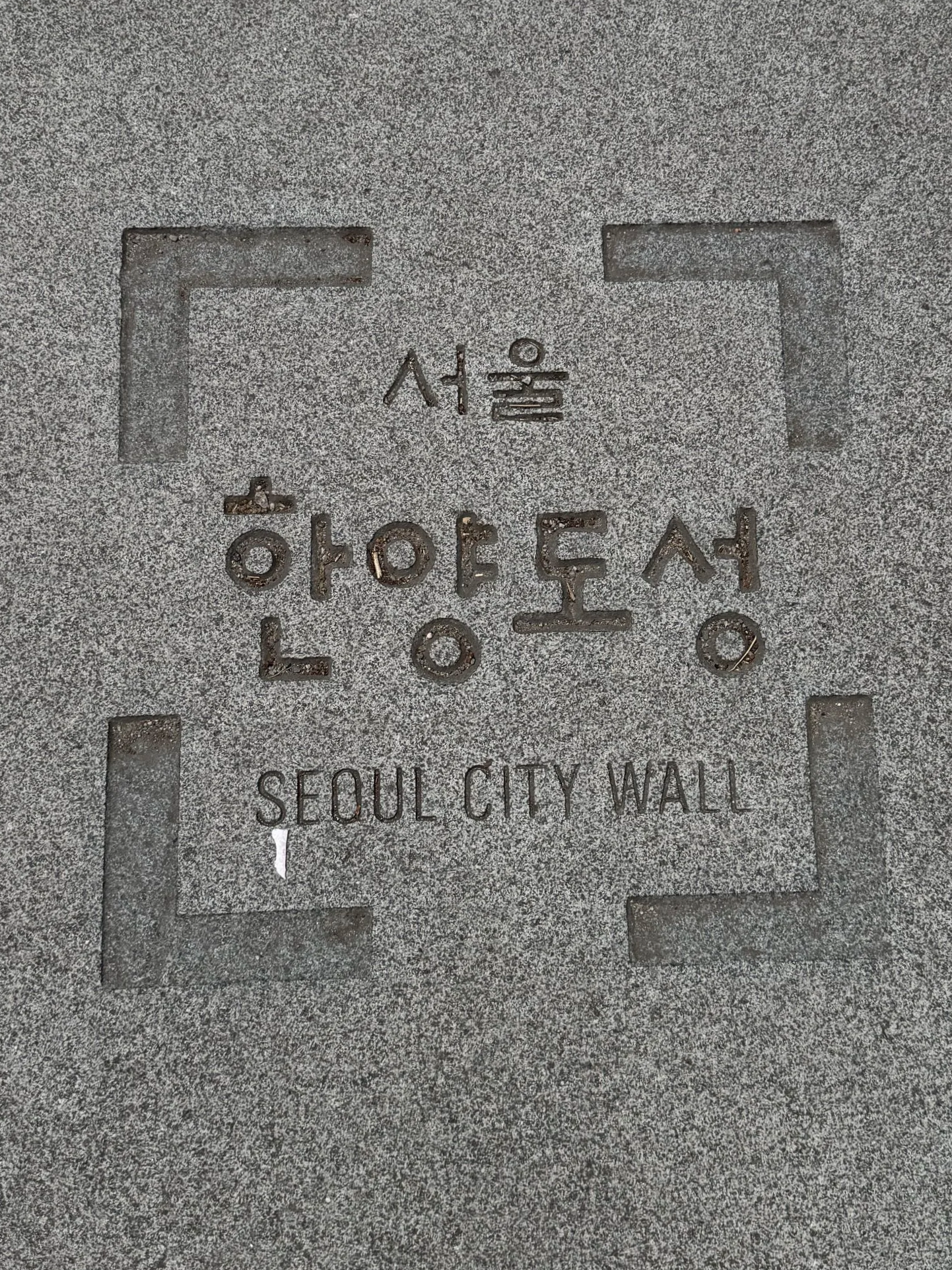
Hanyangdoseong, The Seoul City Wall
If you’ve visited Seoul, then you’ve no doubt seen the Seoul City Wall, known as Hanyangdoseong, winding across the ridgelines of Seoul. One of my favorite places to spot the wall is at Gyeongbokgung Palace - and seeing Gyeongbokgung from the mountaintop was pretty cool, too!
Built during the Joseon Dynasty, the wall once protected the capital from invasion. Today, it offers visitors one of the best ways to experience Seoul's history while enjoying some of the city's most spectacular views.
History of the Seoul City Wall

Whether you're an avid hiker, a history enthusiast, or simply looking for a unique way to explore Seoul, walking the city wall provides a perspective of the capital that few visitors ever see.
Hanyangdoseong was constructed in 1396 shortly after King Taejo established Hanyang (modern-day Seoul) as the capital of the Joseon Dynasty.
Built along the natural ridgelines of four mountains surrounding the city center, the fortress wall originally stretched approximately 18.6 kilometers (11.5 miles). The wall connected four major gates and four smaller auxiliary gates, creating a defensive barrier around the capital while also reflecting traditional Korean geomantic principles.
Although portions of the wall were lost during the twentieth century, extensive restoration efforts have preserved much of the original route. Today, you can walk a majority of the wall and experience a side of Seoul that feels remarkably removed from the modern metropolis below. One moment you're walking beside centuries-old stone fortifications. The next, you're looking out over modern apartment towers, bustling neighborhoods, and the skyline of one of Asia's most dynamic cities.
Each section of the wall offers a different experience. Some feel like true mountain hikes. Others function more as scenic urban walks. Together, they create one of the most rewarding outdoor experiences in Seoul.
The Six Different Trails
The Seoul City Wall is divided into six official sections. I wouldn’t recommend hiking all 6 in one day, but several are doable at once!
Baegaksan Mountain Trails (Bugaksan)
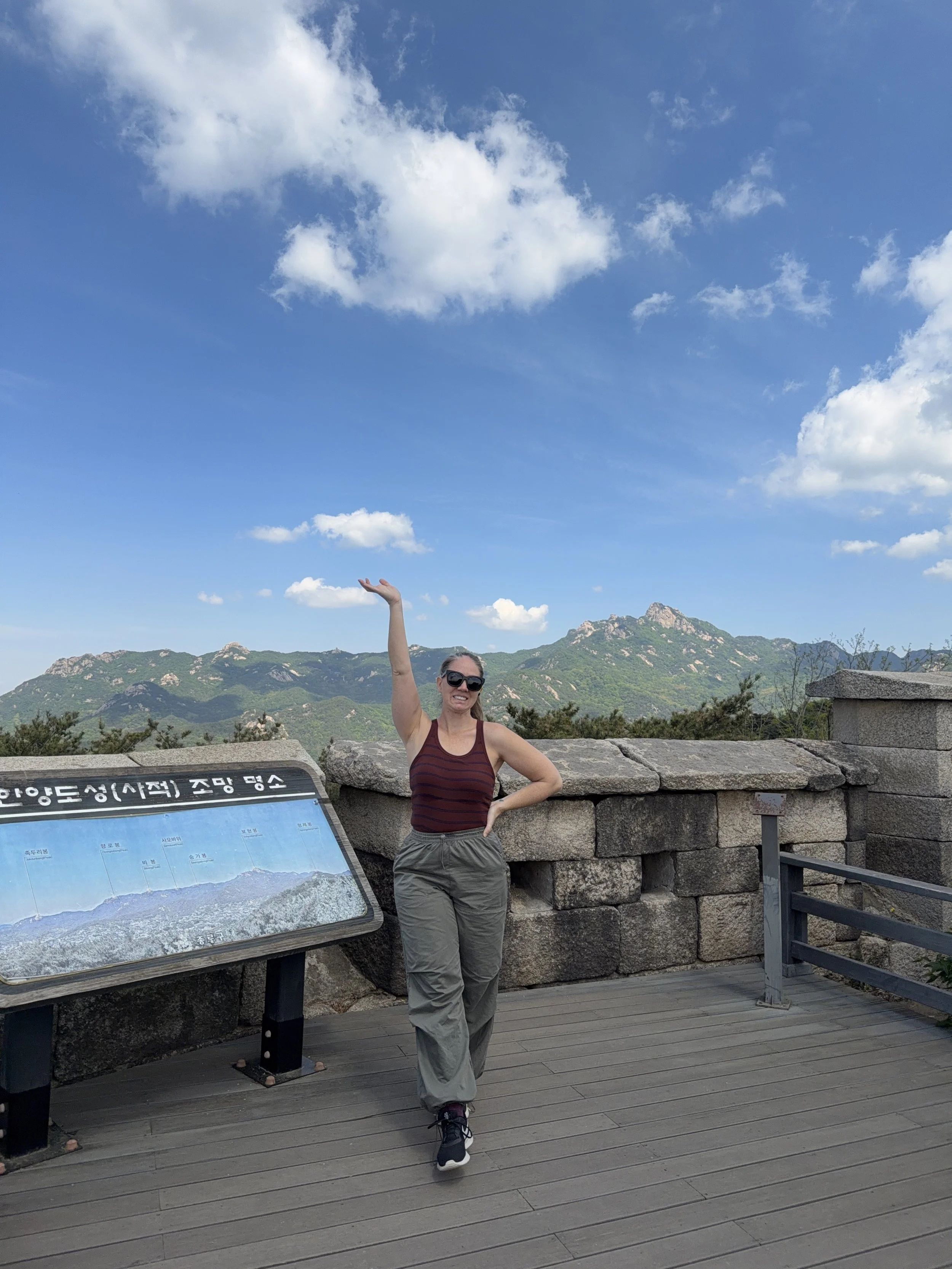
Hiking Baegaksan
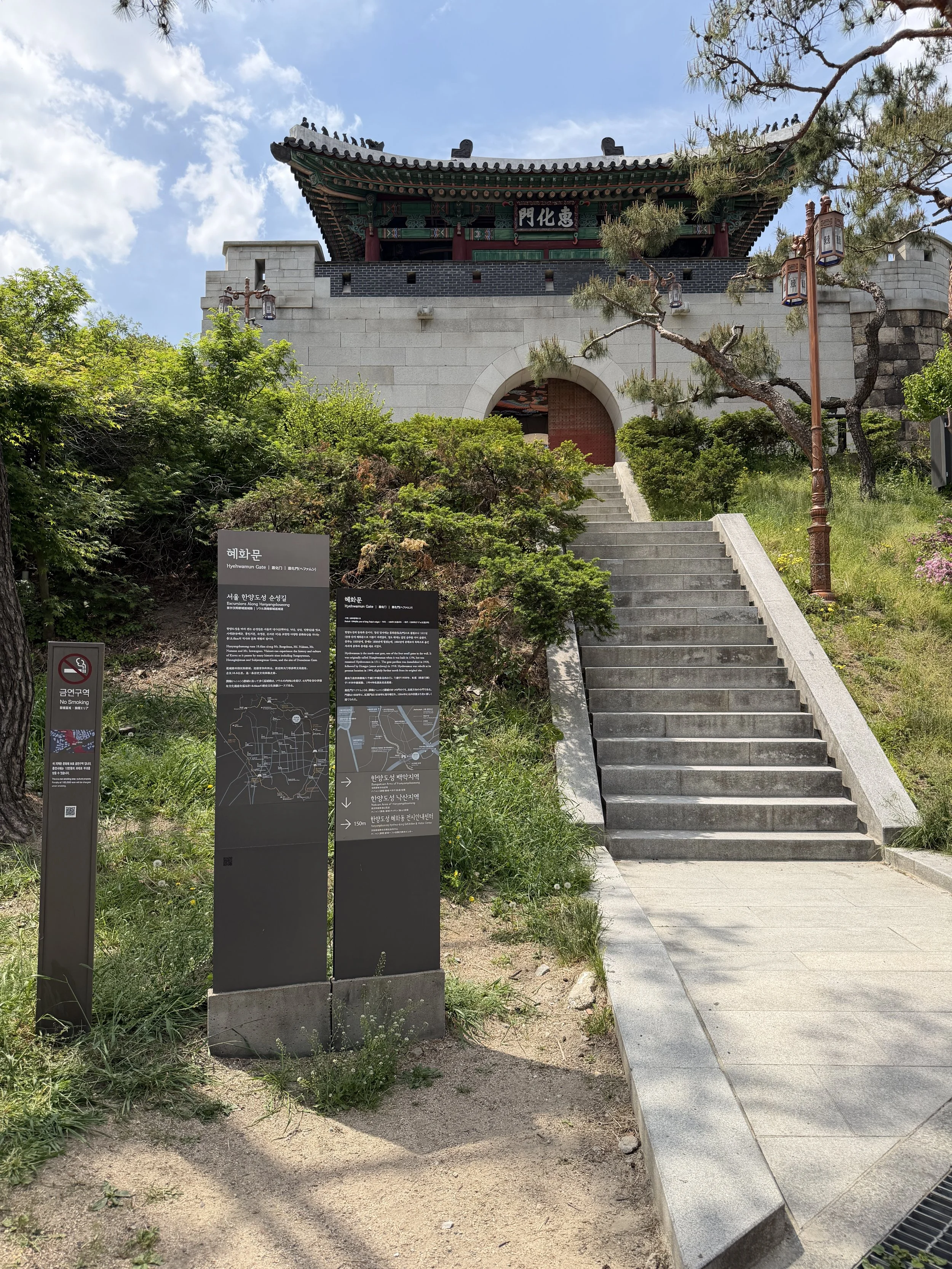
Running from Changuimun Gate to Hyehwamun Gate, this trail crosses Baegaksan (342m), the highest of Seoul's four inner mountains and historically considered the city's main mountain according to traditional geomantic principles. The route follows some of the best-preserved sections of Hanyangdoseong while offering sweeping views over Seoul.
The mountain also has a fascinating modern history. After North Korean commandos infiltrated Seoul in 1968, public access to much of the area was restricted for nearly forty years. The trail wasn't fully reopened until 2007. Today, visitors can enjoy one of the most scenic and historically significant walks in the city.
Unlike some of the more urban sections, Baegaksan feels like a genuine mountain adventure. There are very few places to purchase food or drinks along the route, so bring water and snacks before setting out.
Note: the start of this trail is at a military check point and this trail runs through an active military zone. A passport is technically needed and you might be asked to show it.
Naksan Mountain Trails
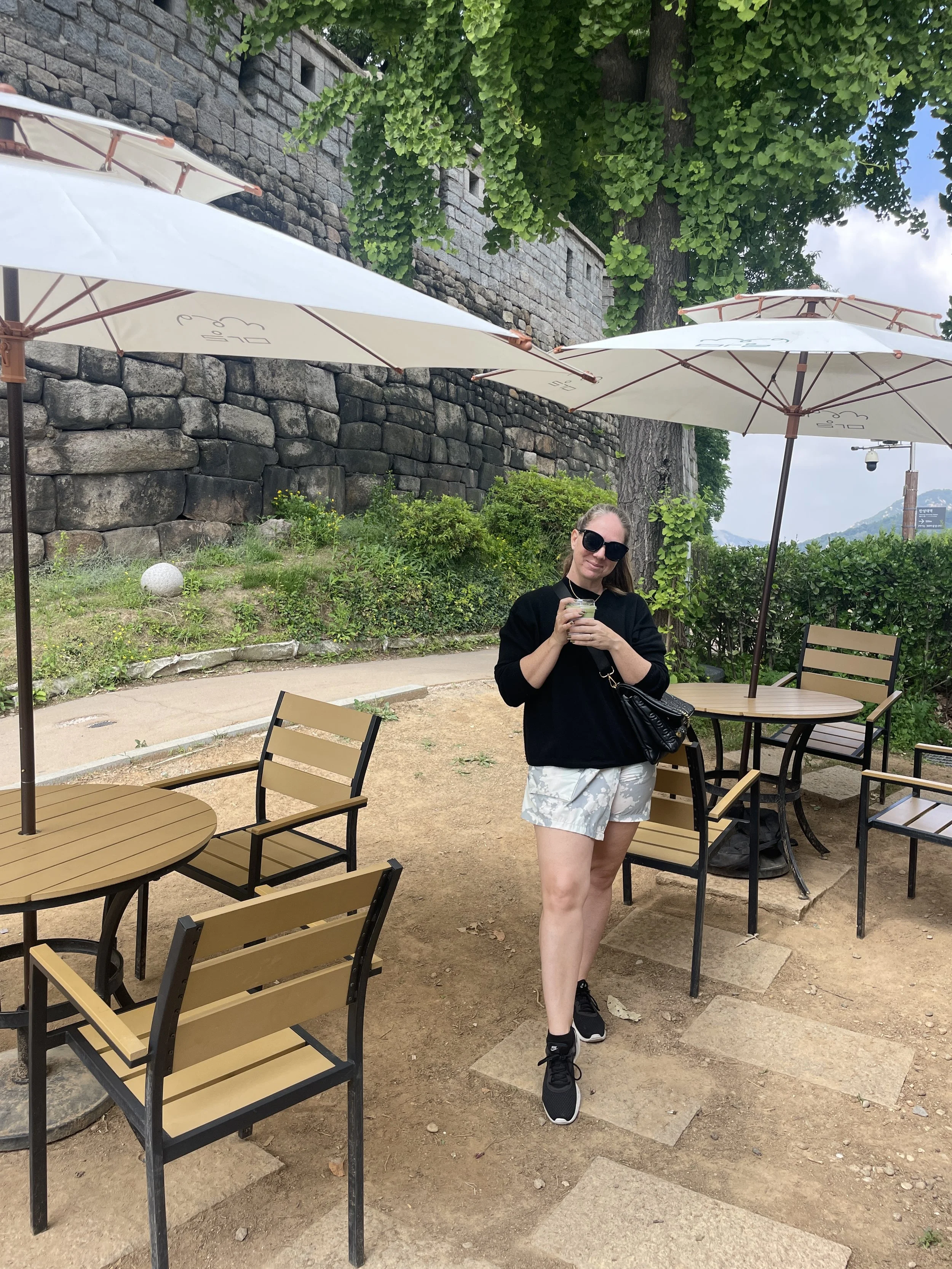
Stopped for coffee along Naksan Trail
Running from Hyehwamun Gate to Heunginjimun Gate, Naksan is the lowest of Seoul's four inner mountains at just 126 meters (413 feet). Its gentle slopes make it the easiest section of Hanyangdoseong and my top recommendation for families with children or first-time visitors.
Naksan was historically known by several names, including Naktasan, or "Camel Mountain," because its ridgeline resembles a camel's humps. As you walk the trail, you'll enjoy views over eastern Seoul while following beautifully preserved sections of the wall through Naksan Park.
One of the most interesting details here is found in the wall itself. If you look closely, you'll notice different stone sizes and construction styles, reflecting the various periods when sections of the wall were built or restored throughout the Joseon Dynasty.
Heunginjimun Gate Trail
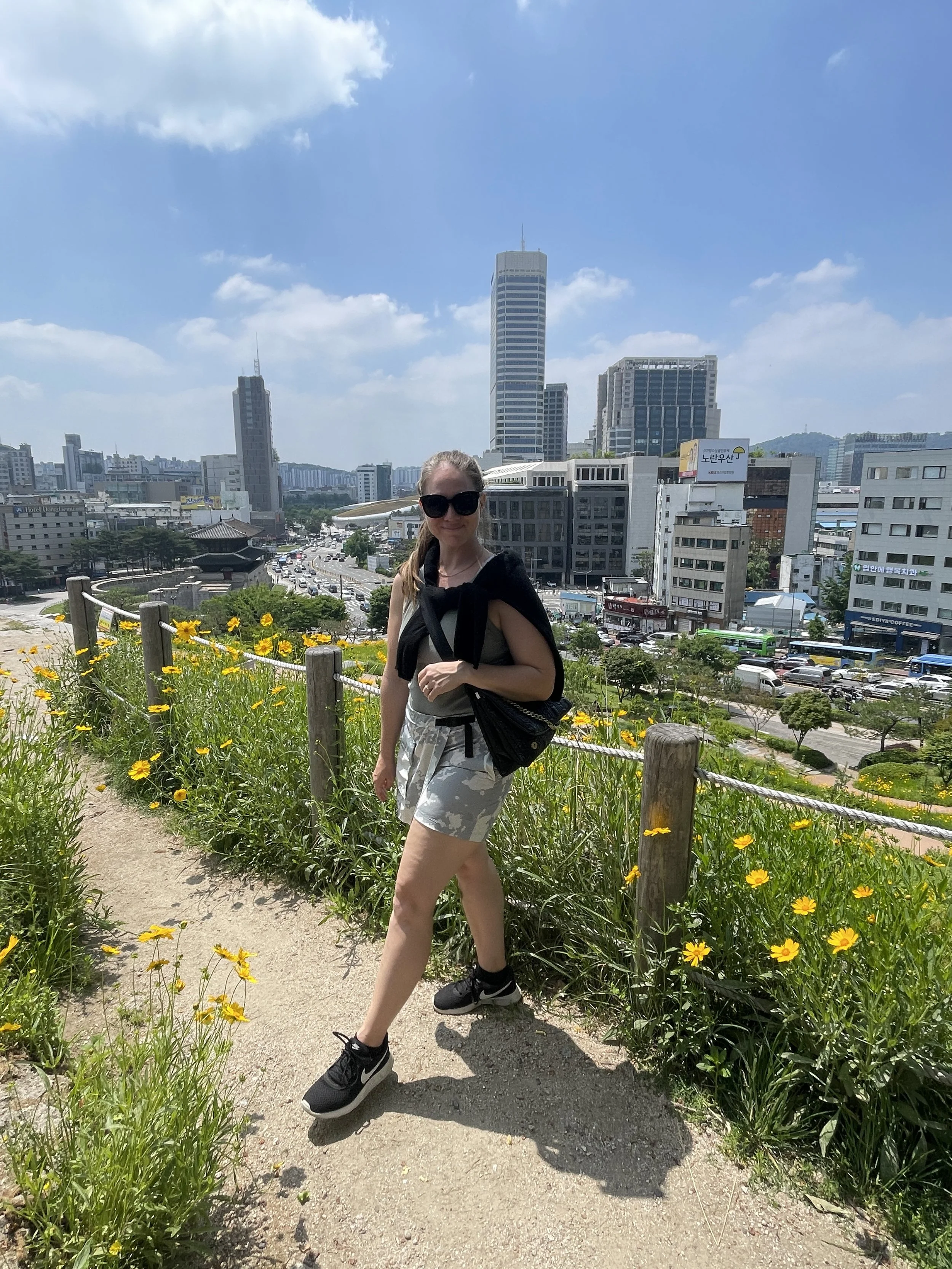
Looking out towards the DDP in Seoul
The Heunginjimun section runs from Heunginjimun Gate (Dongdaemun) past Gwanghuimun Gate and toward Jangchung Arena.
This is one of the shortest and most accessible portions of the route, making it easy to combine with Naksan or Namsan. The trail offers a fascinating look at how Seoul's historic fortifications coexist with the modern city, especially around the busy Dongdaemun area. Because this section follows urban streets and neighborhoods, finding cafés, convenience stores, and restaurants along the way is easy.
Mongmyeoksan (Namsan) Mountain Trails
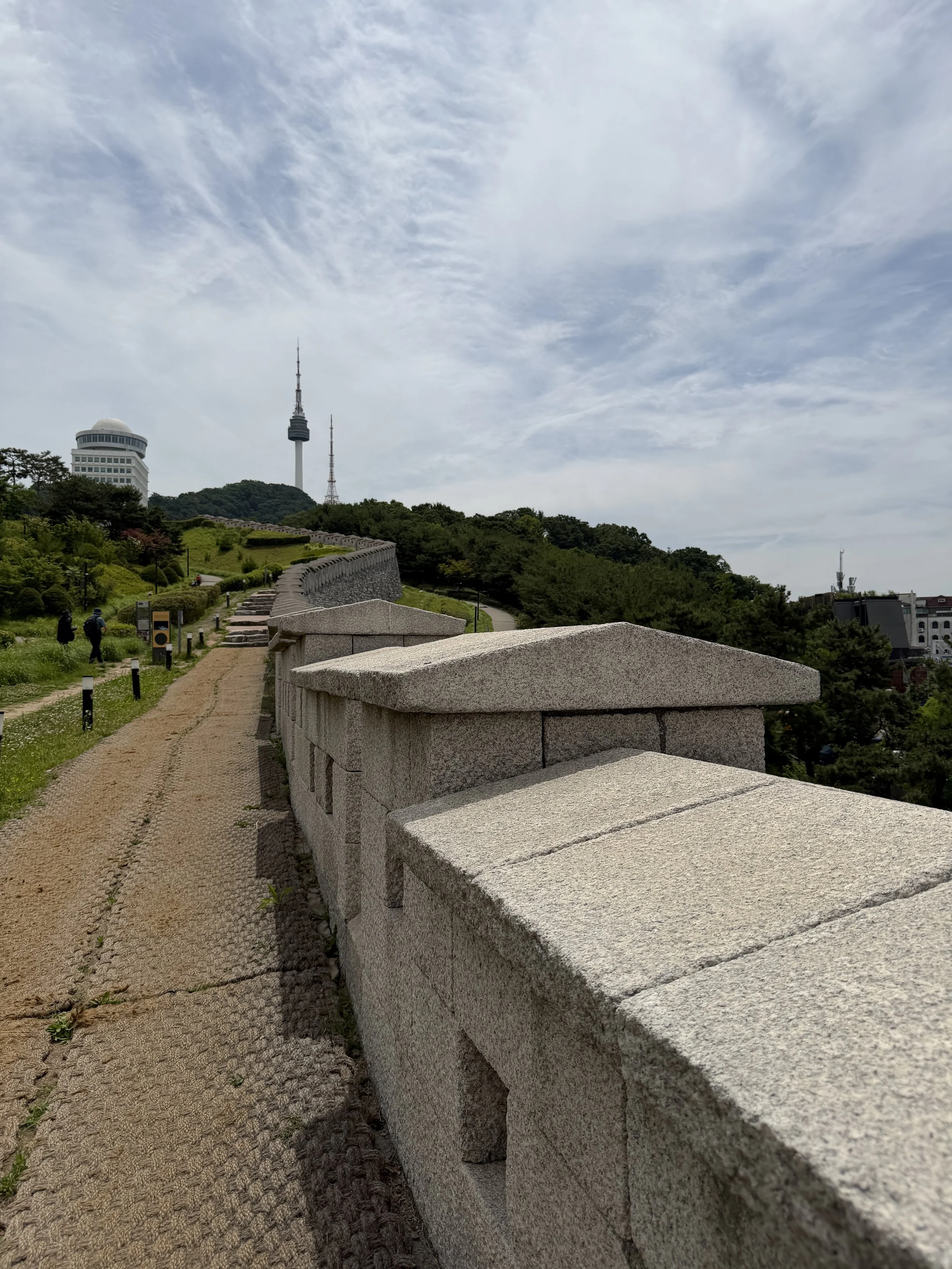
View of Namsan Tower from Namsan trail, Seoul City Wall
The Namsan section begins near Jangchung Arena and winds its way through Namsan Park, one of Seoul's most beloved green spaces.
Known historically as Mongmyeoksan, Namsan rises to 270 meters (886 feet) and has long played an important role in the city's history. During the early Joseon Dynasty, beacon towers were built on the summit to relay messages across the kingdom using smoke and fire signals. Today, visitors are more likely to recognize the mountain as the home of N Seoul Tower.
From 1921 to 1925 during the Japanese colonial period, most of the wall in the area were demolished by the Japanese in order to build the Joseon Shinto Shrine; but due to the preservation and restoration projects conducted since the 1970s and the Namsan recovering project carried out in the mid-1990’s, most of the wall around Namsan have been restored.
This section combines history, nature, and excellent city views, making it one of the most accessible and enjoyable walks along Hanyangdoseong.
Sungnyemun Gate Trail
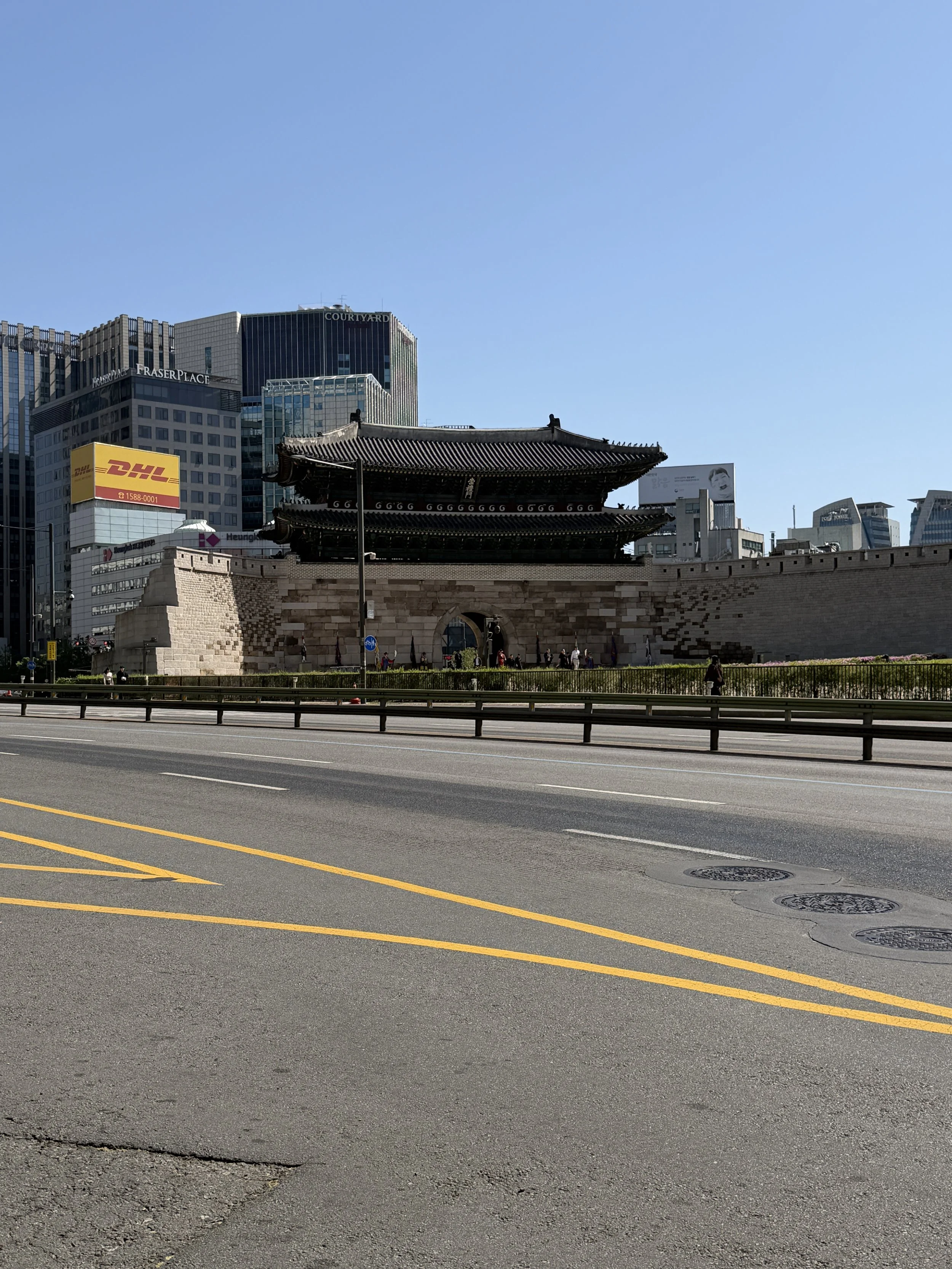
Namdaemun, Seoul
The Sungnyemun section runs from Baekbeom Square past Sungnyemun (Namdaemun Gate), continuing toward the former sites of Souimun and Donuimun Gates.
While Sungnyemun itself is one of Korea's most important historic landmarks, much of the original fortress in this section was demolished and buried in 1914/1915 during the Japanese colonial period, and instead you’ll find memorial plaques in place of the actual gates.
Inwangsan Mountain Trails
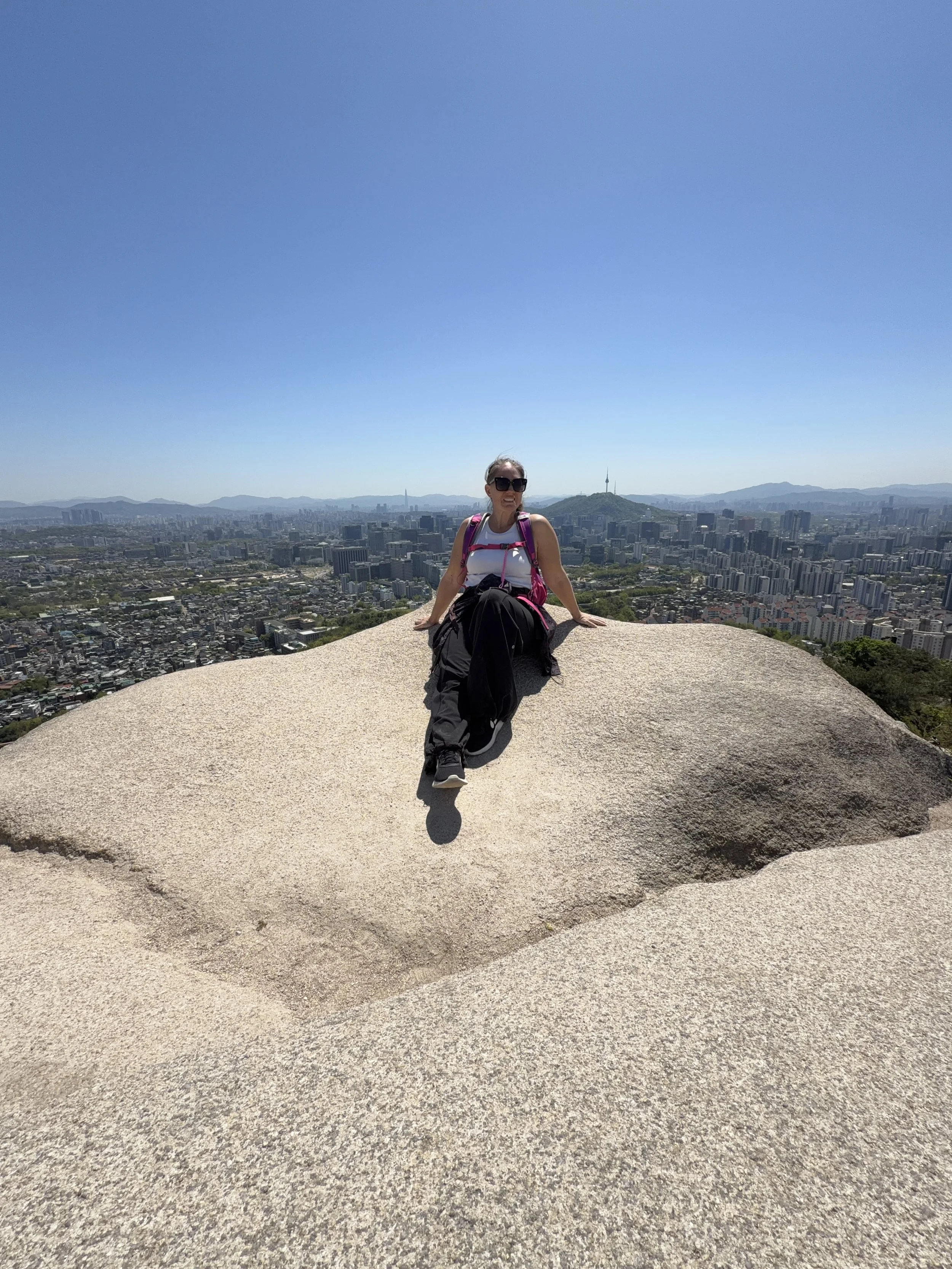
On top of the rock while hiking Inwangsan
Running from the site of Donuimun Gate to Yun Dong-ju Literary Hill, Inwangsan is the most challenging section of the Seoul City Wall and one of its most rewarding.
Rising to 339 meters (1,112 feet), Inwangsan is famous for its dramatic granite peaks and unusual rock formations, including Chimabawi (Skirt Rock), Seonbawi (Meditating Monk Rock), and Gichabawi (Train Rock). Like Baegaksan, access to Inwangsan was restricted after the 1968 North Korean commando infiltration. The mountain remained closed to the public until 1993.
Today, the trail offers some of the most spectacular views anywhere along Hanyangdoseong. It is also the most physically demanding, with steep climbs, rocky terrain, and long staircases. Amenities are limited once you're on the mountain, so be sure to bring water and snacks.
One of my favorite discoveries along this section was the Inwangsan Forest Rest Area, a treehouse-like retreat tucked among the trees along the trail. It was such a unique stop that I ended up writing an entire article about it!
Walking the Trail Sections
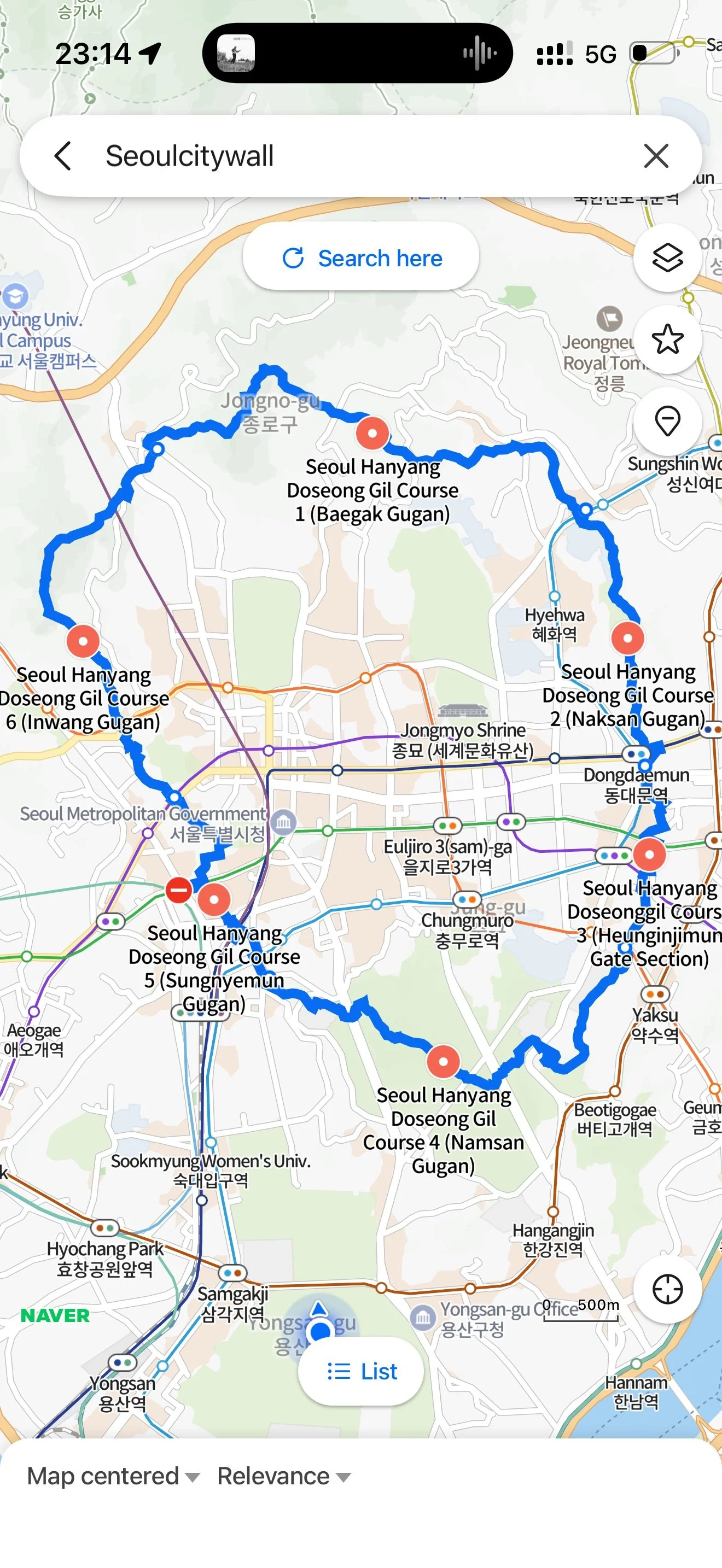
Seoul City Wall route screenshot from Naver
While Hanyangdoseong is divided into six official sections, many hikers combine certain routes into longer walks.
Naksan and Heunginjimun are often grouped together because they're connected by relatively easy urban walking and can comfortably be explored in a single outing. In addition, if you have the stamina and the time, you could easily continue walking the Namsan Trail as well. In the opposite direction, coming down from Baegaksan, you could continue with Naksan and Heunginjimun.
Likewise, Namsan and Sungnyemun are frequently paired together as one route through central Seoul, however, during my own hikes, I paired Sungnyemun with Inwangsan instead. Namdaemun Gate was the easiest starting point for me to reach via public transit that day.
One of the best things about walking the Seoul City Wall is that you don't have to follow the official sections exactly. The route is flexible enough that you can create an itinerary based on your interests, available time, and transportation plans.
It's worth knowing that there is an official Seoul City Wall app that provides information about the various courses, trail sections, and points of interest along Hanyangdoseong. That said once I searched "seoulcitywall" in Naver Maps, I found the entire route in a format that I found easier to follow while actually walking. If you're planning to hike multiple sections, I recommend downloading the official app for background information and historical context, but keeping Naver Maps handy for real-time navigation.
Food and Drinks
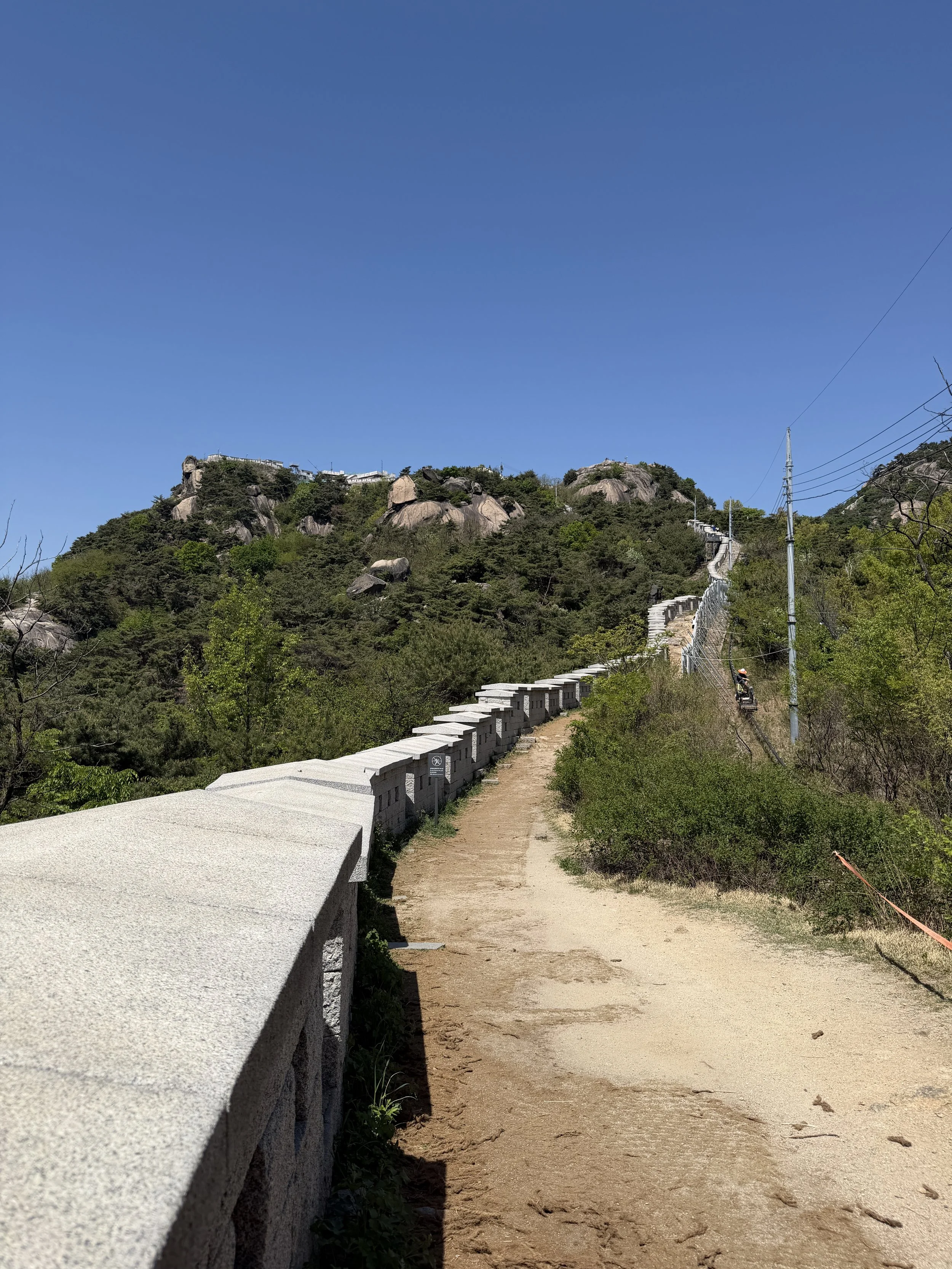
If you're planning to hike Baegaksan or Inwangsan, make sure to bring water and any snacks you might want along the way. Both routes spend most of their time in the mountains, and there aren't many opportunities to stop for food or drinks once you're on the trail. I didn’t bring enough snacks OR water the day I hike Inwangsan and I regretted that. That being said: don’t be a twat and litter. What you carry in, you carry out, do not leave trash behind.
The other sections are much easier in that regard. Naksan, Heunginjimun, Namsan, and Sungnyemun all pass through or alongside busy city streets and neighborhoods where convenience stores, cafés, and restaurants are never far away. If you run low on water or decide you need a coffee break, it's usually easy to find what you're looking for before continuing your walk.
Which Hanyangdoseong Trail Should You Choose?
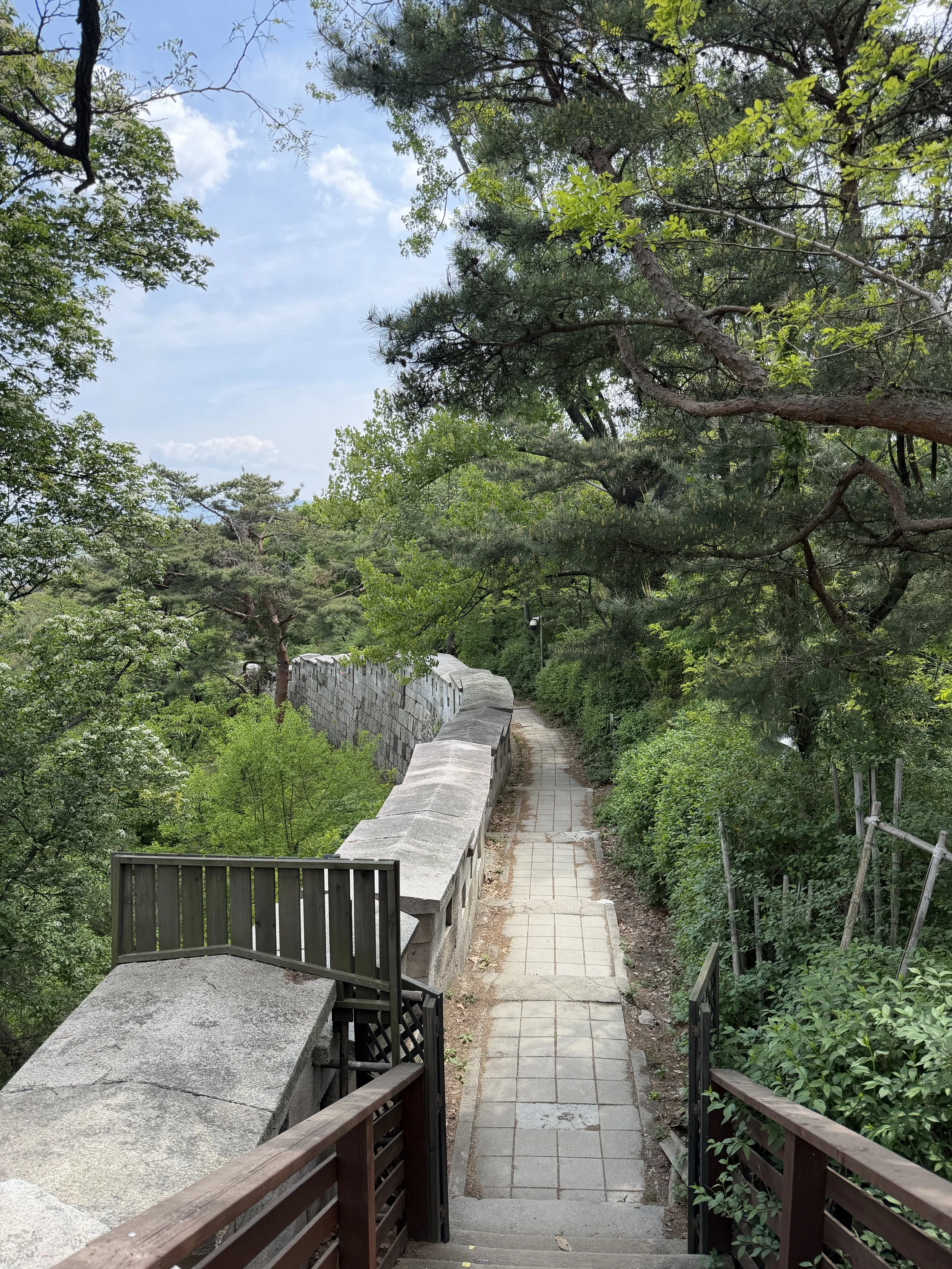
My Favorite: Baegaksan
For the best combination of history, scenery, and preserved city wall sections, Baegaksan is hard to beat.
The Hardest: Inwangsan
Steep climbs and rocky terrain make Inwangsan the most physically demanding section of the route.
Best for Families: Naksan
Gentle grades, easy access, and beautiful city views make Naksan ideal for families and first-time visitors.
If Time Is Limited: Skip Sungnyemun
You’re doing a lot of reading plaques and trying to find the path since everything here was destroyed. While it has historical value, it left A LOT to the imagination.
Continue Exploring the Seoul City Wall
If you'd like to explore more sections of the Hanyangdoseong, I've written guides for the other Seoul City Wall hikes as well. Each course offers a completely different experience, from the rugged granite peaks of Inwangsan to the forested slopes of Baegaksan and the scenic climb up Namsan.
You can start with my complete overview of the Hanyangdoseong, which includes the history of the wall, information on all six hiking courses, and tips for planning your own journey around Seoul's 18.6-kilometer fortress.
Read next:
Whether you're hiking a single section or working toward completing the entire route, the Seoul City Wall offers one of the best ways to experience Seoul's history, mountains, and neighborhoods all in a single journey.
I think that the Seoul City Wall is one of the most underrated attractions in Seoul. While many visitors focus on palaces, shopping districts, and observation decks, Hanyangdoseong offers something entirely different: the opportunity to experience more than six centuries of Korean history while walking through some of the city's most beautiful landscapes.