Hiking Seoul City Wall: Sungnyemun Gate & Inwangsan Trails
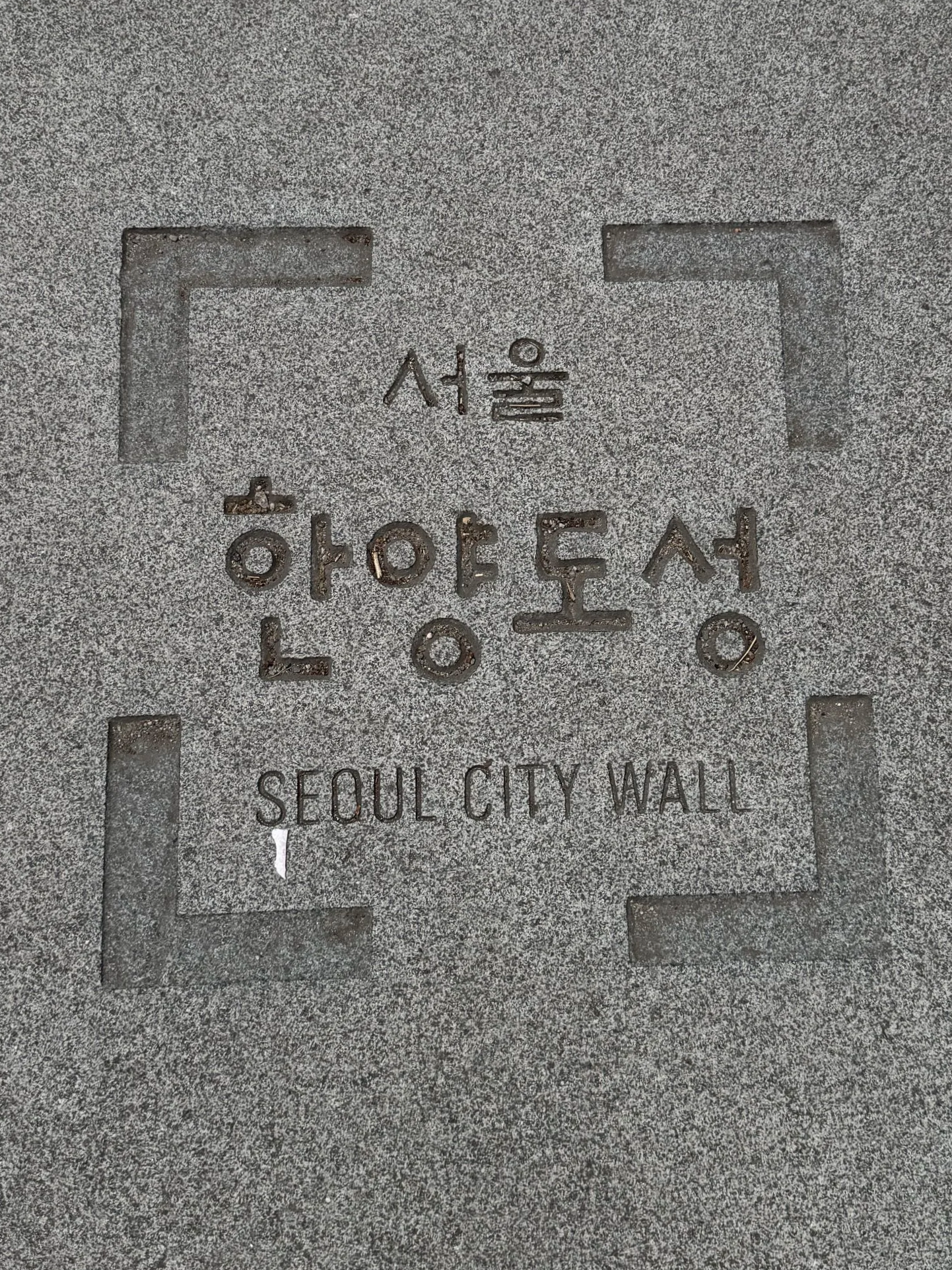
The Seoul City Wall, officially known as Hanyangdoseong, circles the historic heart of Seoul and offers one of the city's most unique hiking experiences. While many visitors explore only a short section of the wall, hiking each trail reveals a different side of Seoul's history, landscape, and culture.
Hiking Hanyangdoseong has been on my Korea bucket list for years, and in April I finally put in the effort to complete it. I should have done it sooner. April turned out to be a fantastic month for these hikes - not too hot, not too cold, and I was lucky enough to have fantastic air quality and beautiful blue-sky days for nearly every trail.
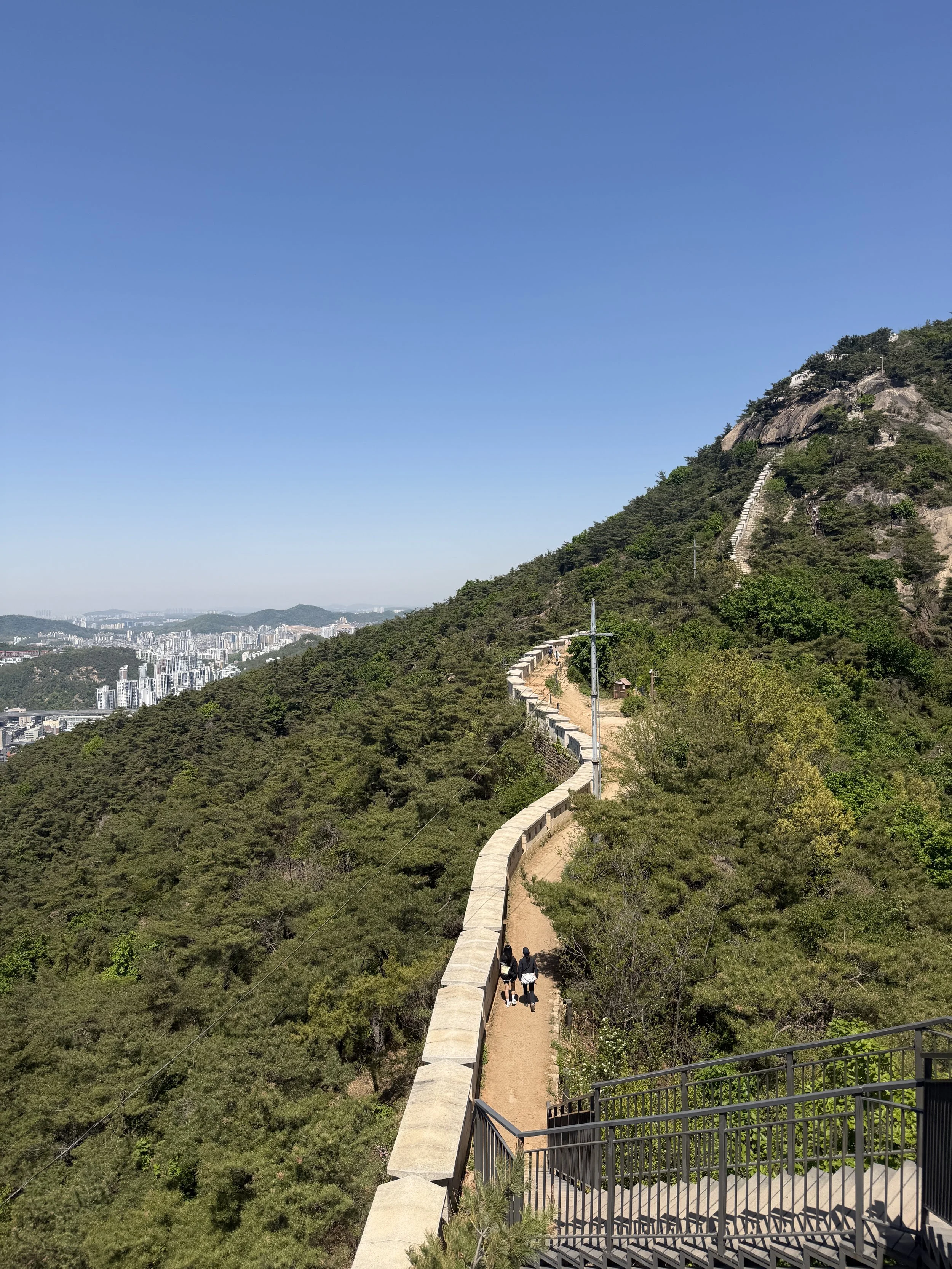
The trail between Inwangsan peaks
Many people combine the Sungnyemun section with Namsan - in fact that’s how the Seoul City Wall website lists them, but Namdaemun was the easiest starting point for me, so I paired it with Inwangsan instead. I had overly ambitious plans for the day and expected to hike both Inwangsan and Baegaksan. That didn't happen. I was completely unprepared in more ways than one, and honestly, after completing every section of the wall, I don't think I'd recommend tackling both in a single day anyway. Inwangsan and Baegaksan are two of the most memorable trails along Hanyangdoseong, and each deserves time to be enjoyed on its own.
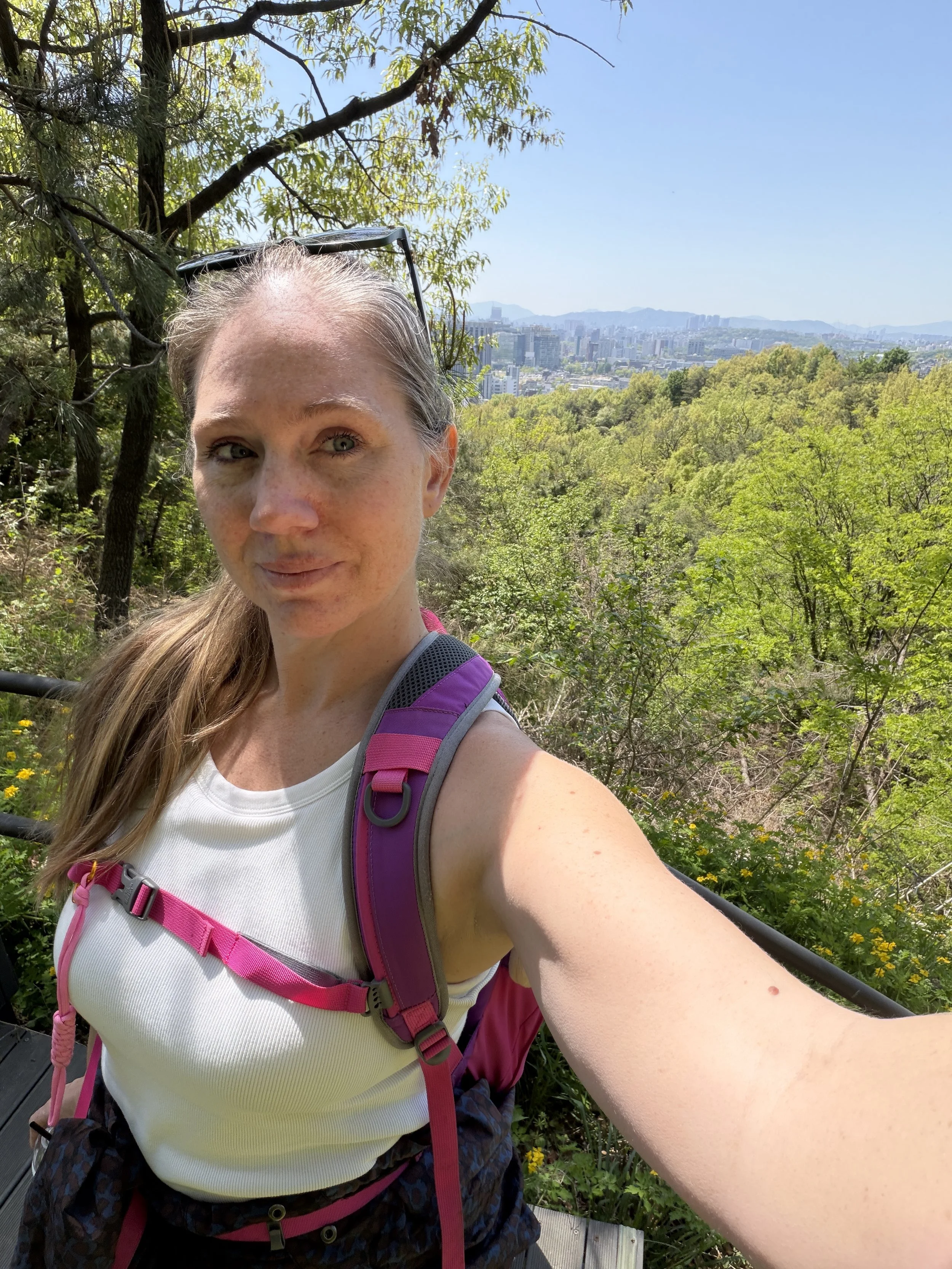
I waited until I had completed every section of the Seoul City Wall before writing this blog series so I could compare the trails from experience. Whether you're hoping to hike a single section or tackle the entire route, I hope these guides help you decide where to start and inspire you to experience all of Hanyangdoseong for yourself!
Sungnyemun Gate Trail: Following the Route of a Lost Wall
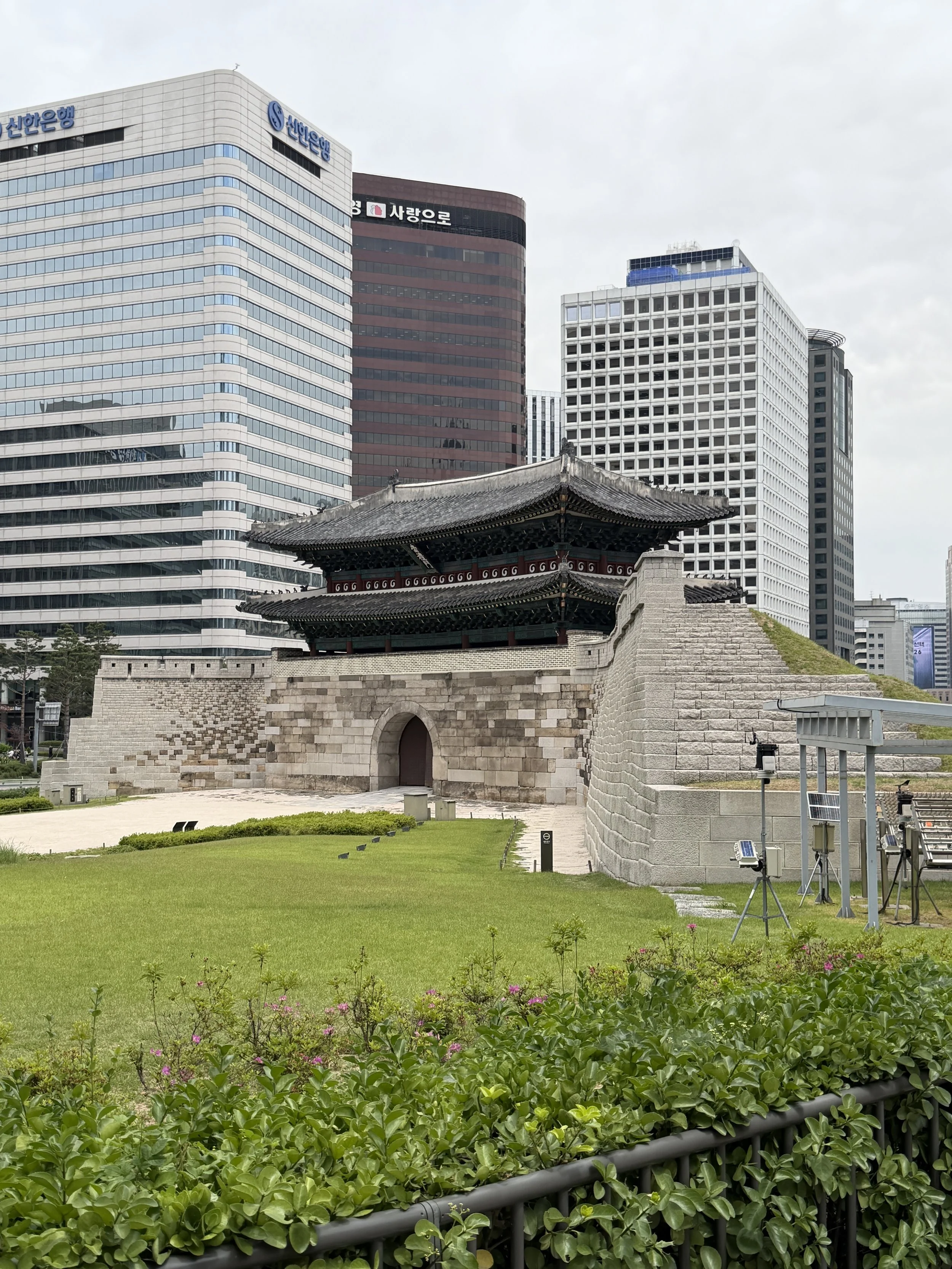
Sungnyemun Gate, also known as Namdaemun, historic southern gate of Seoul City Wall
Sungnyemun Trail Information
Distance: Approximately 1.8 km (1.1 miles)
Time Required: About 1 hour
Difficulty: Easy
Best For: History lovers and hikers connecting to other sections of the wall
Hours: Namdaemun is open year round, 09:00~18:00 Summer (June ~ Aug.) 09:00~18: 30 / Winter (Nov. ~ Jan.) 09:00~17:30.
Namdaemun is closed on Monday’s
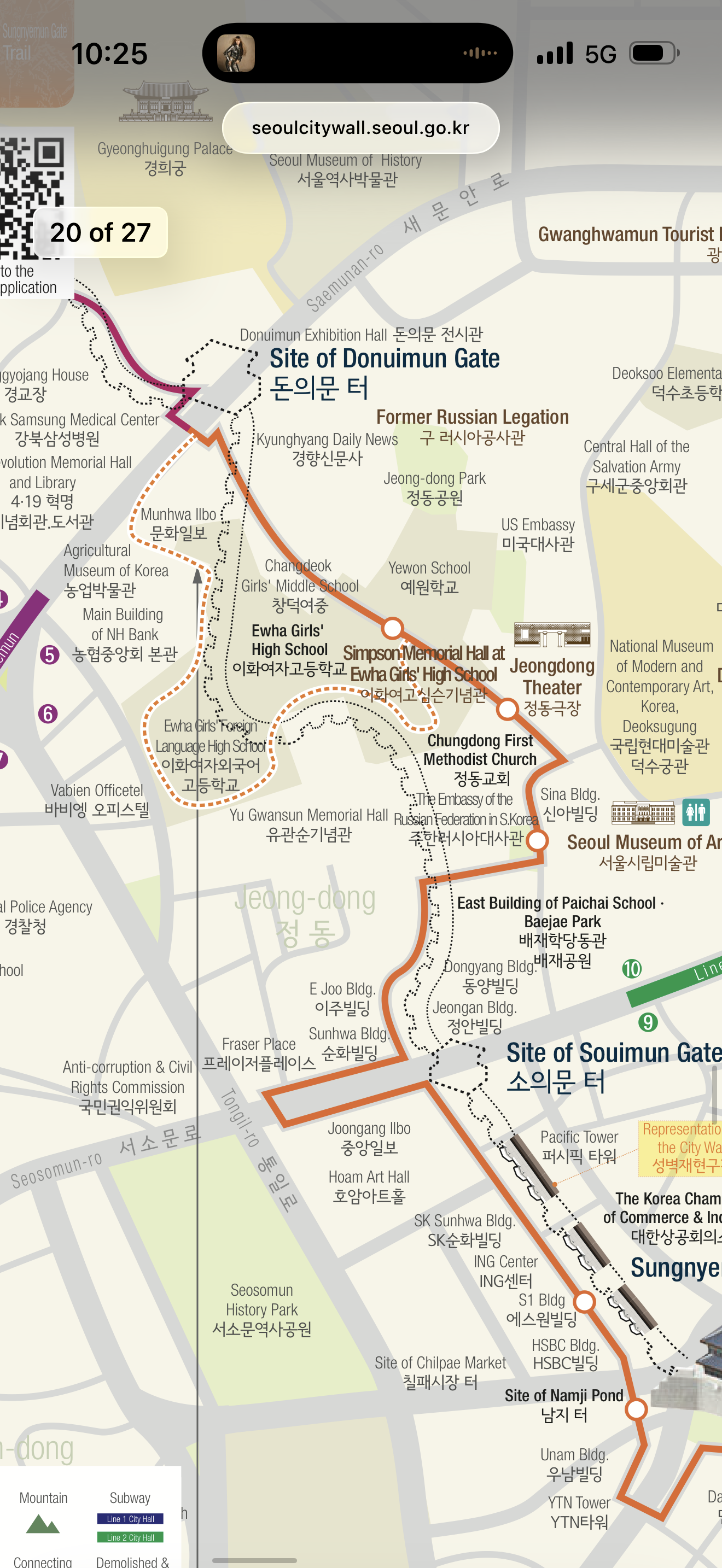
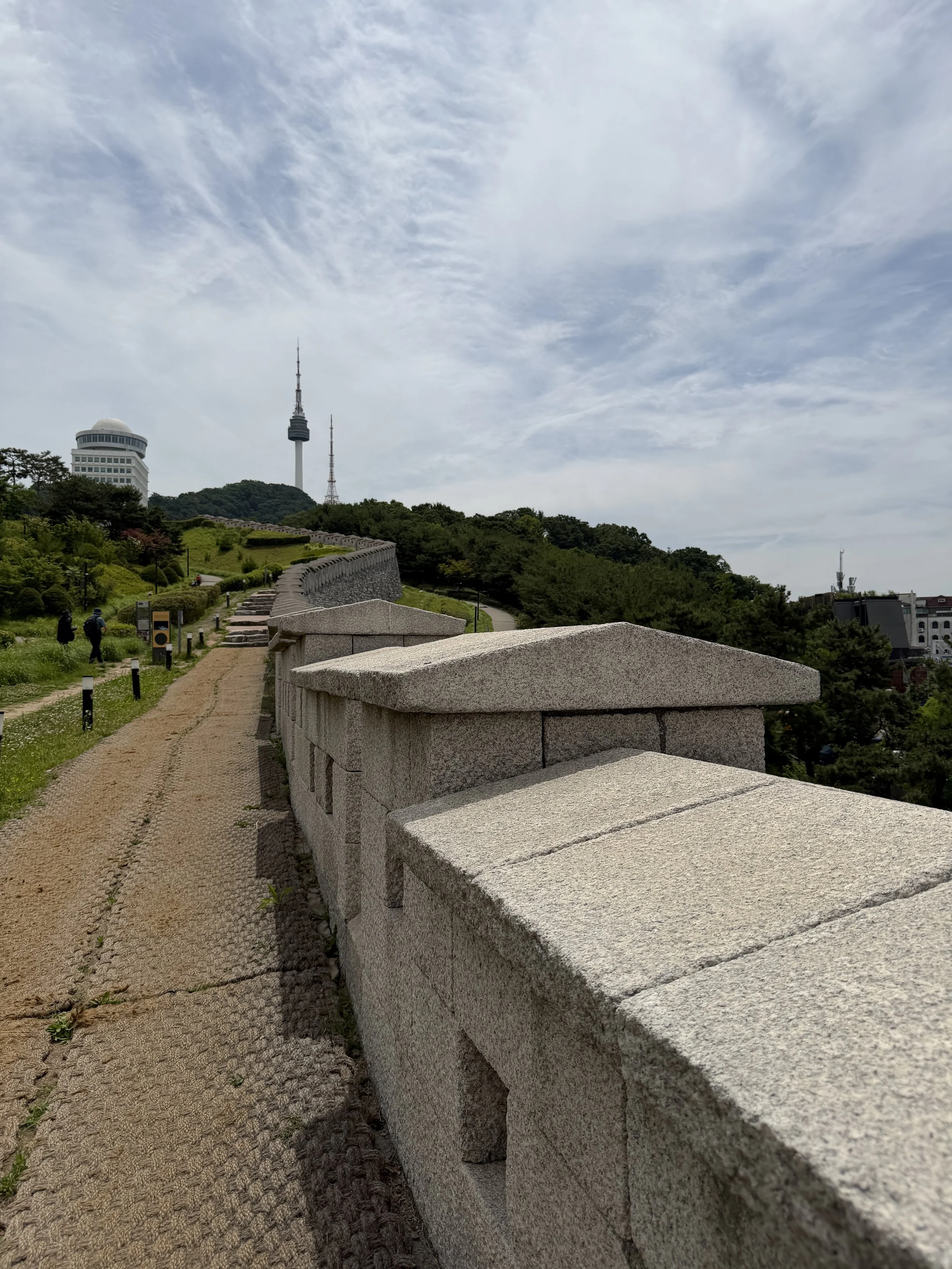
Of all six sections of the Seoul City Wall, the Sungnyemun Gate Trail is the easiest to skip. Unlike the mountain trails where the stone fortifications remain clearly visible, most of the original has been destroyed. In fact, the remains can only be seen in the street between The Korea Chamber of Commerce & Industry and the Pacific Tower.

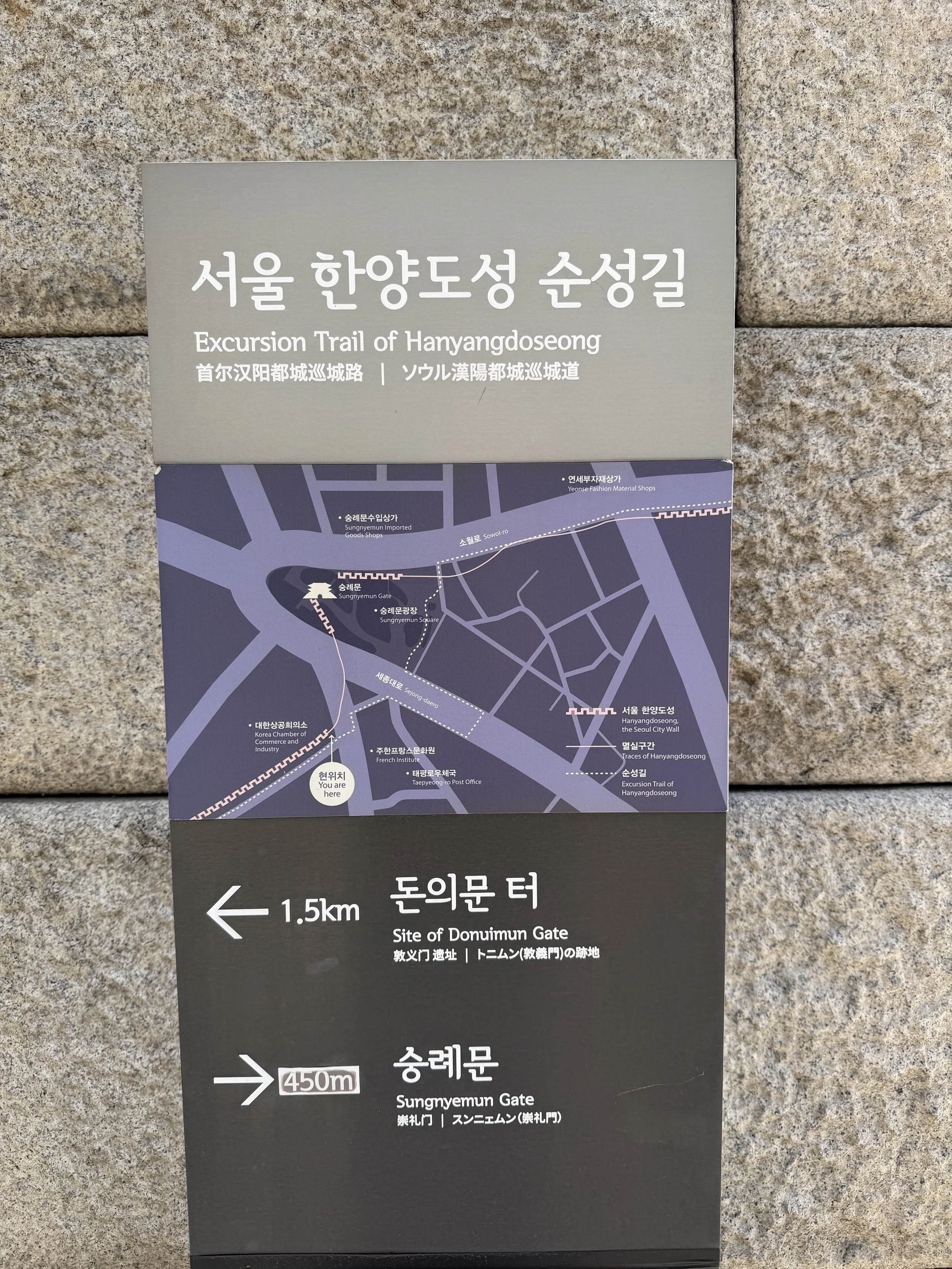
There’s a good chance that you’ve walked these sidewalks without even realizing that you’re walking past the historical wall! Today, the route follows city streets, parks, and historical markers that trace where the wall once stood.
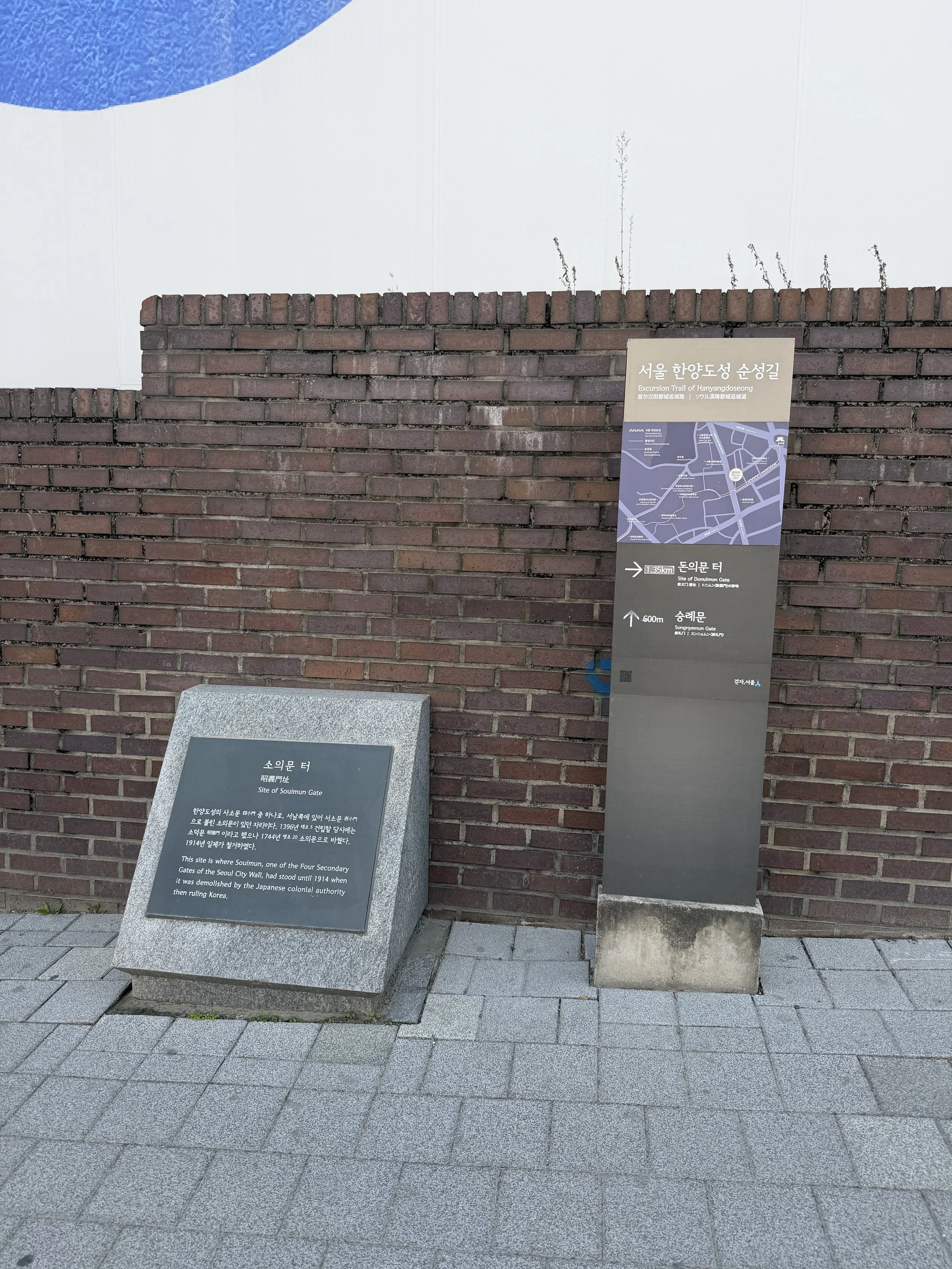
The plaque denoting the Site of Soimun Gate
The highlight is Sungnyemun Gate, better known as Namdaemun. Completed in 1398 during the Joseon Dynasty, it served as the primary southern entrance to the capital and remains one of Seoul's most important historic landmarks. While the surrounding wall largely disappeared, the gate itself has survived several rebuilds over centuries of change and continues to stand as a reminder of Seoul's past.
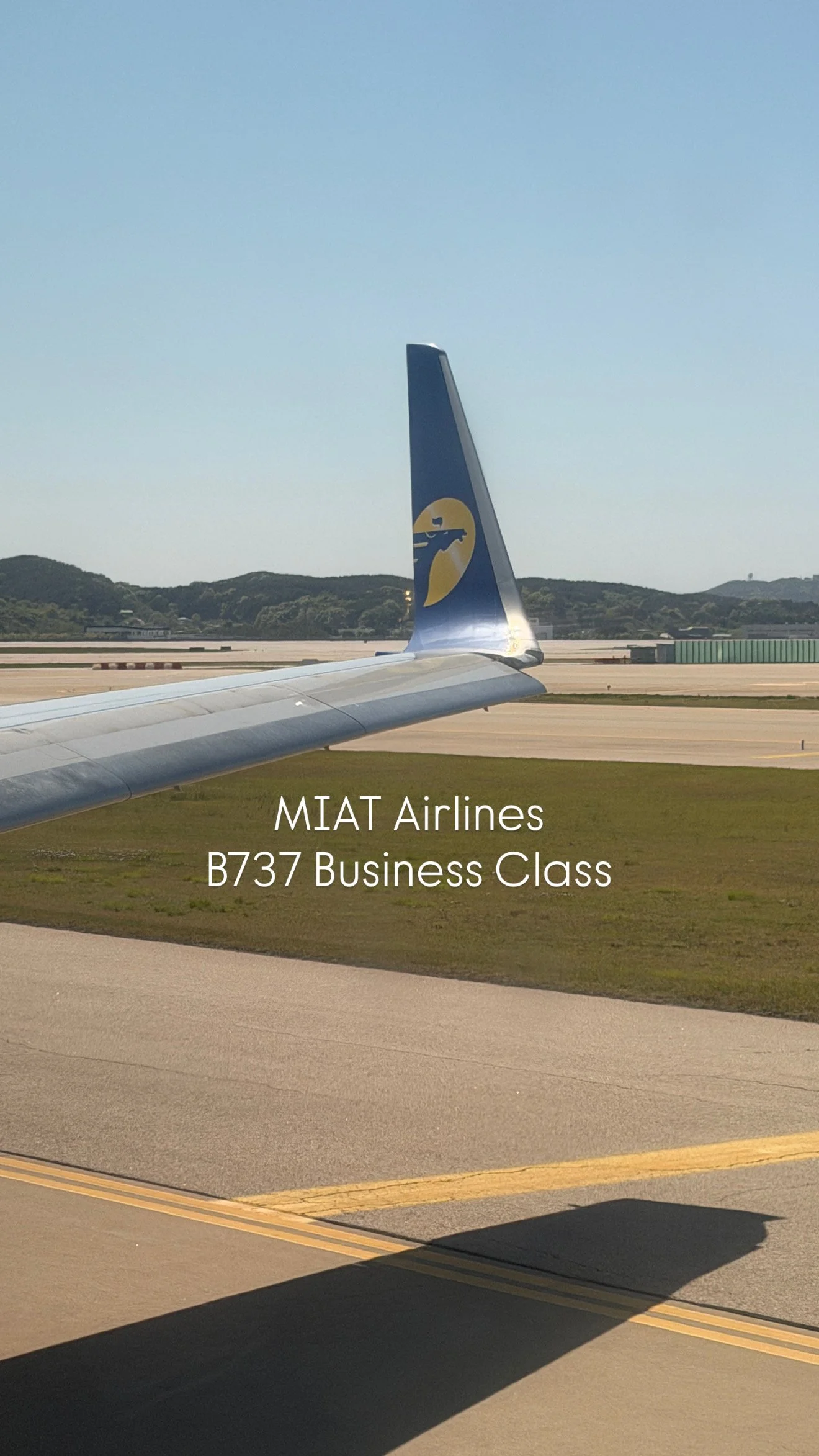
For me, this section was a practical starting point. Coming from Pyeongtaek on public transportation, arriving at Namdaemun made it easy to begin my day and work west toward Inwangsan.

If you’re not looking for it, it’s easy to miss the location of Soimun Gate. This small auxiliary gate once served funeral processions leaving the city and during Joseon, public executions were carried out in the large yard located outside Souimun Gate. The gate itself no longer exists, but a plaque marks its former location along the trail. (As of April 2026, there is a ton of construction happening around this area, which made this even less noticeable.)
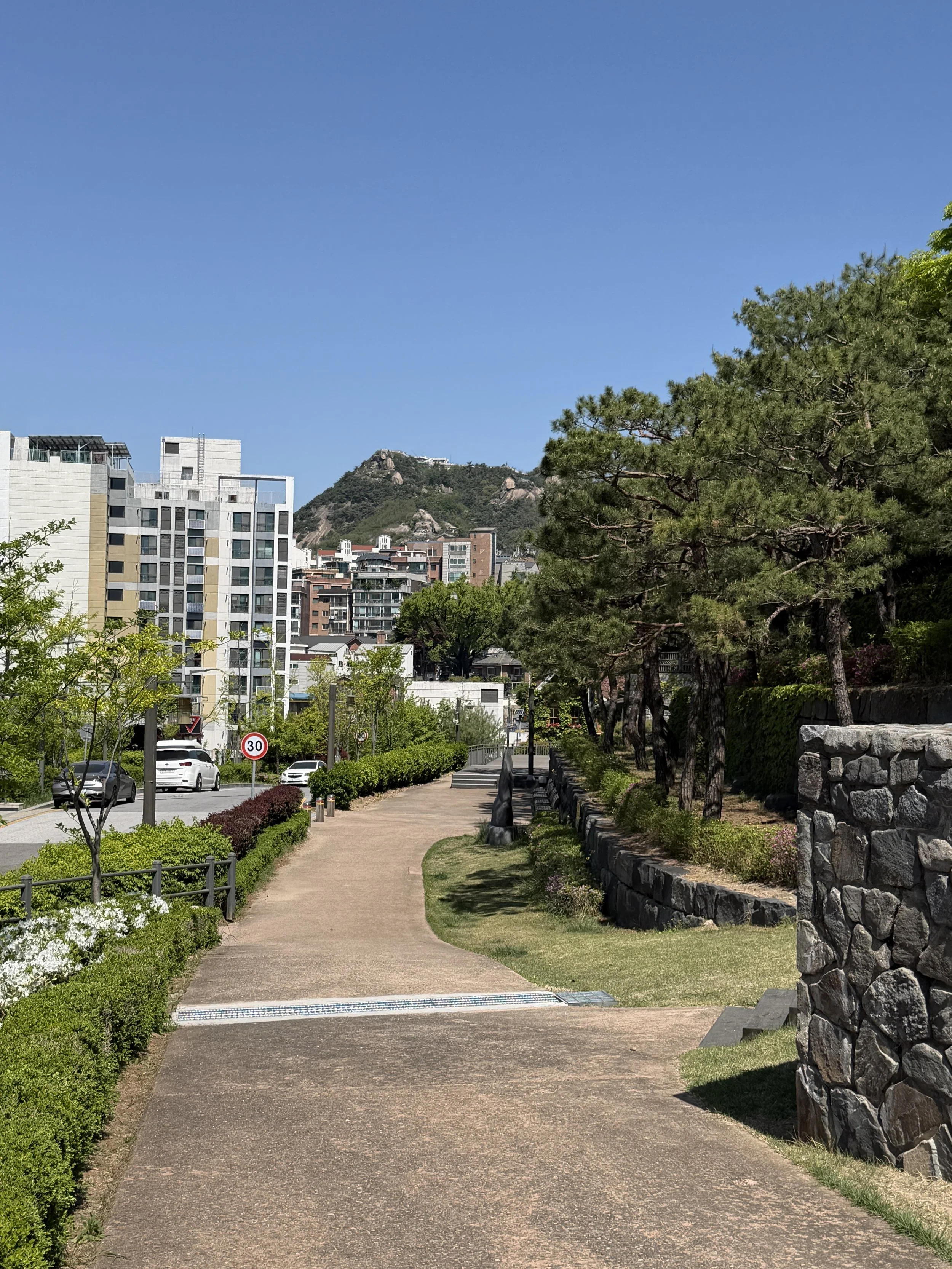
Heading towards Inwangsan!
Because so little of the original wall remains, this was actually the section where I found navigation most challenging. On several occasions I stopped to double-check my route. If you're planning to walk this section, I recommend searching "seoulcitywall" instead of using the Seoul City Wall app.

This is the point where the Sungnyewmun Trail and Inwangsan Trail meet
The good news is that you're never far from convenience stores, restaurants, cafés, or public restrooms. Unlike the mountain sections, supplies are easy to find throughout the route.
Inwangsan Trail: The Most Challenging Trail
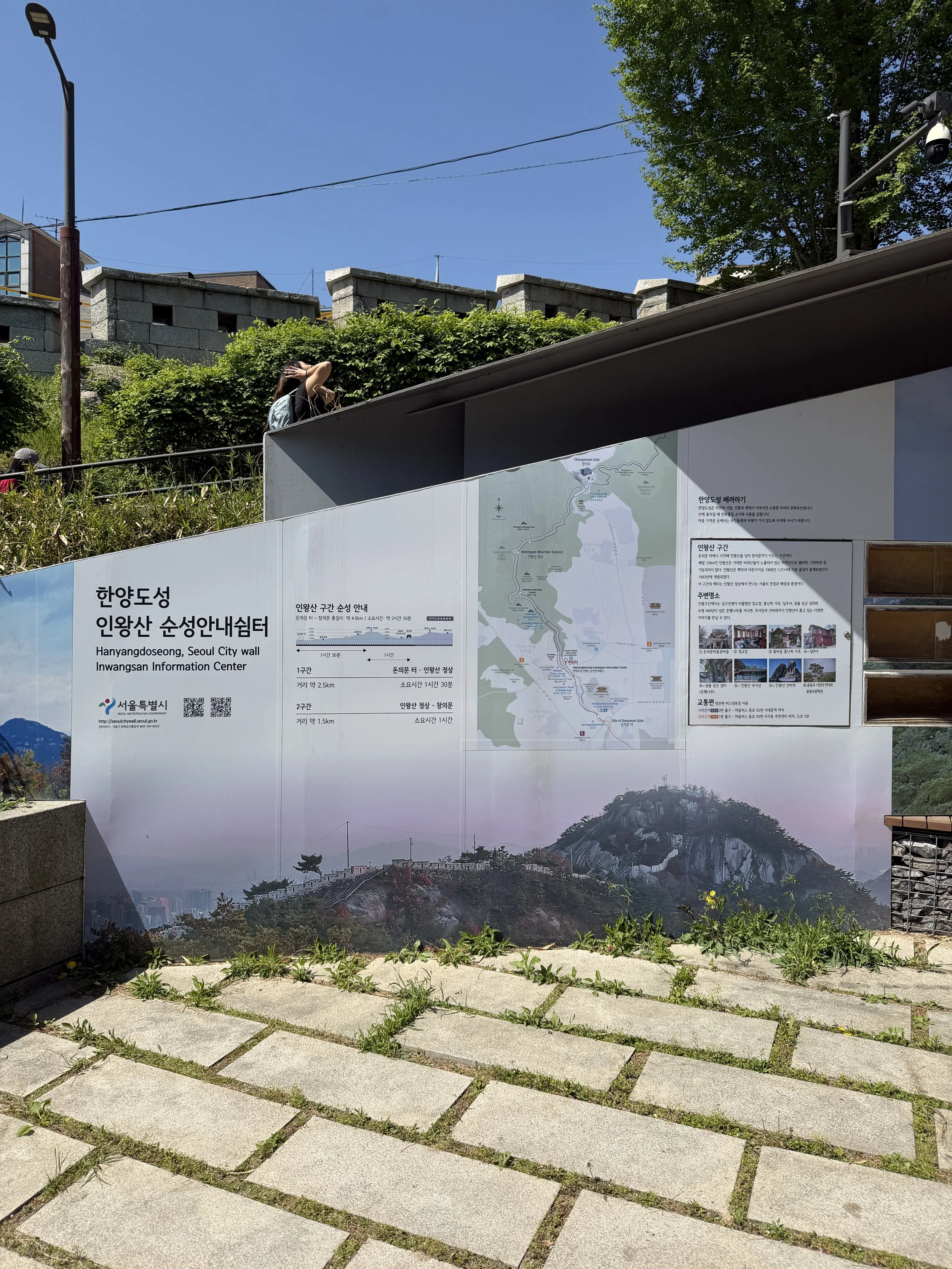
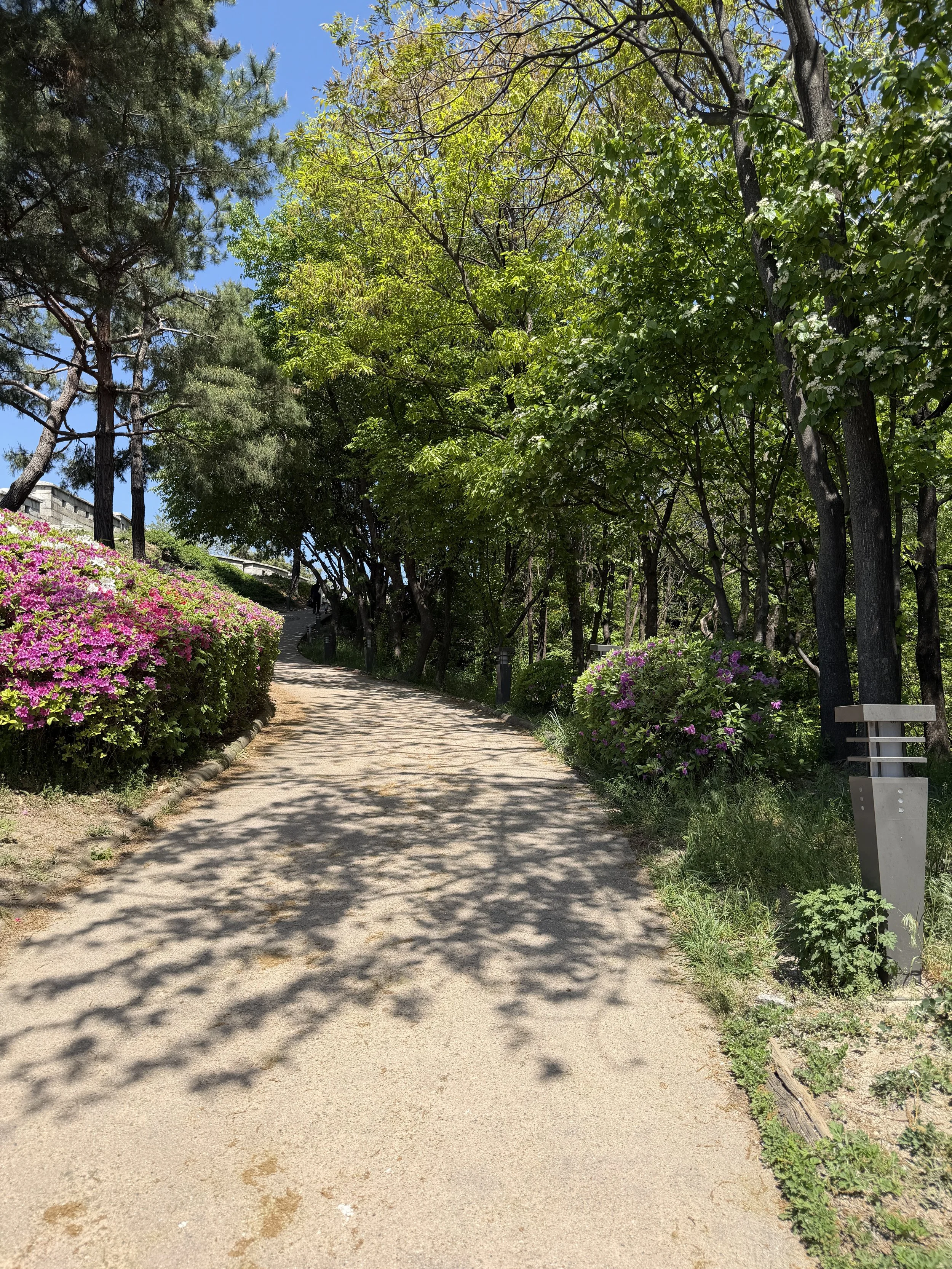
Inwangsan Trail Information
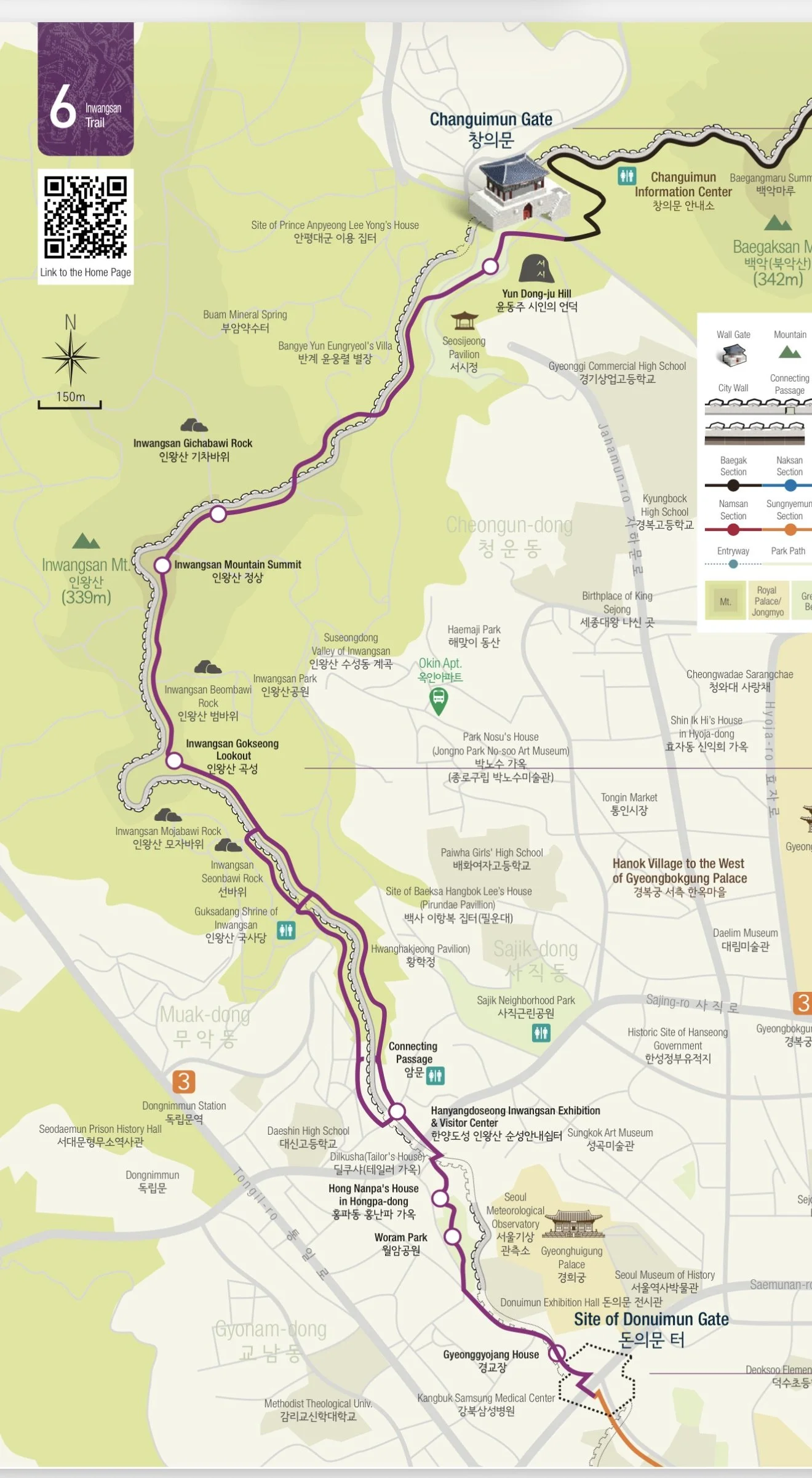
Distance: Approximately 4 km (2.5 miles)
Time Required: 2–3 hours
Difficulty: Difficult
Best For: Experienced hikers, photographers, history enthusiasts, and visitors seeking the most dramatic Seoul City Wall experience
Bring: Water, snacks, sun protection, and sturdy footwear
This trail is open 24/7
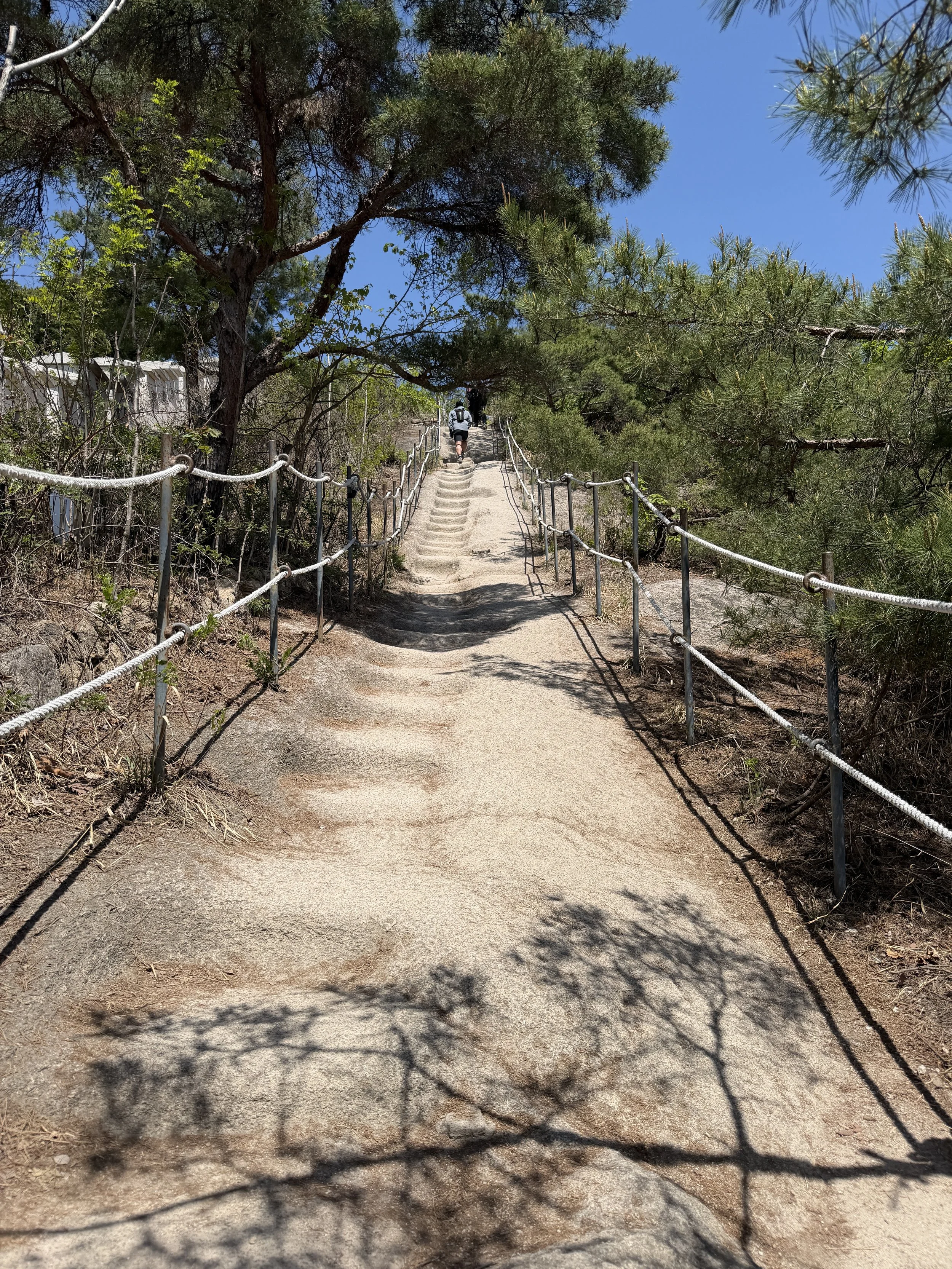
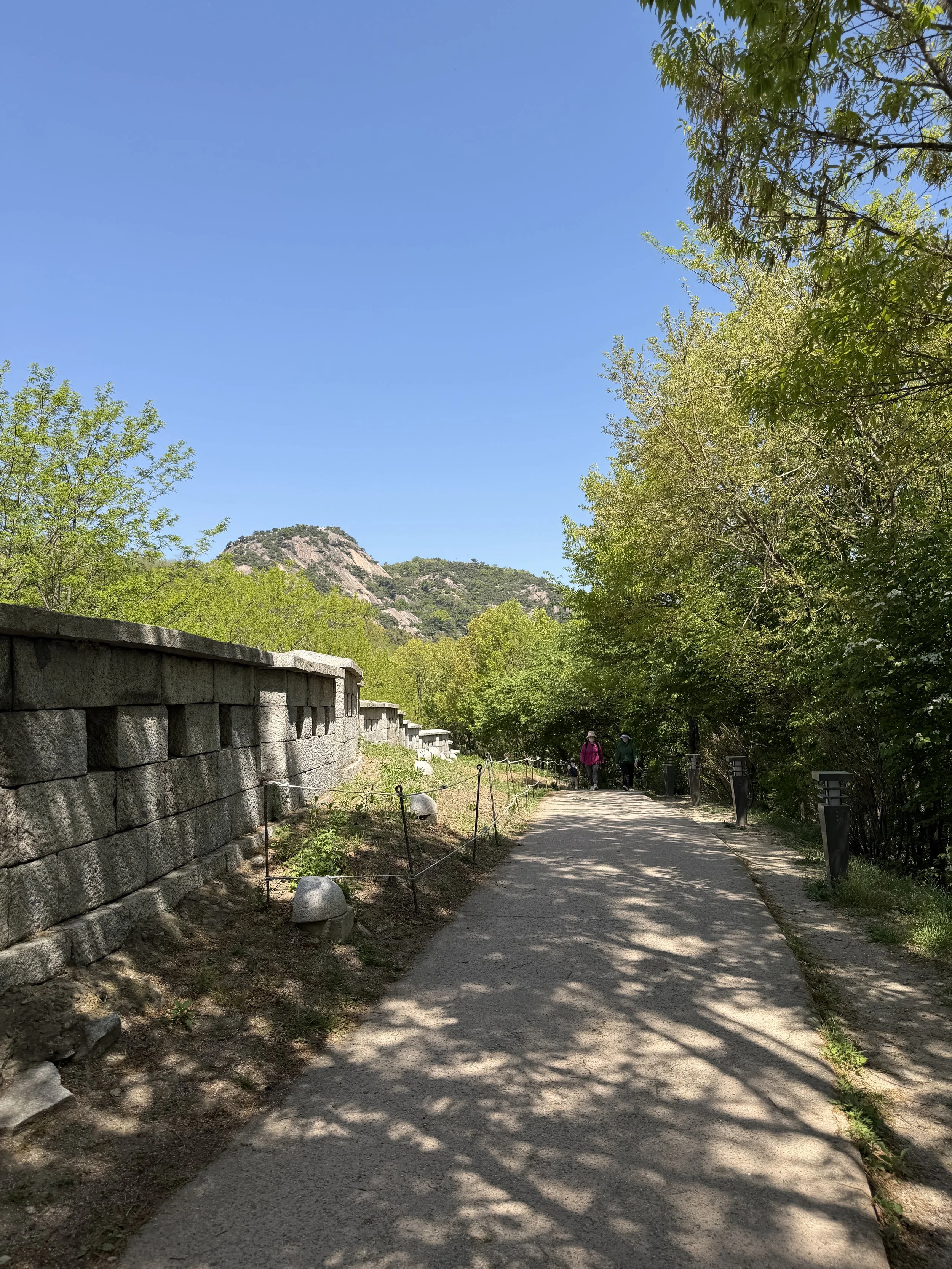
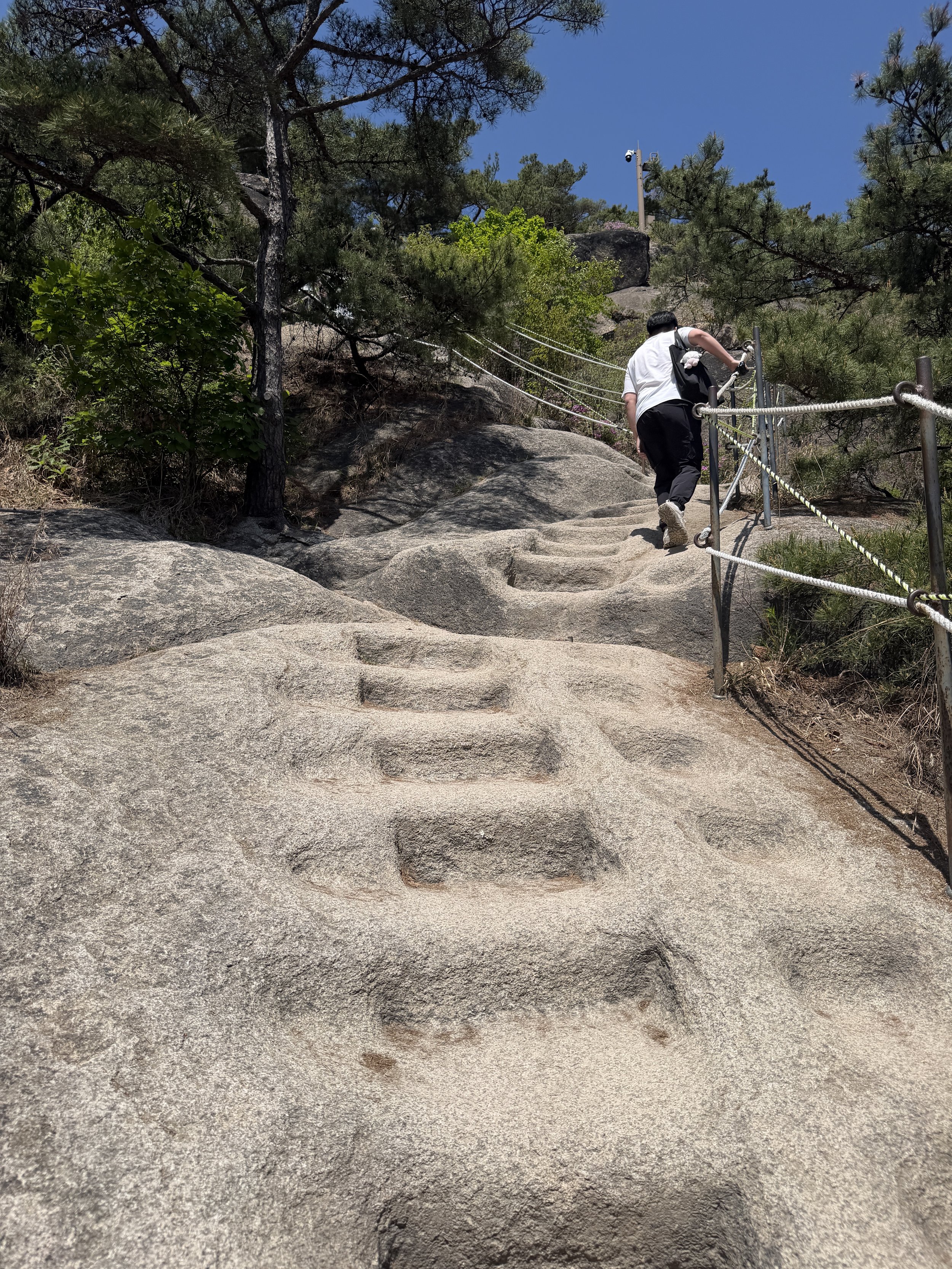
Much of the trail was like this
If the Sungnyemun section requires imagination, Inwangsan is where the trail truly comes alive.
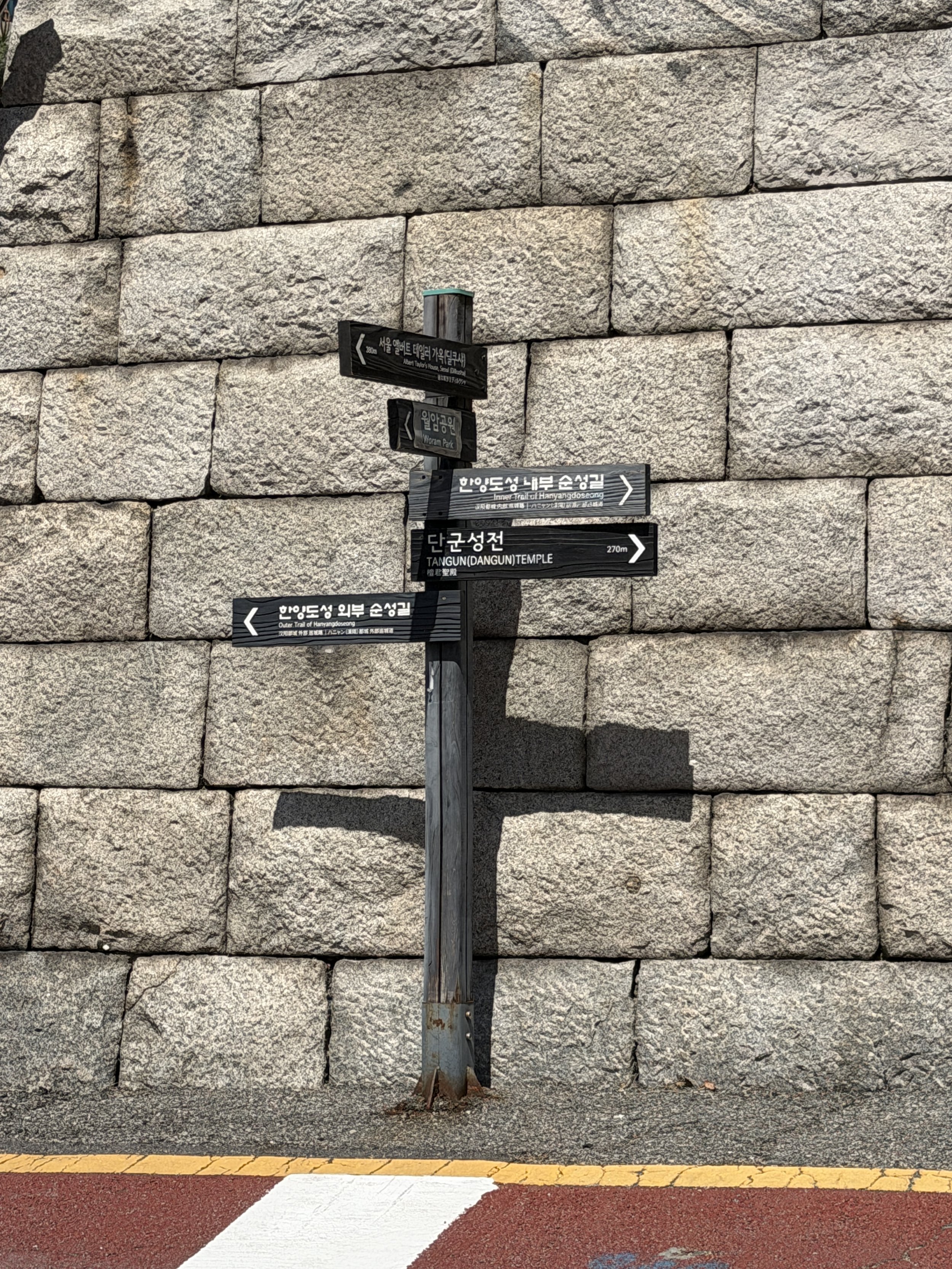
Stretching from the site of Donuimun Gate to Changuimun Gate, the trail climbs directly over the granite ridges of Inwangsan Mountain. Here, the ancient stone walls wind across exposed rock faces and steep slopes, creating one of the most dramatic hiking experiences anywhere in Seoul. You can walk the inner trail or the outer trail. I chose to walk the inner trail which ended up being mostly stairs. From a friend, I’ve heard that one trail is stairs and one follows the landscape, so keep that in mind!
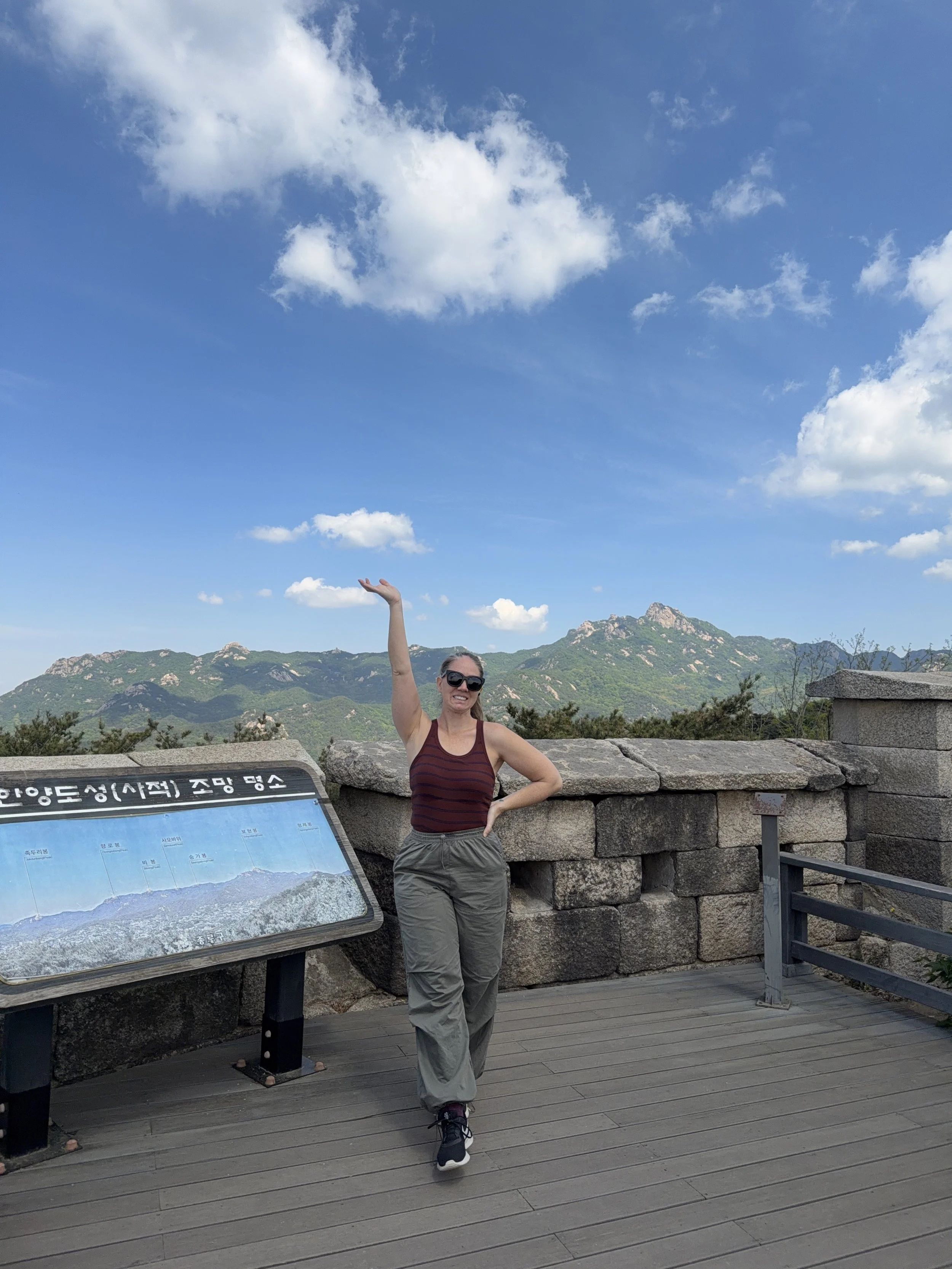
Inwangsan is known for its distinctive granite landscape and unusual rock formations. As you hike, you'll pass or spot famous landmarks including Chimabawi (Skirt Rock), Seonbawi (Meditating Monk Rock), and Gichabawi (Train Rock). When I was there in April 2026, several of the lookout points were under construction and you couldn’t access all of the rocks. The mountain's name itself comes from a Buddhist term, and according to local tradition, the monk Muhak (1327–1405), an advisor to King Taejo and one of the most influential Buddhist figures of the early Joseon Dynasty, predicted that if Inwangsan became one of the country's principal mountains, Buddhism would flourish there.
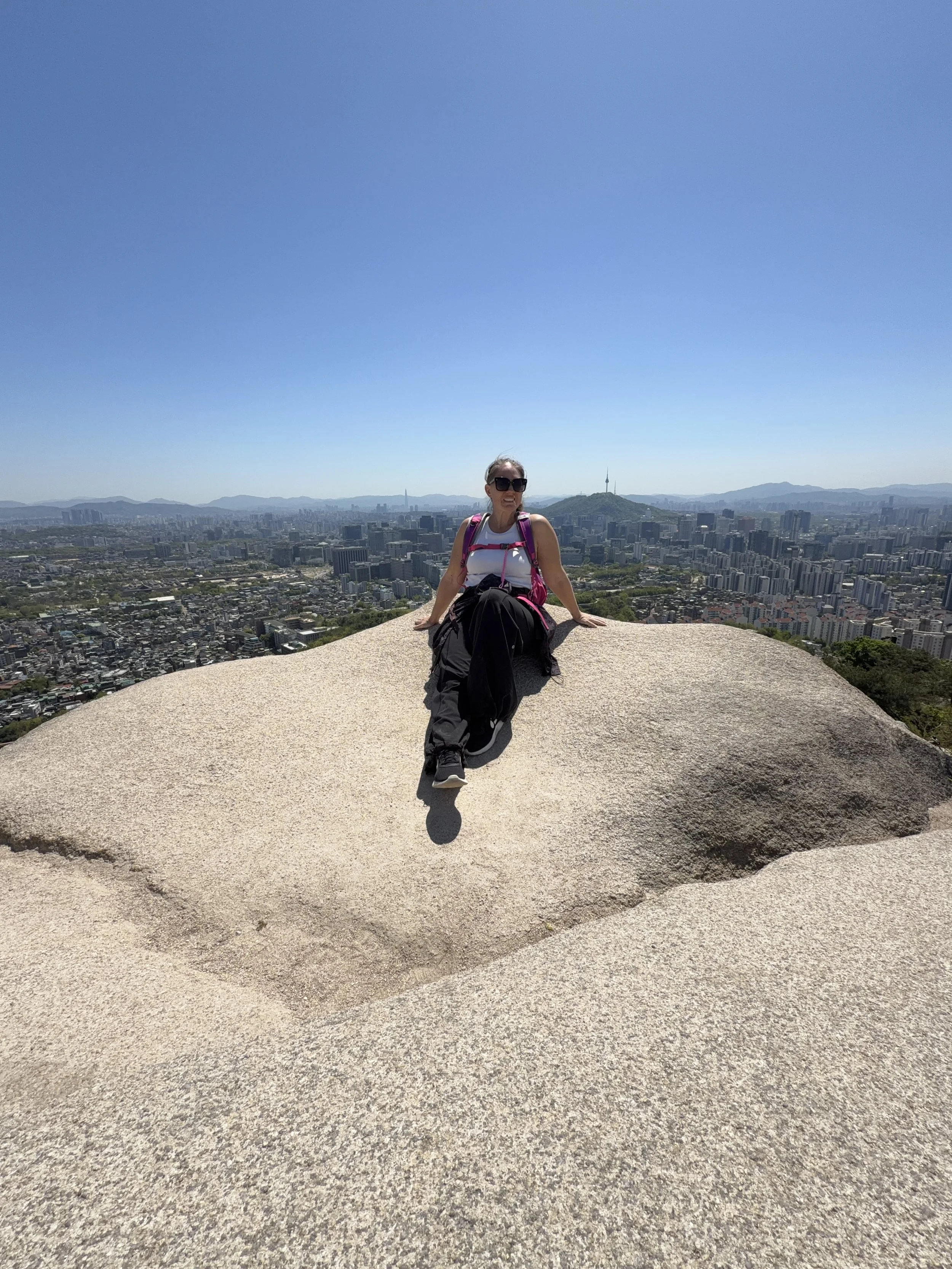
On top of one of the rocks on Inwangsan
This western section of Hanyangdoseong was designed to take advantage of Inwangsan's natural defenses. Rather than leveling the landscape, builders incorporated the mountain itself into the fortifications. More than six centuries later, hikers can still follow the same ridgelines while enjoying panoramic views across the city below.
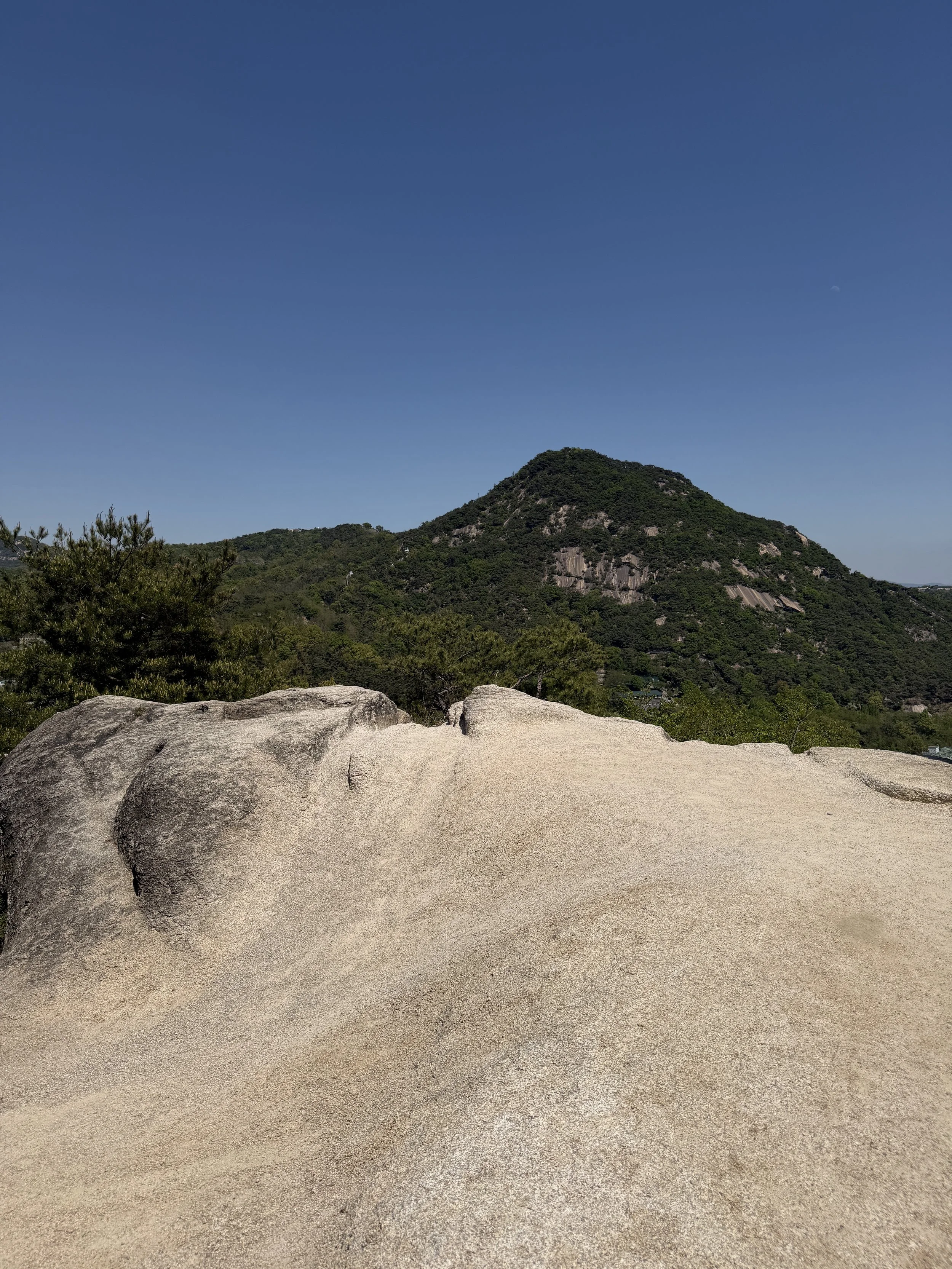
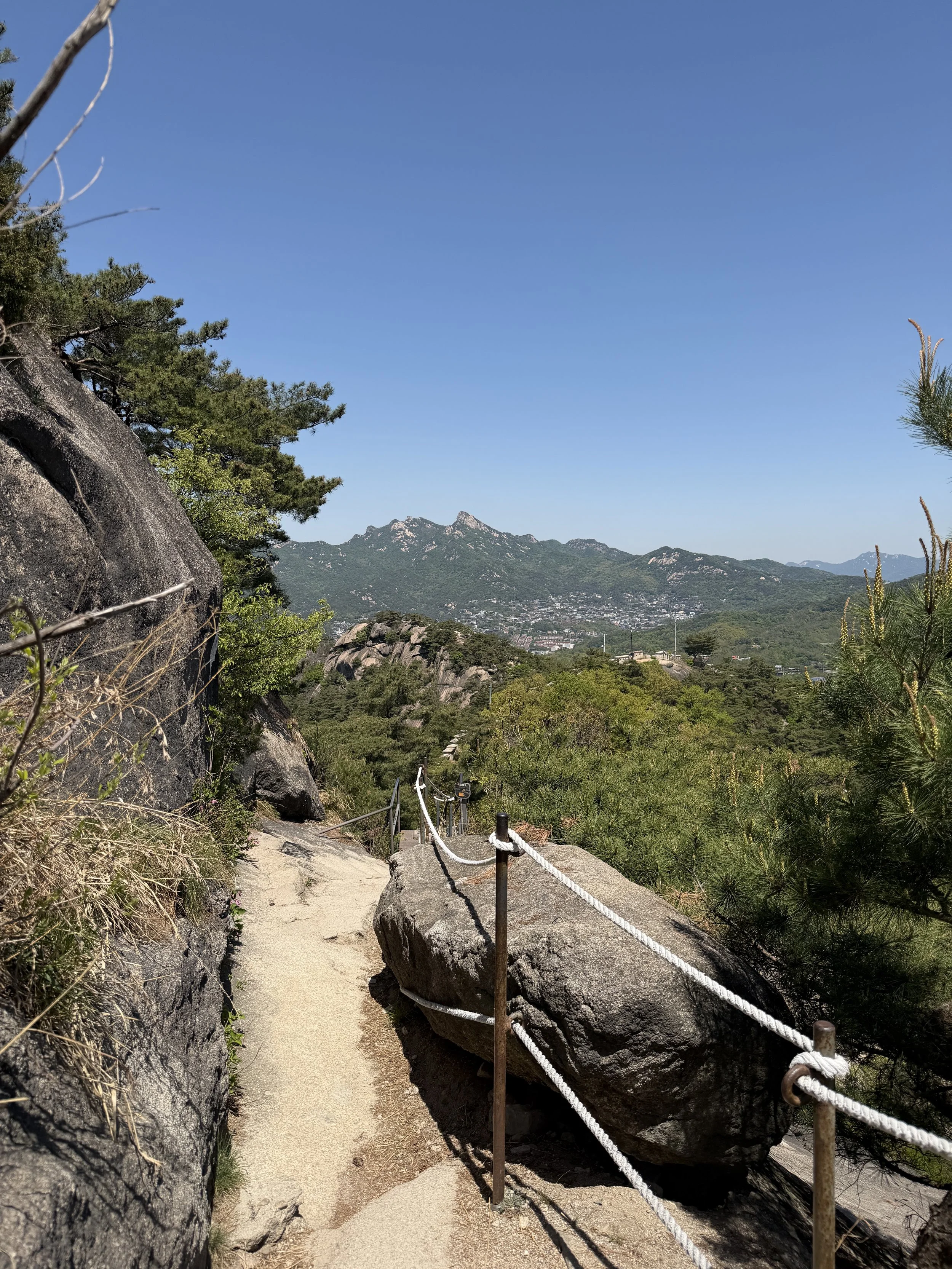
The mountain also played a role in modern Korean history. Following the January 21, 1968 infiltration attempt by North Korea, access to Inwangsan was heavily restricted because of its proximity to the Blue House.
Large portions of the mountain remained off-limits to the public for decades and were not fully reopened until 1993. Today, hikers can freely explore trails that were once considered sensitive security areas, making the experience feel even more remarkable.
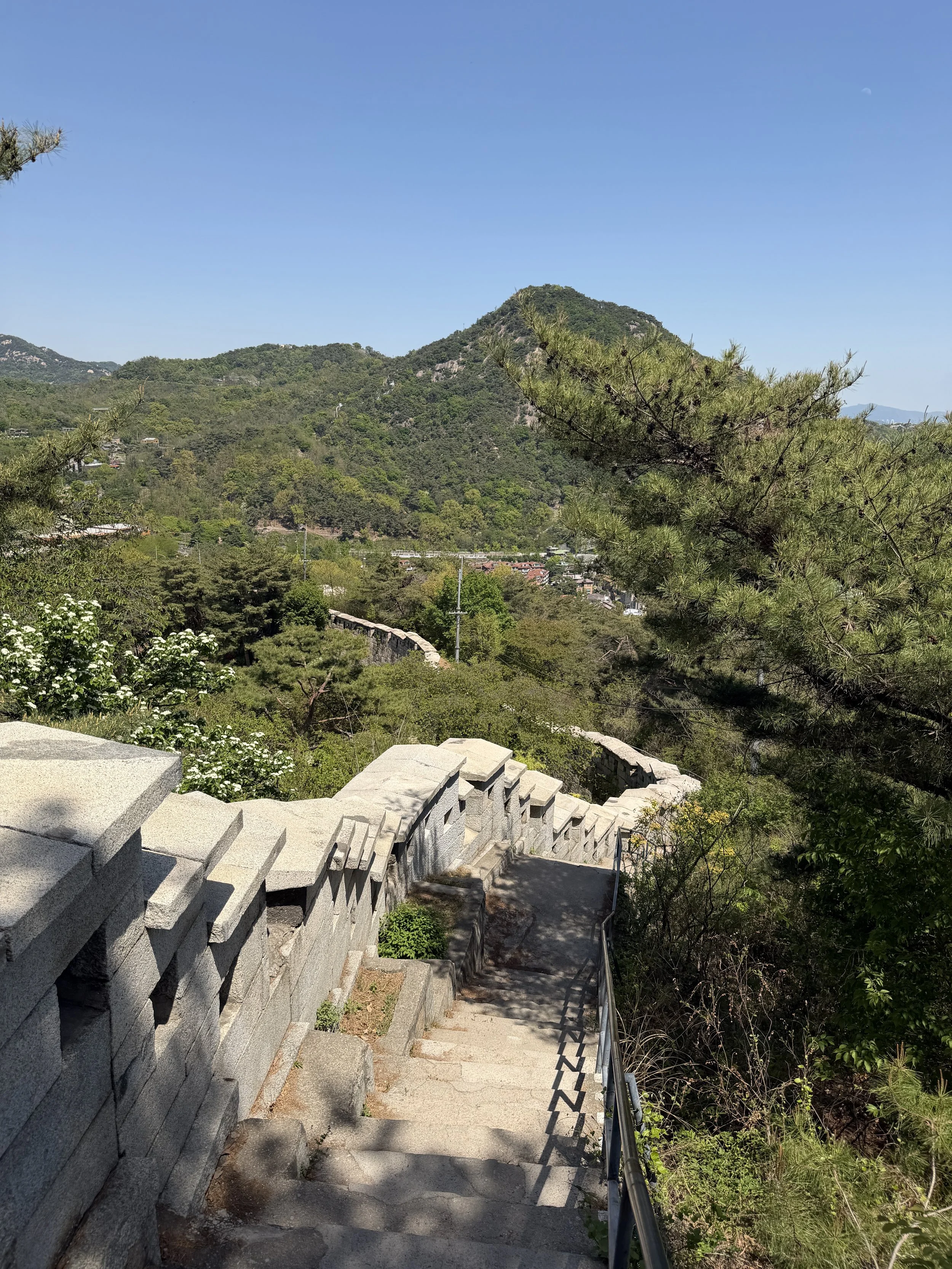
Fun fact: The actual construction work for the entire Hanyangdoseong continued for 98 days, half in the winter and half in the summer of 1394 and about 197,400 people were mobilized for the construction of the wall.
Looking at the steep granite slopes, it's hard to imagine how such an ambitious project was completed in just over 3 months with the tools available at the time. As I climbed higher, I gained a new appreciation for the engineers and laborers who built the wall.
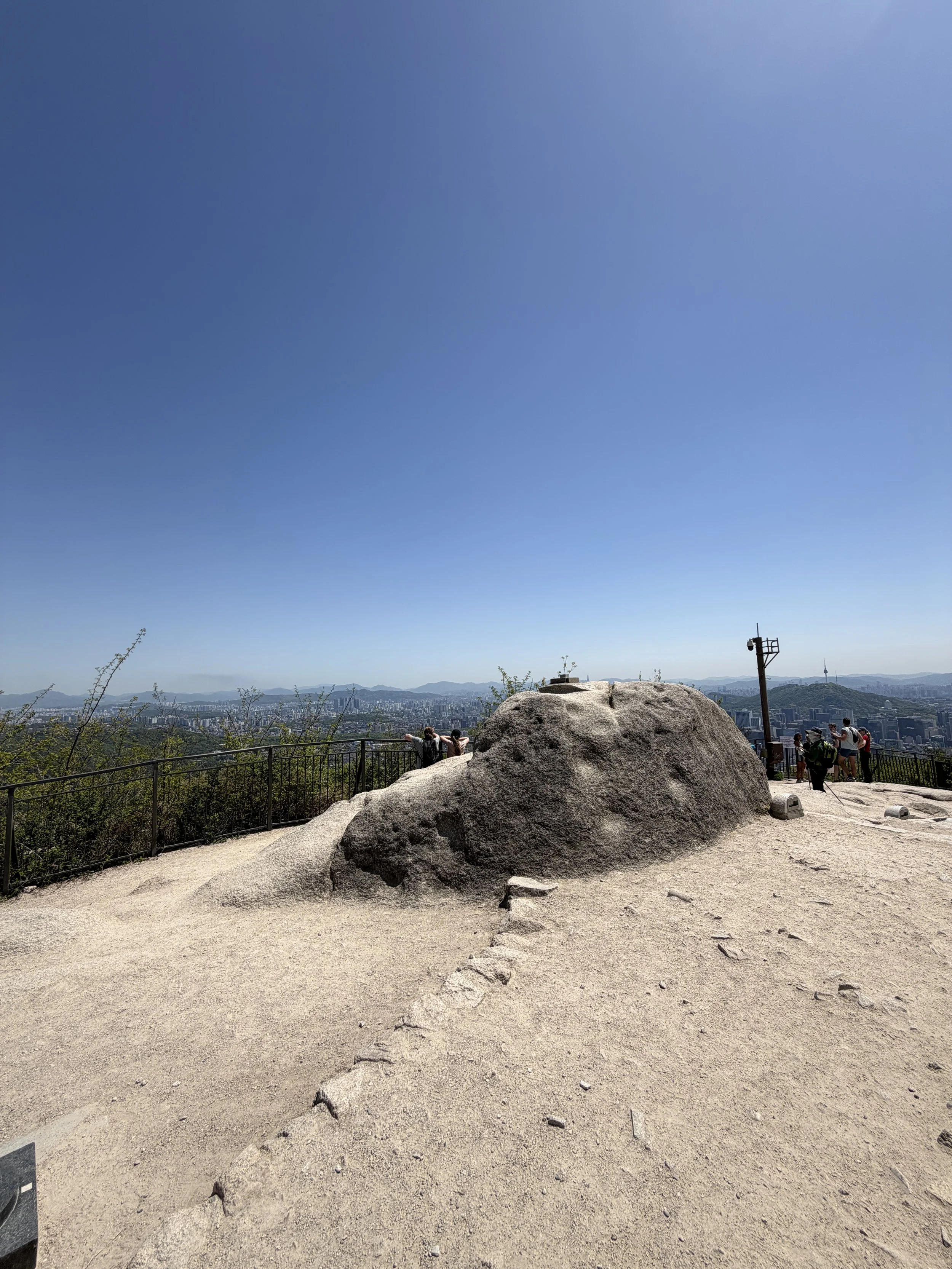
In my opinion, Inwangsan is the most challenging section of the entire Seoul City Wall. While some hikers consider Baegaksan equally demanding, I found Inwangsan tougher because of its combination of steep staircases and exposed rock sections. There were several points where it felt less like hiking and more like scrambling over giant rocks.
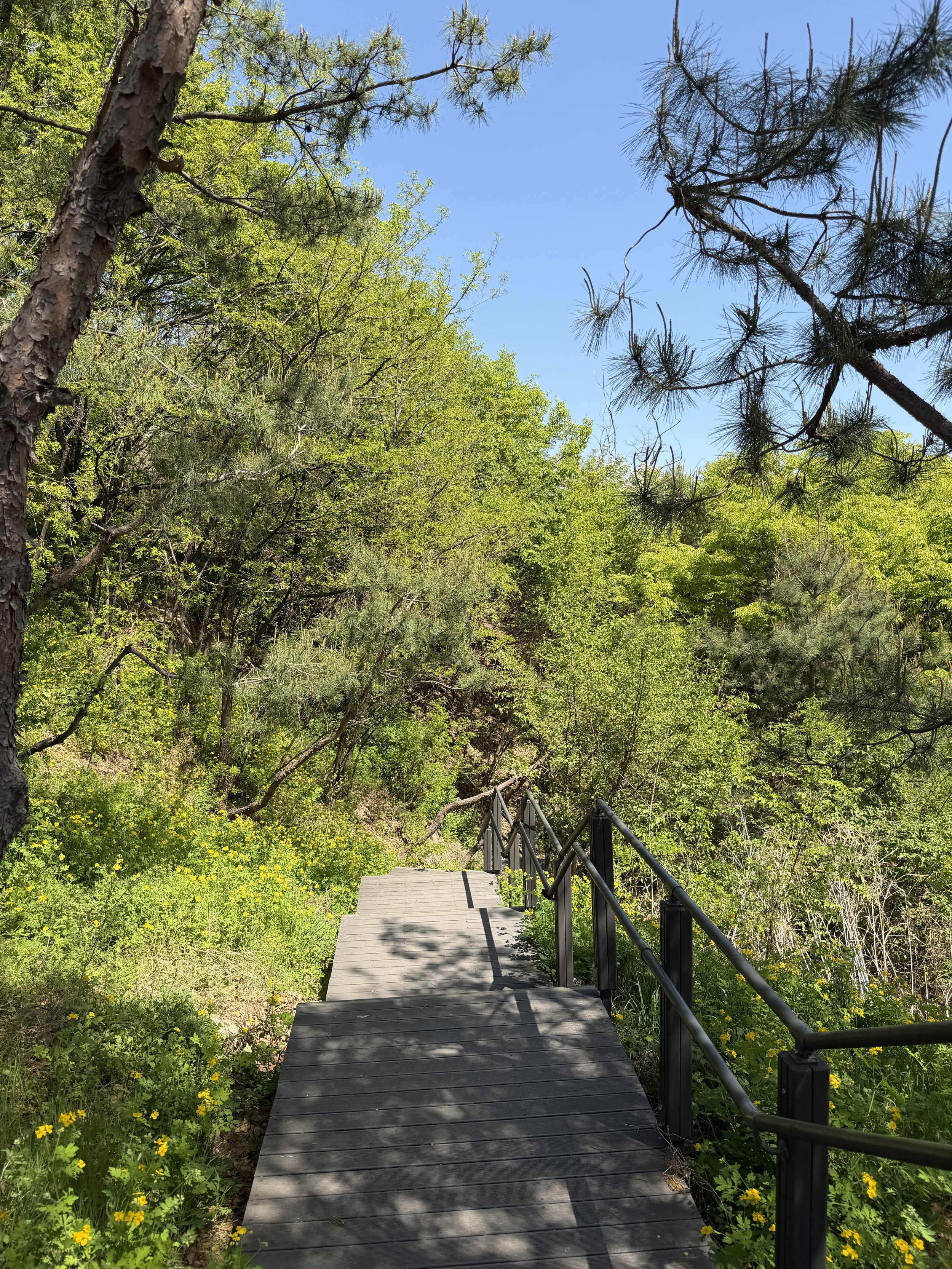
To make an already challenging hike even longer, I decided to explore a few of the side trails to see if they were worth the extra effort. One of those detours led to the Mineral Spring. If you're running low on water, it may be a worthwhile stop, but personally, I didn't find the additional descent and inevitable climb back up worth it.

The view from inside Inwangsan Forest Rest Area
The Inwangsan Forest Rest Area, however, was a completely different story. Hidden away off the main trail, it was one of the most unexpected surprises of the day. By that point, my legs were already tired, so finding a peaceful place to sit and rest felt like a gift. If you have the time, I'd definitely recommend making the short detour. (You can also access the rest area without hiking Inwangsan’s ridge line!)
Before I started hiking, my husband mentioned joining me and bringing our daughters, who are 6 and 11. As I worked my way up one particularly steep section, I remember thinking, "Yeah, this is definitely not a trail I'd bring my kids on." Almost immediately, I turned around and saw three children, all under eight, making their way up the same rocks with their parents.
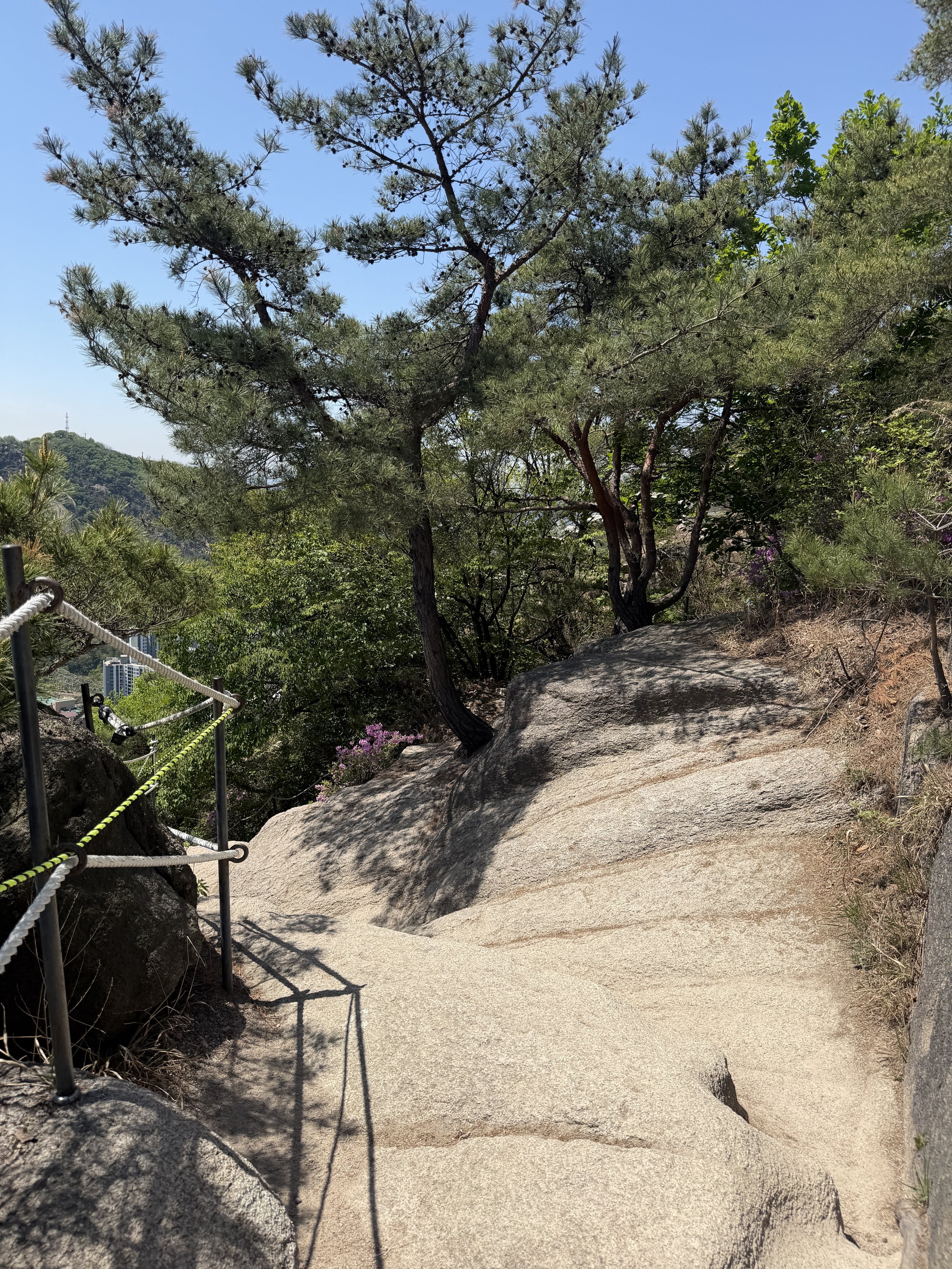
That made me laugh. My kids aren’t really in to hiking, so while I still wouldn't choose Inwangsan as a family hike for my own kids, plenty of families were tackling the mountain without hesitation.
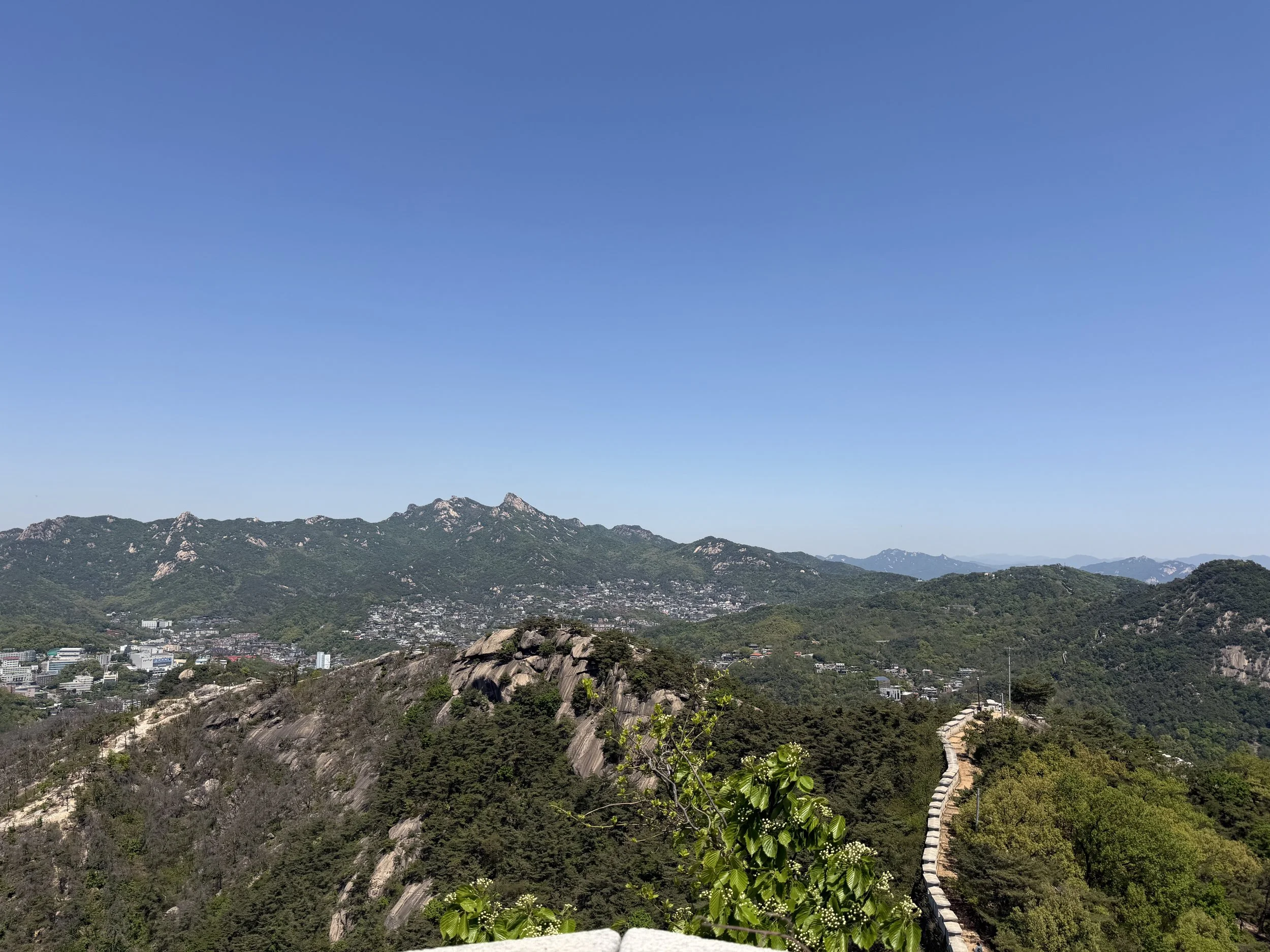
Every major climb seems to reveal another incredible view. Unlike Namsan, where you're often surrounded by the city, Inwangsan gives you the feeling of rising above it. The contrast between the ancient stone walls and Seoul's modern skyline perfectly captures one of my favorite things about Korea - the way history and modern life coexist so naturally.
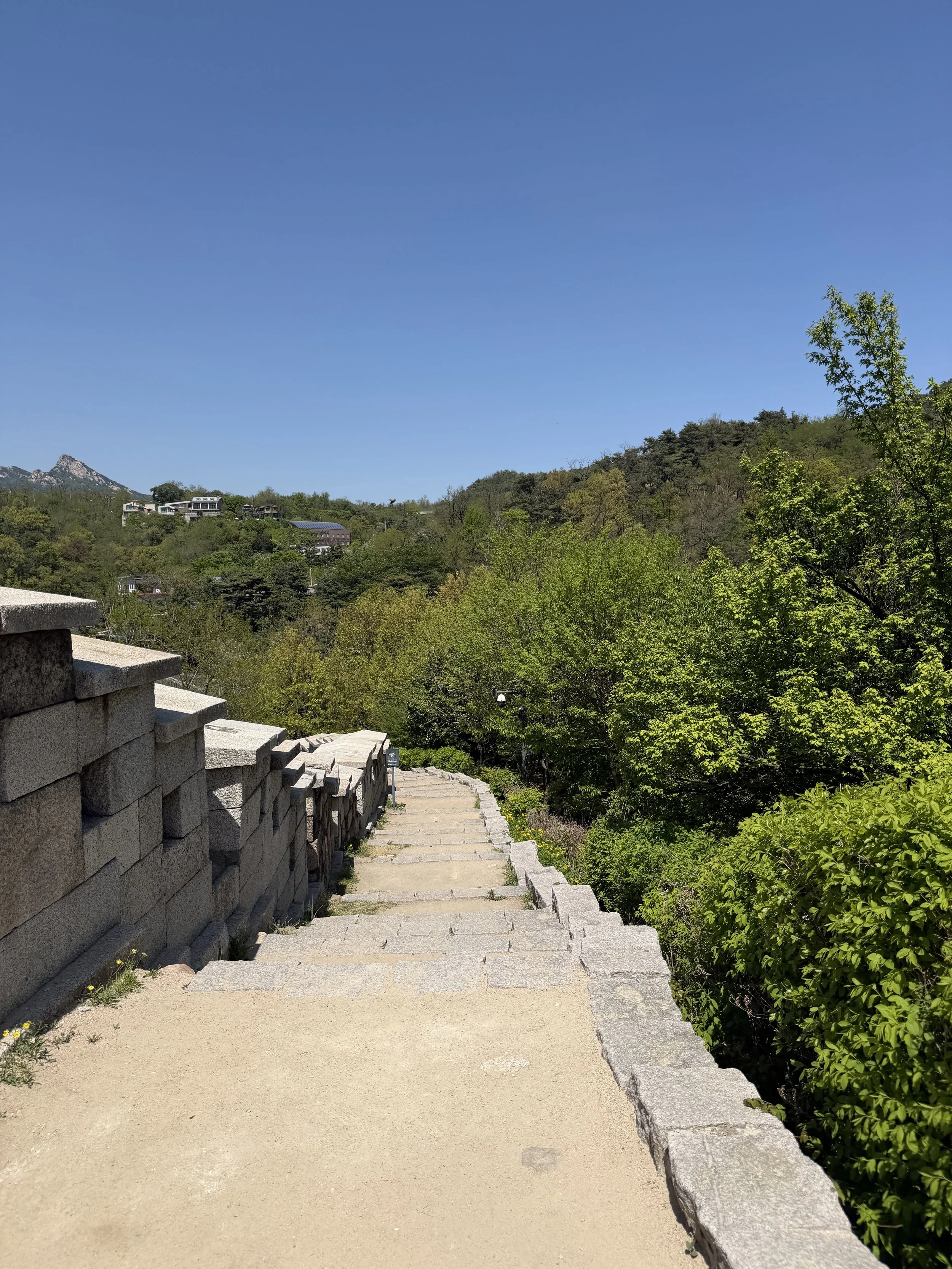
From various points along the trail, I could see Namsan, Lotte World Tower, mountain ridges, and clusters of skyscrapers stretching toward the horizon. By this point, my legs were questioning all of my life choices. I hated almost every step of this hike, but I loved every second spent taking in the views.

Before Setting Out…
Here are a few things worth knowing.
Unlike the urban sections of the Seoul City Wall, there are very few services once you begin climbing Inwangsan.
There are no convenience stores waiting for you on the ridgeline. Bring plenty of water, especially during the warmer months. I also recommend packing snacks or a light meal. If you’ve gone on day trips with me, you know I have no shortage of snacks in my bag. I ate through all of my snacks, drank both water bottles and my tea. Definitely pack more than you think you’ll want.
Use the restroom before starting your climb. There are restrooms at Inwangsan Forest Rest Area, but that’s a good ways into the hike from the Inwangsan Exhibition and Visitor’s Center.
Make sure your tennis shoes have good tread left because the rock surfaces and steep staircases can become slippery, especially after rain.
Continue Exploring the Seoul City Wall
If you'd like to explore more sections of the Hanyangdoseong, I've written guides for the other Seoul City Wall hikes as well. Each course offers a completely different experience, from the rugged granite peaks of Inwangsan to the forested slopes of Baegaksan and the scenic climb up Namsan.
You can start with my complete overview of the Hanyangdoseong, which includes the history of the wall, information on all six hiking courses, and tips for planning your own journey around Seoul's 18.6-kilometer fortress.
Read next:
Whether you're hiking a single section or working toward completing the entire route, the Seoul City Wall offers one of the best ways to experience Seoul's history, mountains, and neighborhoods all in a single journey.