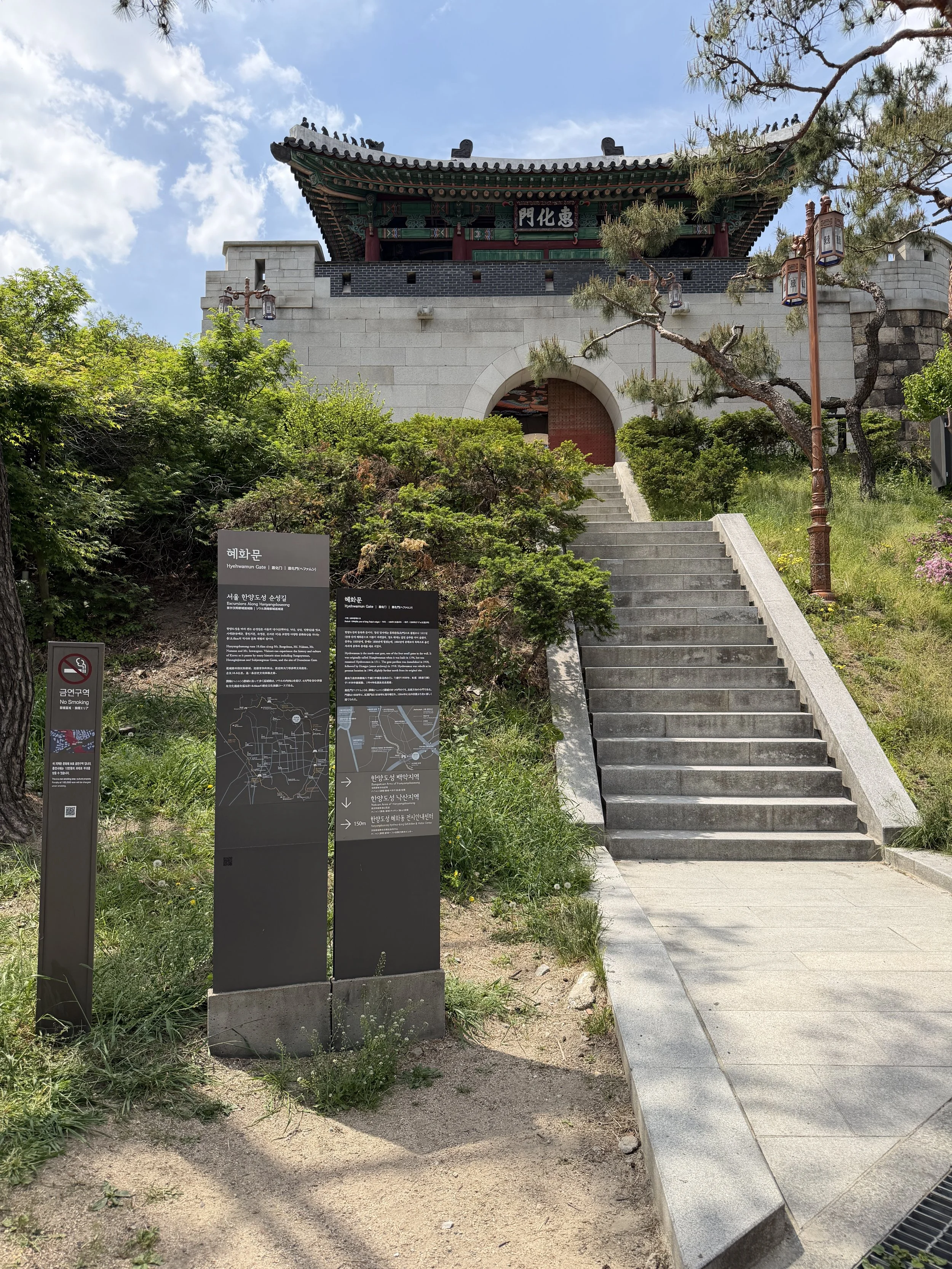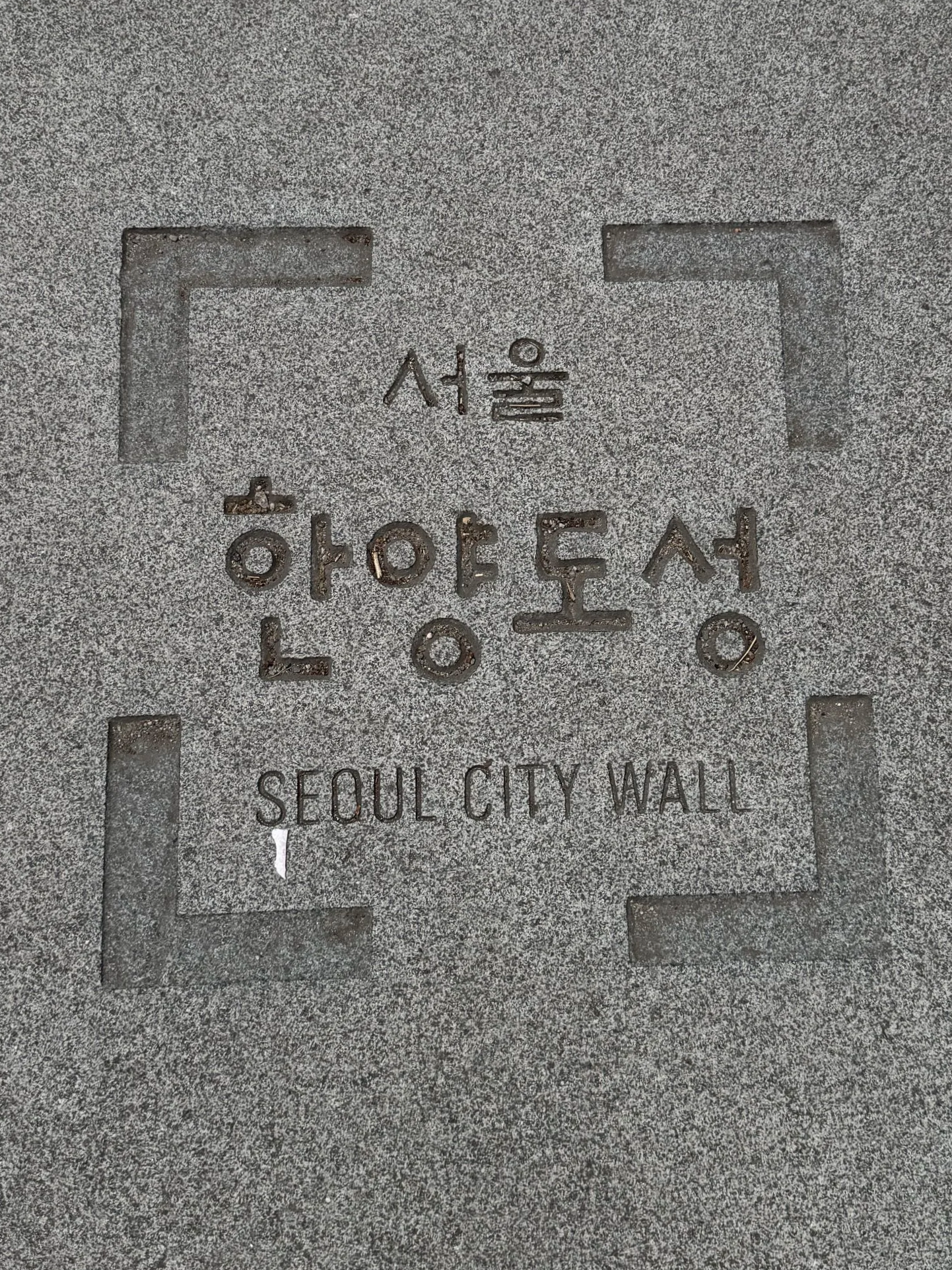
Hiking The Seoul City Wall: Namsan Mountain Trails
After completing the Bugaksan, Inwangsan, Sungnyemun, and Naksan sections of the Seoul City Wall Trail, all that remained was Namsan. This section is often one of the most popular parts of the Hanyangdoseong Trail thanks to its central location and its famous landmark, N Seoul Tower. Official estimates put the hike at around three hours, though I finished it a little faster than that.
Because of how closely the Namsan section connects to both the Naksan and Sungnyemun sections, it would be entirely possible to combine all of these sections into one long day of hiking. I chose to tackle Namsan on its own, but if you're short on time and looking to complete the entire Seoul City Wall Trail, combining sections here makes a lot of sense. Even after finishing the wall portion of the hike, I continued walking all the way to Namdaemun before veering off to Seoul Station.
Namsan Trail Overview

Distance: Approximately 4.2km
Difficulty: Moderate
Time Required: Approximately 3 hours, doable in 2.5 or less
Route: Jangchung Arena to Namdaemun
Be prepared for a ton of stairs from the Banyan Tree to Namsan Park.
Getting to Namsan Trail
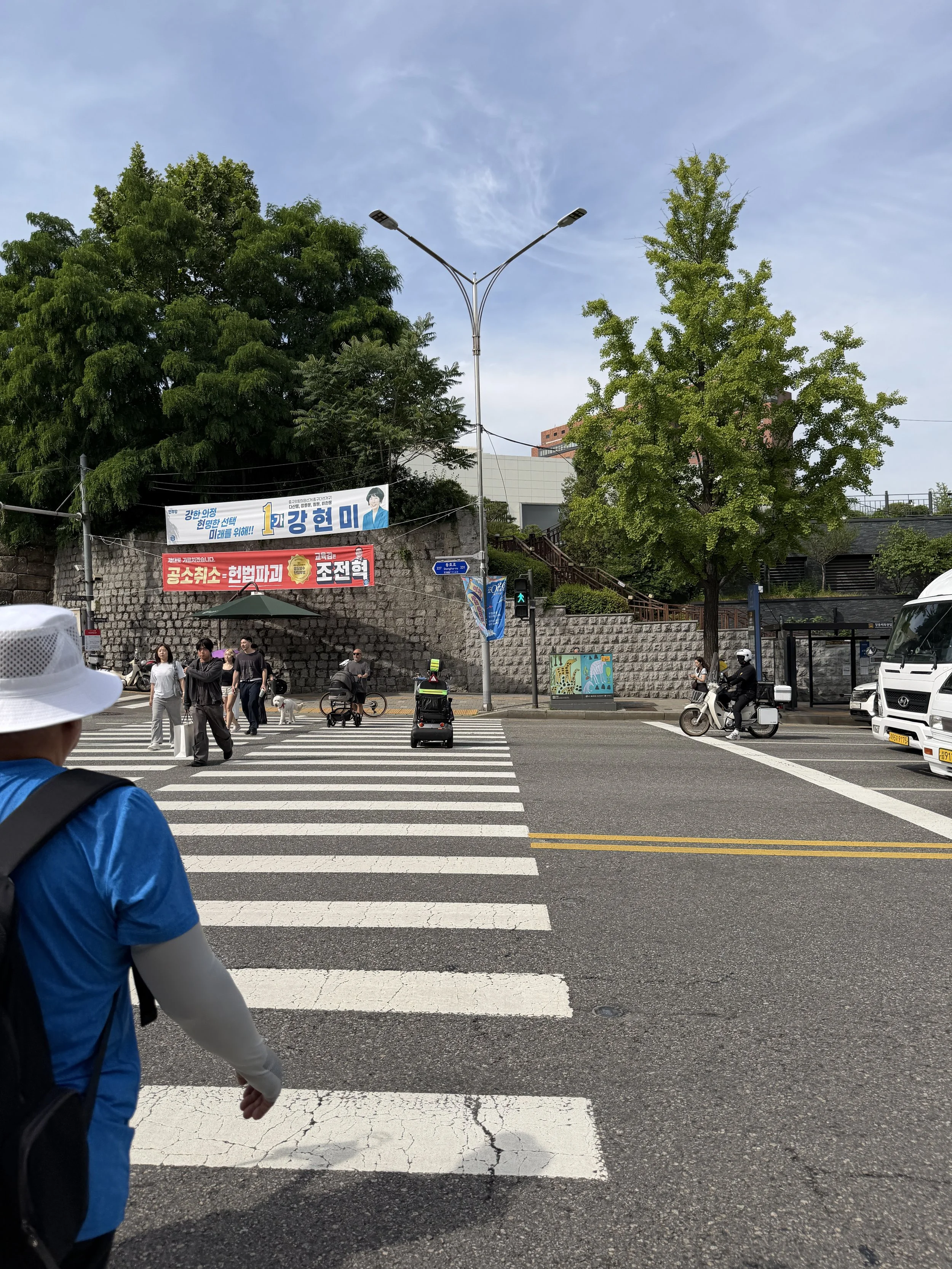
The Jangchung Arena is just to right and the wall is fairly easy to spot here!
If you've been following the Seoul City Wall Trail in order, the Namsan section begins near Jangchung Arena, where the Naksan section ends. The trail quickly starts climbing onto the wooded slopes of Namsan Mountain, leaving the busy streets behind and entering one of Seoul's most recognizable urban green spaces.
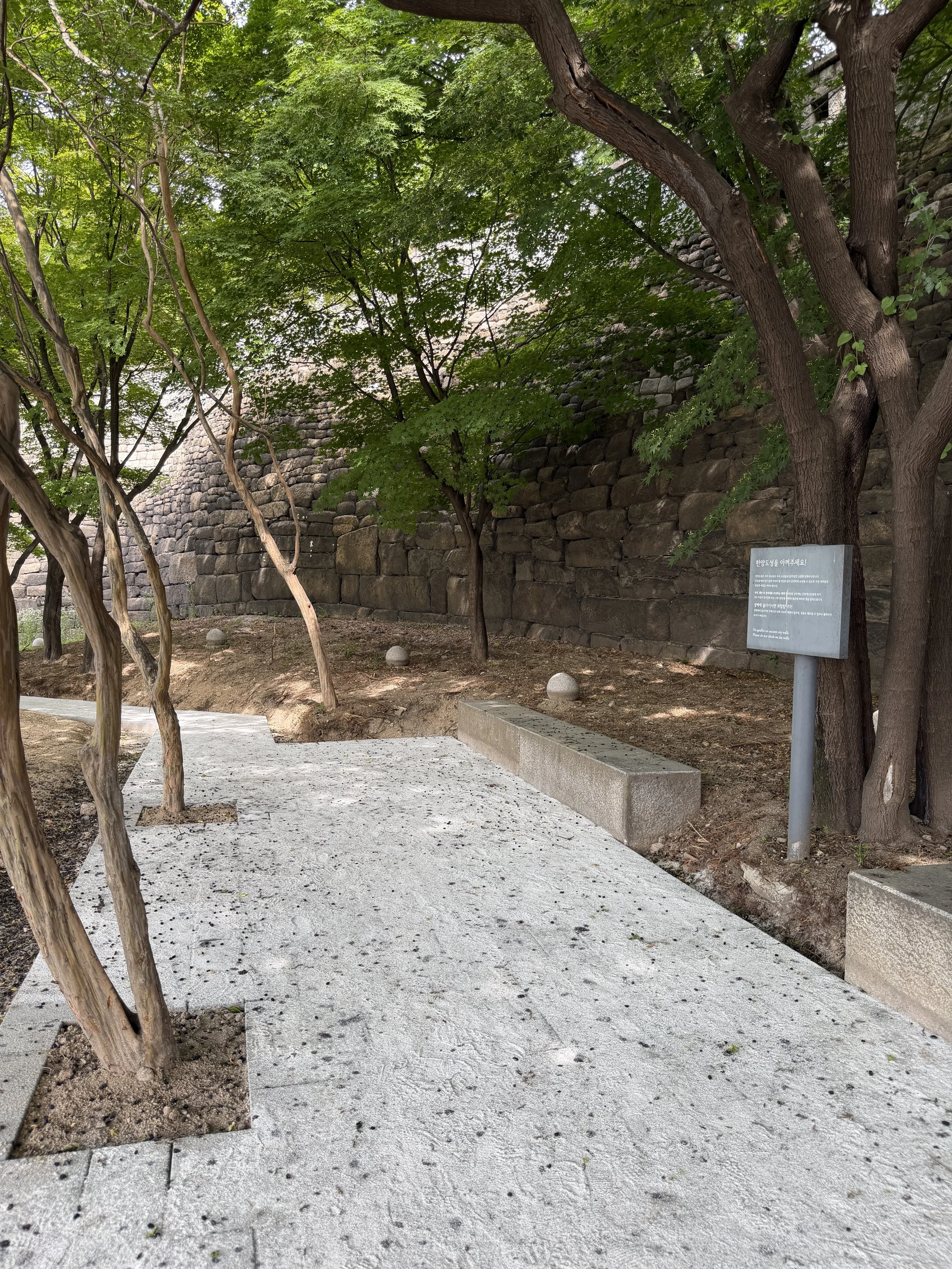
Freshly paved and sanded trails.
Like the other sections of the wall, the route is exceptionally well marked. Between the wall itself, directional signs, and the steady flow of visitors heading toward N Seoul Tower, it's difficult to get lost.
If you’re in need of a bathroom here, there’s one marked just a few minutes on to the trail. It was easy to follow the signs for (it belongs to a church) and it was clean.
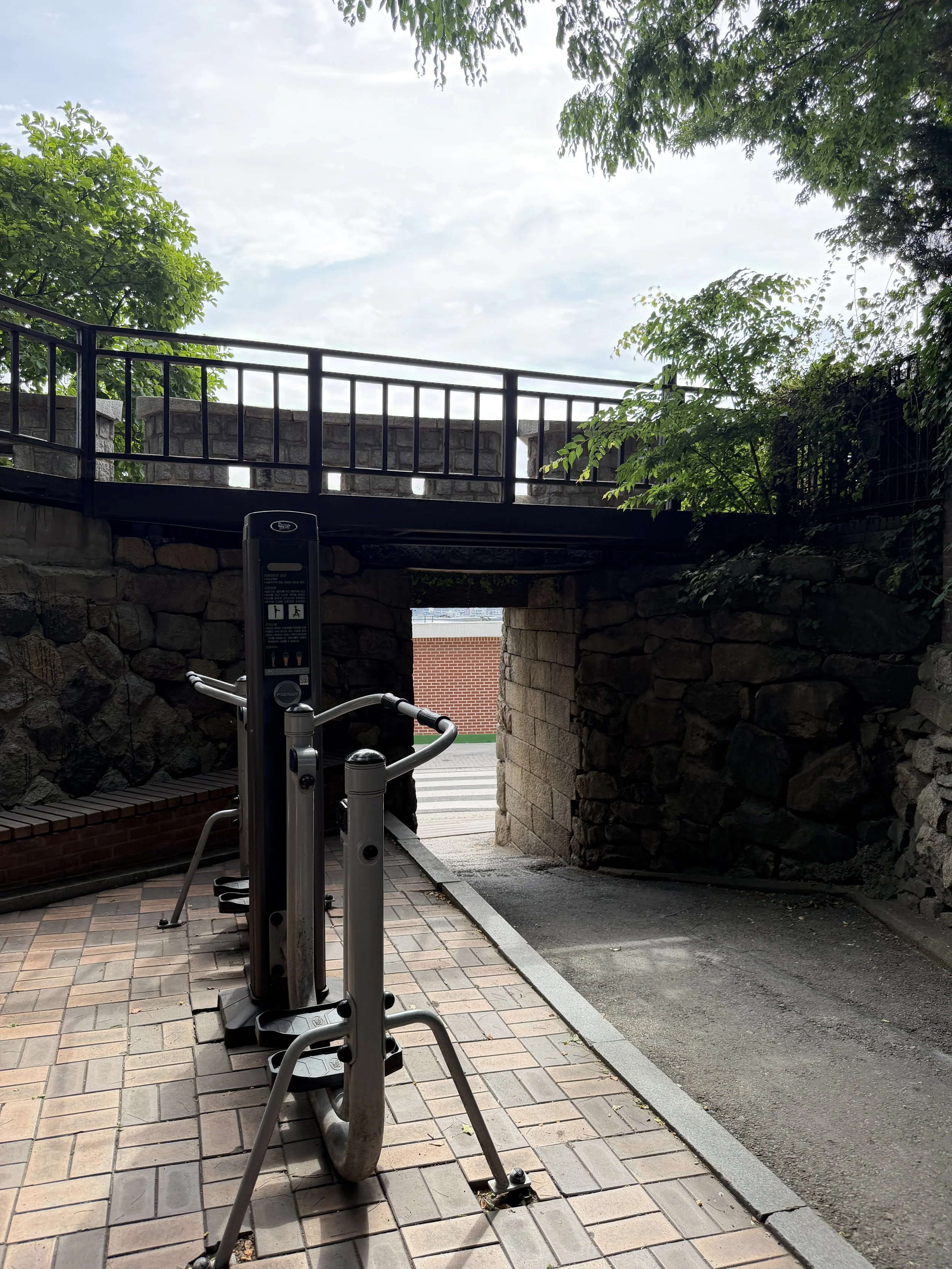
I went through this connecting passage to get on top of the wall here.
Like many parts of the Seoul City Wall, there is an inner trail and an outer trail. When I hiked Inwangsan, I chose the inner trail. Here, I apparently chose the outer trail without thinking about it. I stayed on this side of the wall in that picture, however, I believe if I had gone down the street and around towards The Shilla, I could’ve stayed on the inner trail for most of the way. No problem, though, because there were plenty of opportunities to cross over!
Hiking Through the Forests of Namsan
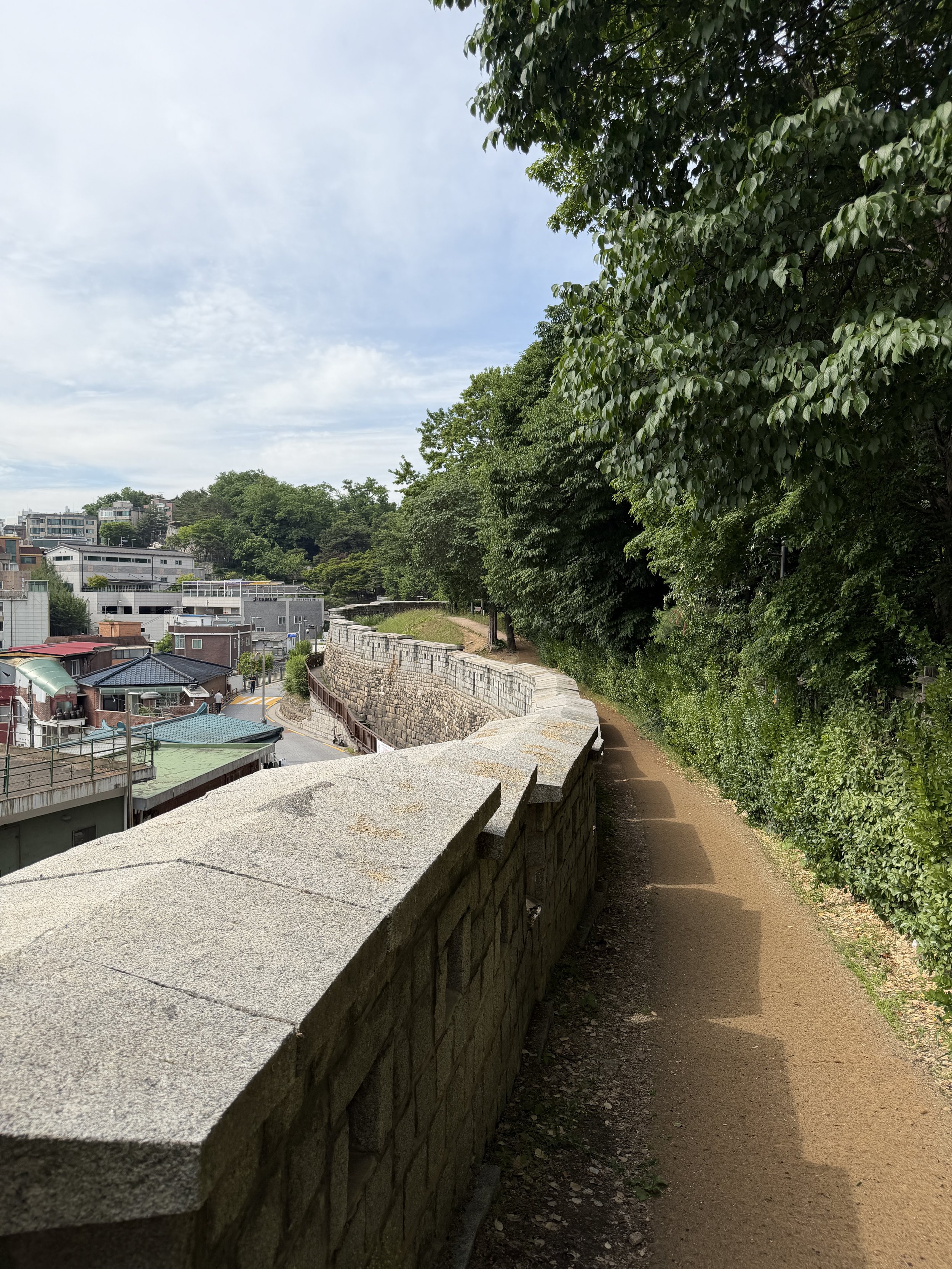
Here you can see both the inner and outer trails along the Seoul City Wall on the Namsan Trail near The Shilla
Compared to some of the other sections of the Seoul City Wall, much of the Namsan route feels surprisingly peaceful. While you're still in the heart of Seoul, the dense trees create the feeling of being much farther from the city than you actually are. During the warmer months, the shade provided by the forest canopy is especially welcome.
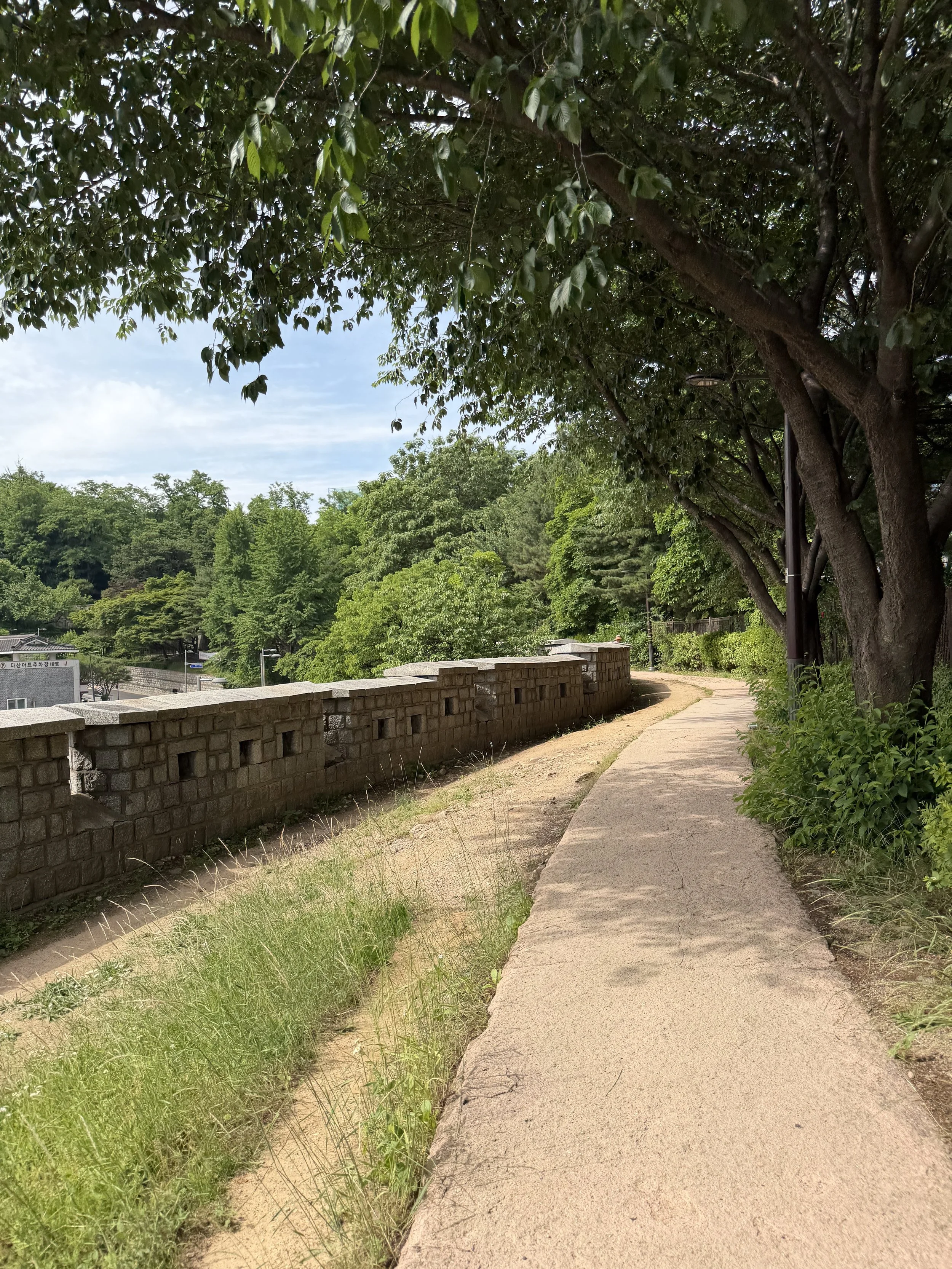
I came prepared with far more snacks than I ended up needing. Unlike the Bugaksan or Inwangsan sections, where planning ahead is helpful, Namsan is surrounded by neighborhoods, shops, restaurants, and convenience stores. If you need water, a quick snack, or even a longer break, you'll have no trouble finding something nearby.
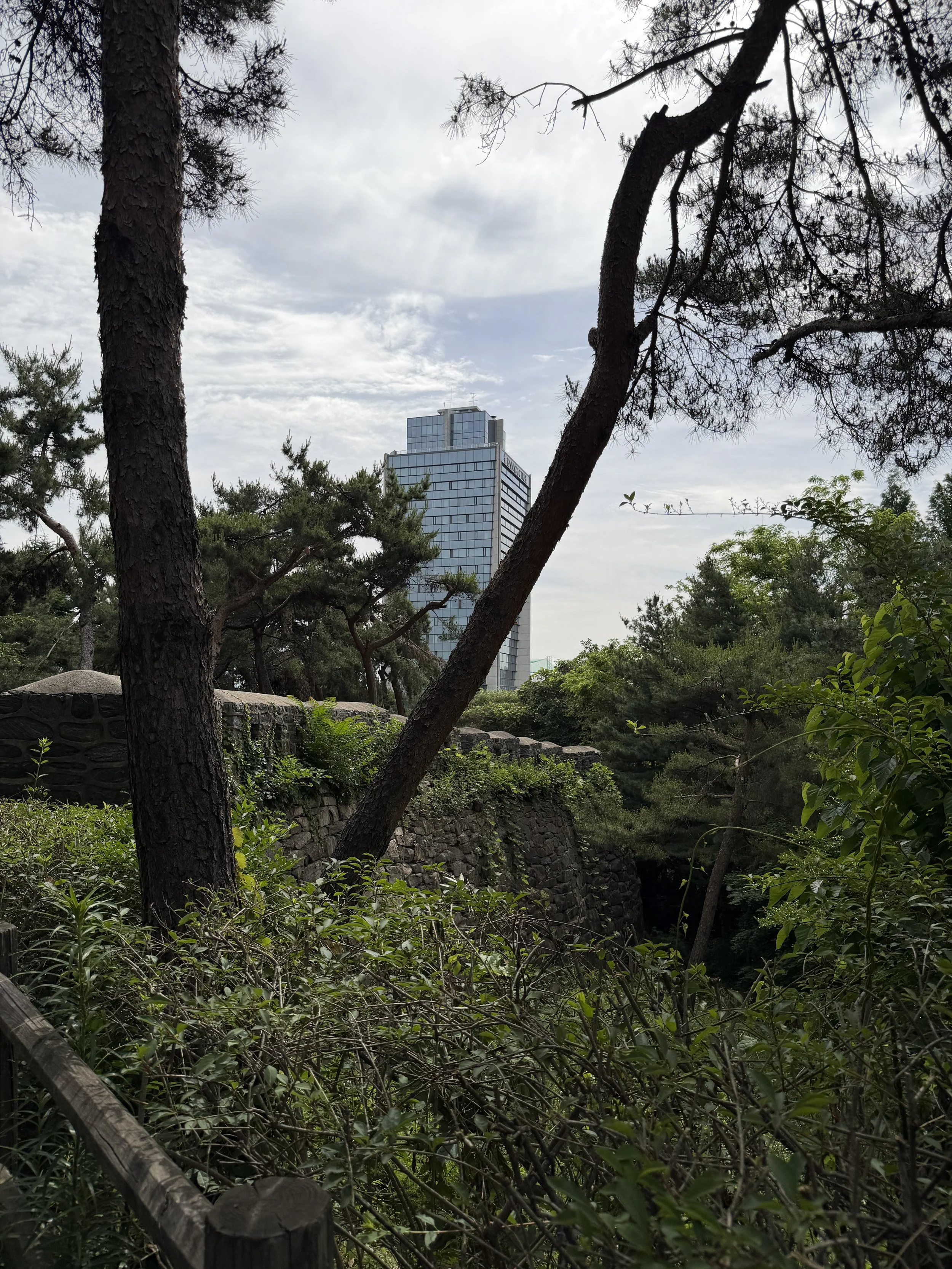
One of my favorite stretches of the trail passed near the Banyan Tree Club & Spa Seoul. In this area, you'll actually leave the wall itself and follow a route around the Banyan Tree property - make sure to follow the signs and head towards the tennis court.
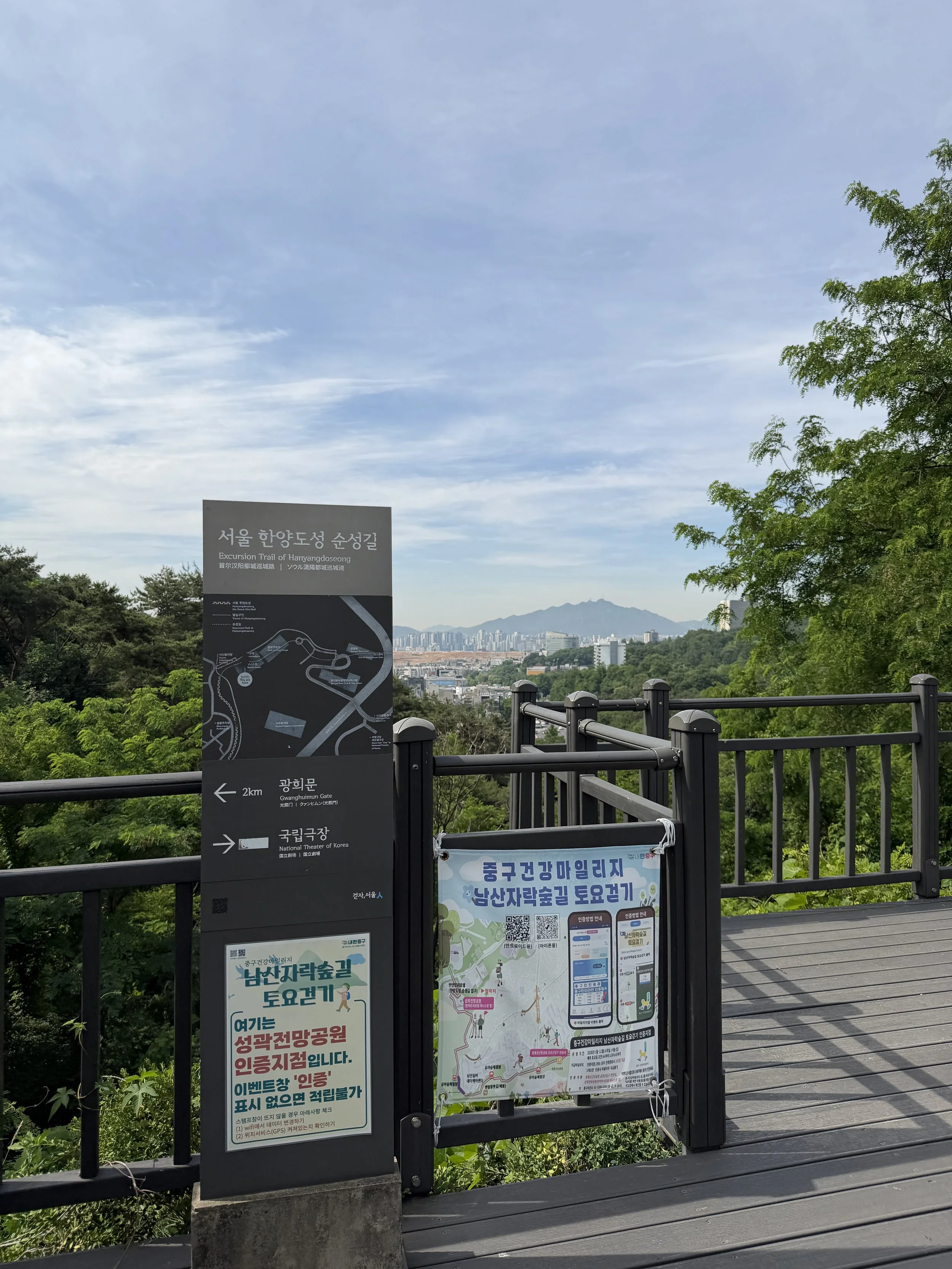
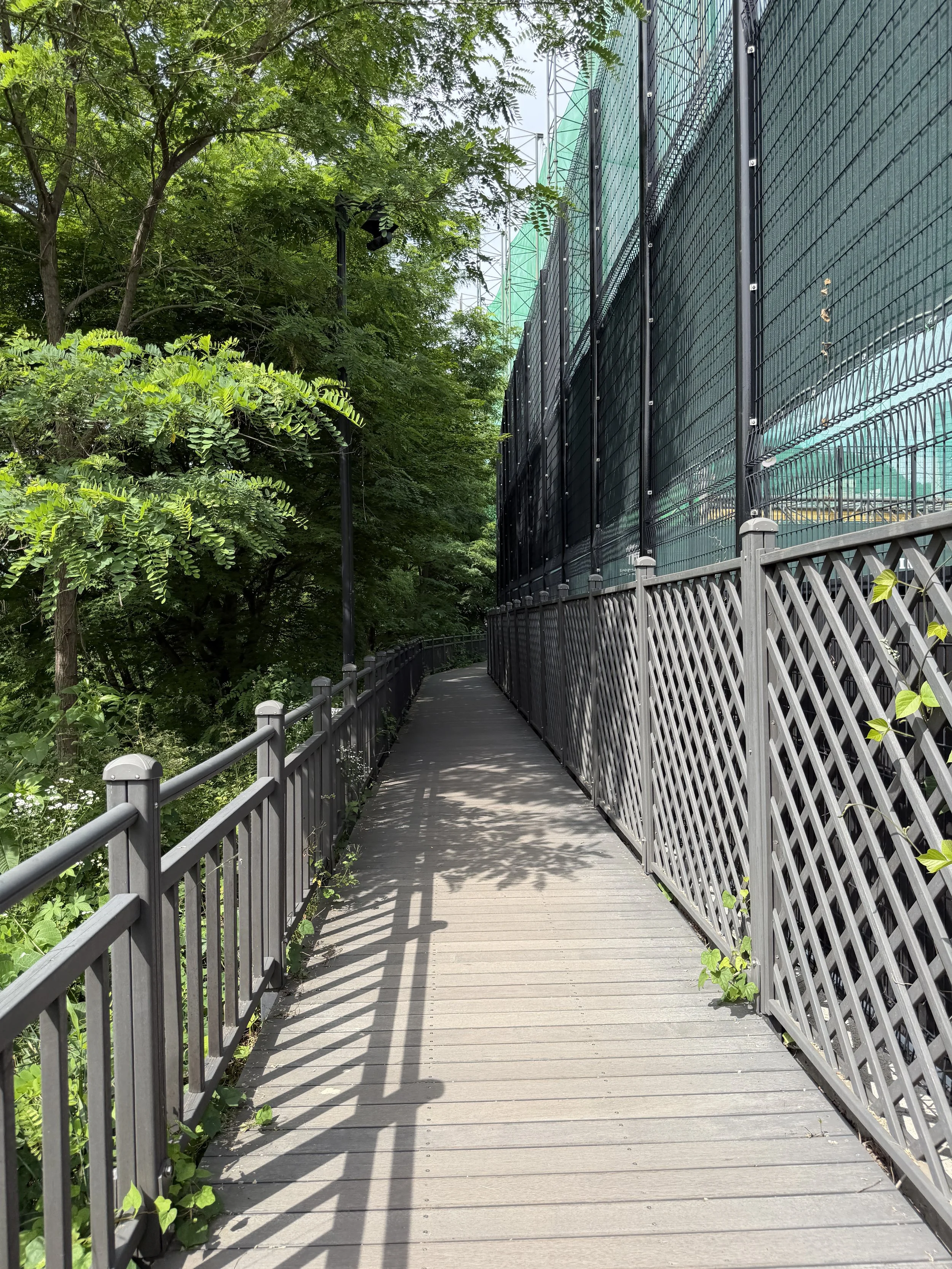
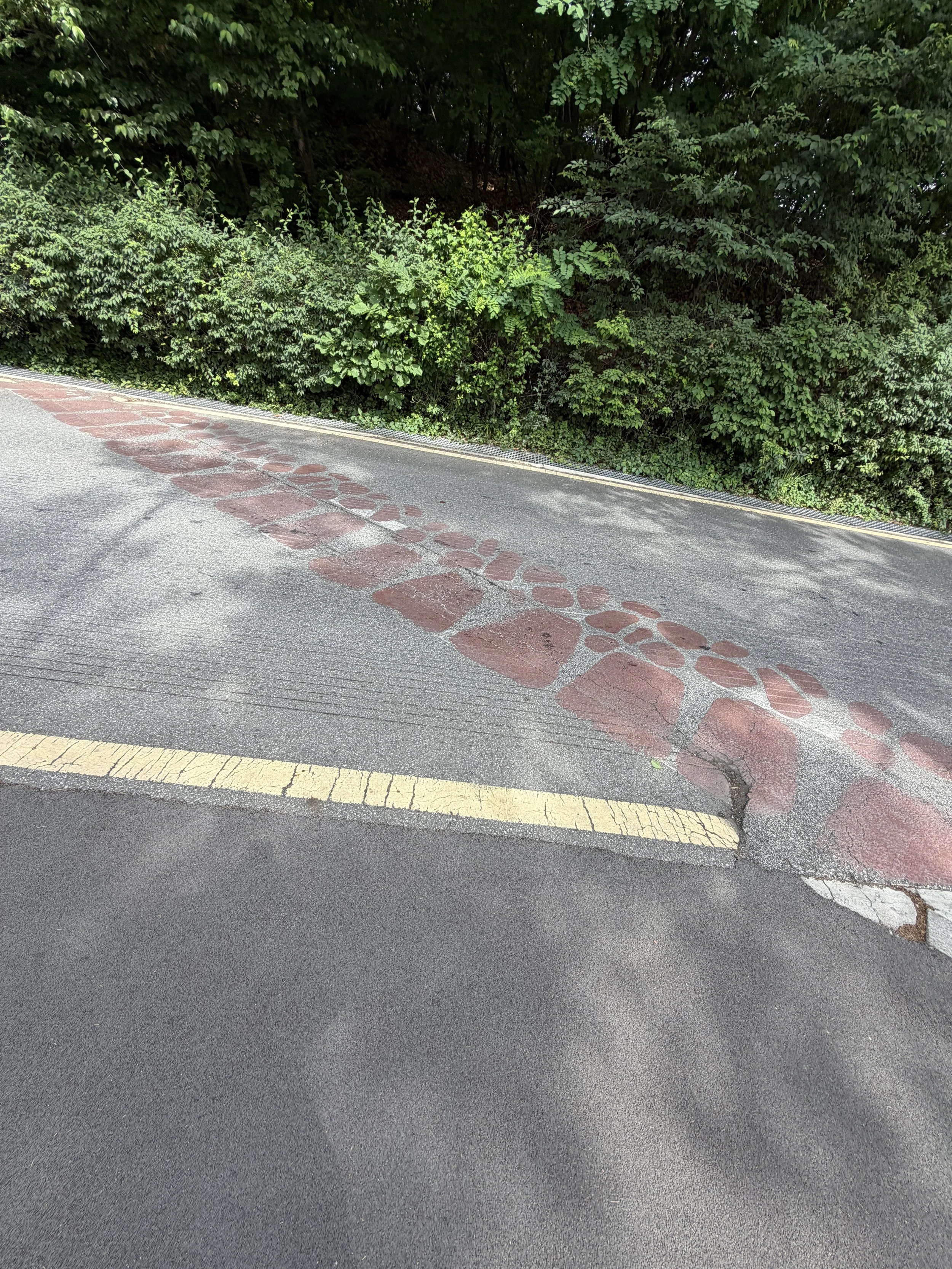
The original wall no longer exists here for the most part, so you're not missing much by detouring away from it. There was one feature I thought was particularly cool here - as you're hiking up the road to reconnect with the wall, you'll notice that the road cuts directly across what would have been the original wall route. To mark its path, the city has painted/stenciled the stone outlines onto the pavement, giving you a visual reminder of where the fortifications once stood.
From here, the trail heads into the woods and begins a fairly steep climb up the mountain - there are a lot of stairs here! Thankfully, the dense tree cover provides plenty of shade, making the climb much more comfortable than it could have been. The extra effort was well worth it.

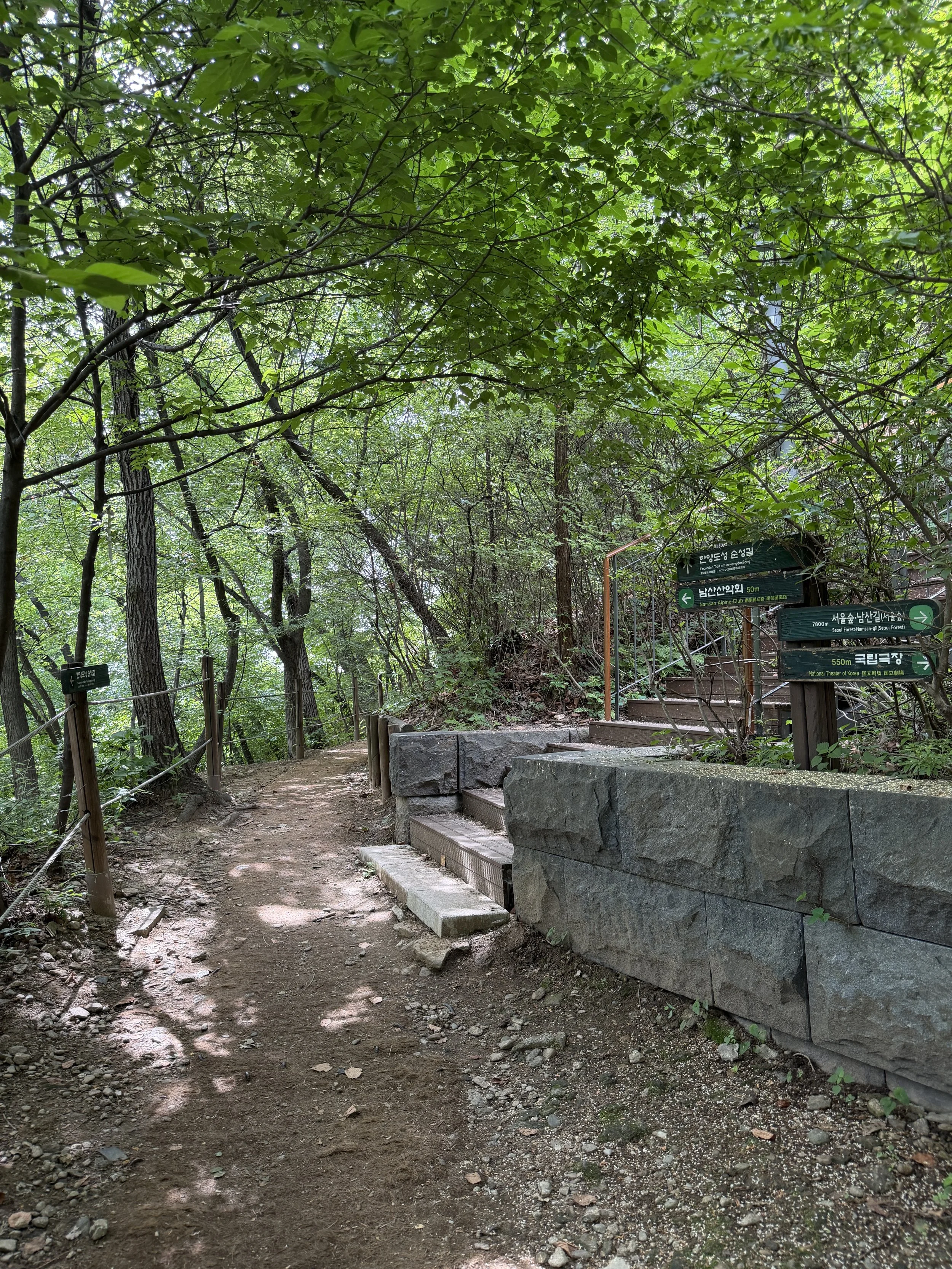
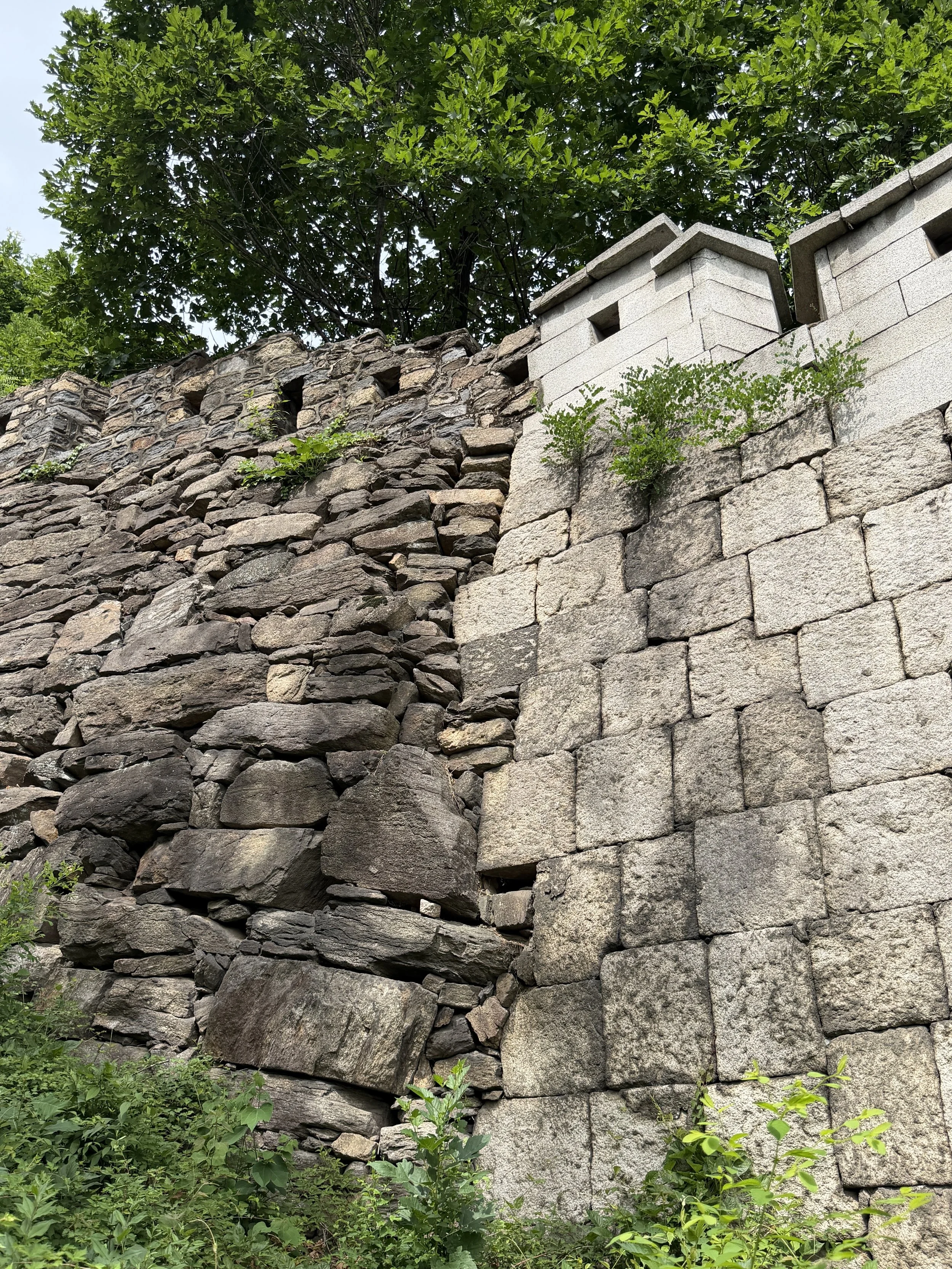
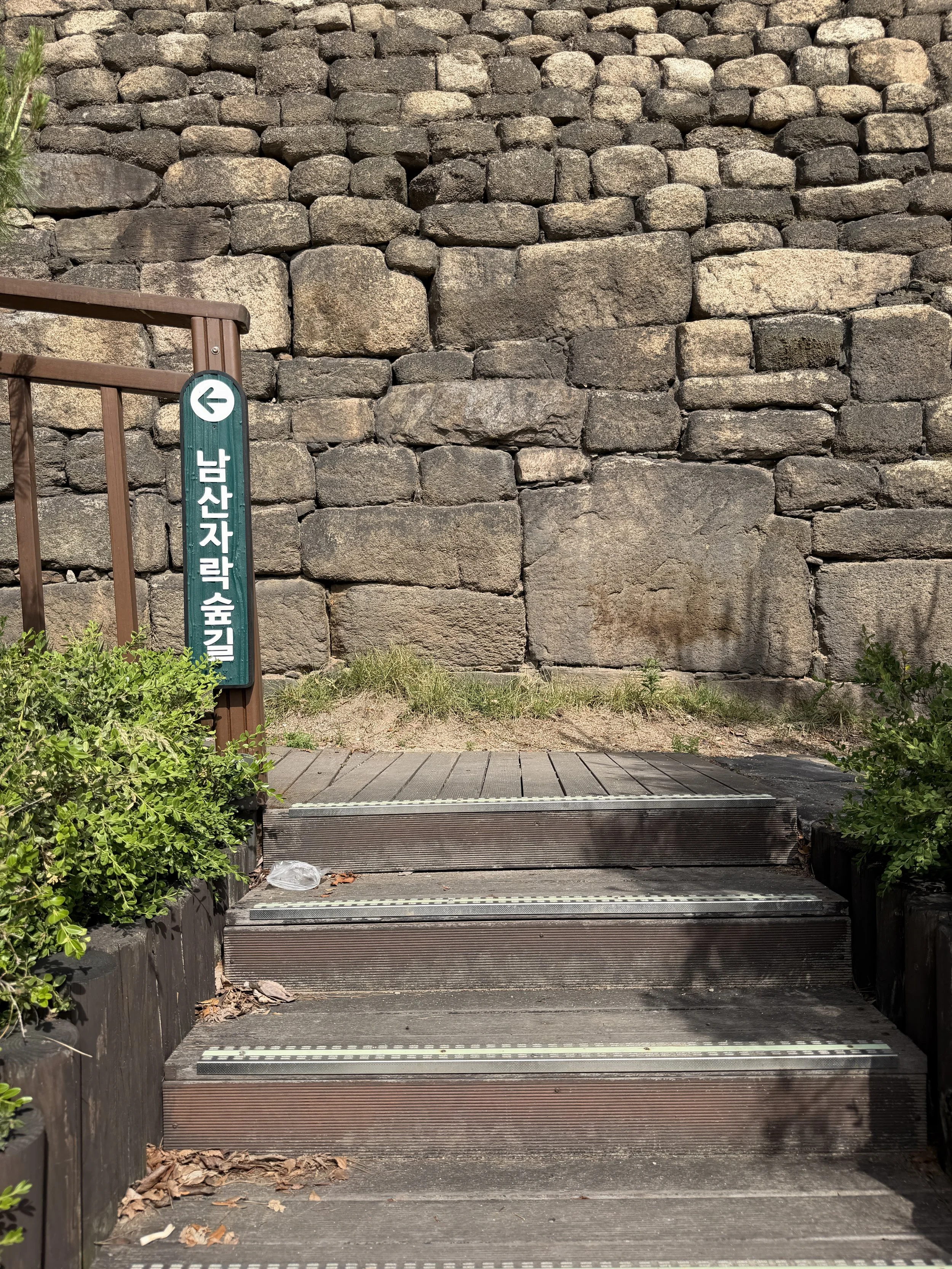
This section of the trail was surprisingly quiet, even a bit overgrown I’d say, and for a while it genuinely felt like I had escaped the city altogether. The path winds through beautiful forested areas, and every so often you can look back through the trees for great views overlooking the Banyan Tree below.
Another cool thing is that the wall here still seems to be in great shape and you can see the different variations of stone from the different eras.
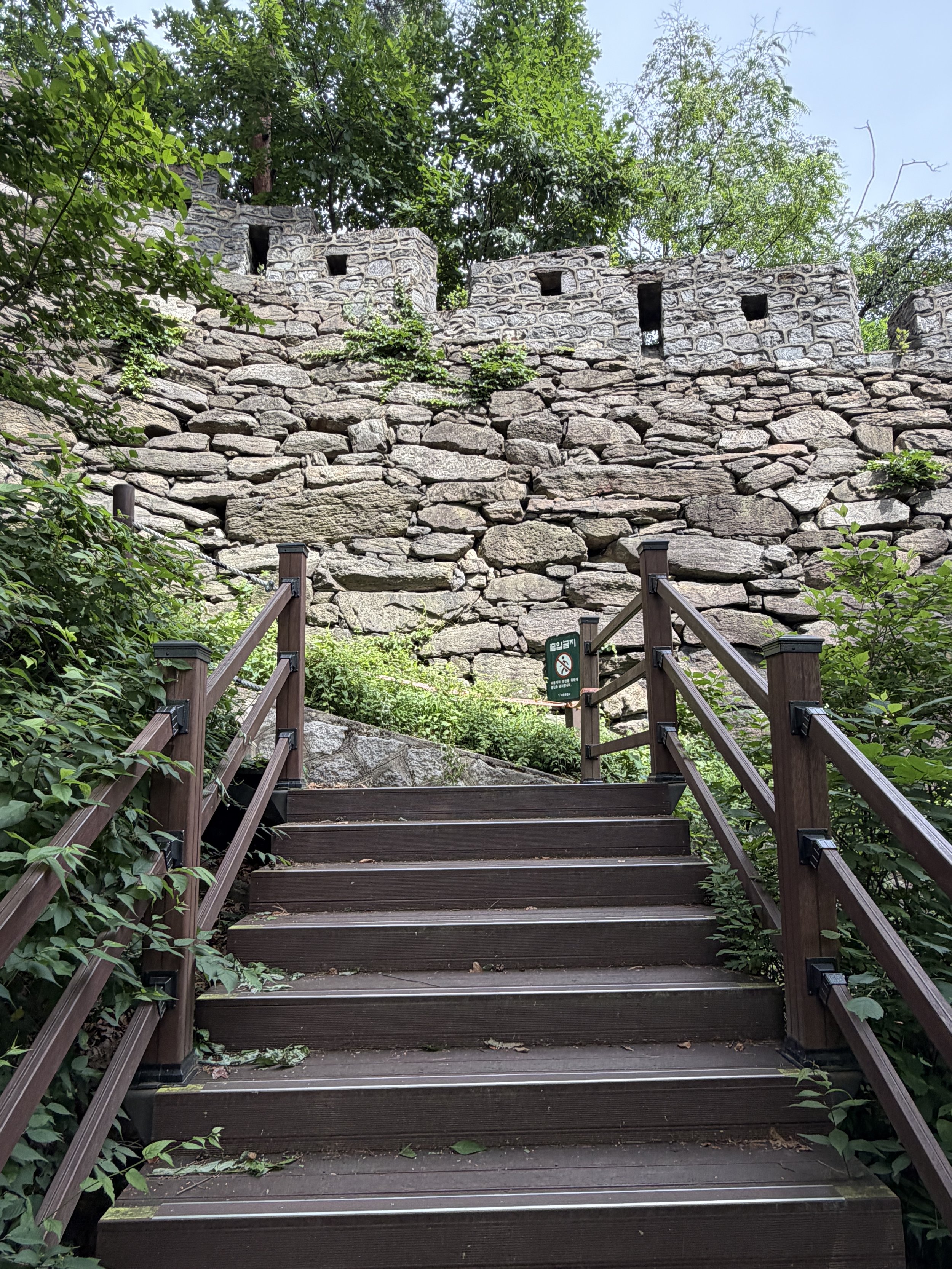
One thing that surprised me was how few people I encountered along this part of the route. I often joke that when you hike in Korea, you're almost never alone. Even on lesser-known mountain trails, you'll usually pass plenty of fellow hikers. Near the Banyan Tree section, however, I found myself walking alone for long stretches. For a trail located in the middle of Seoul, it felt unexpectedly quiet.
Reaching N Seoul Tower
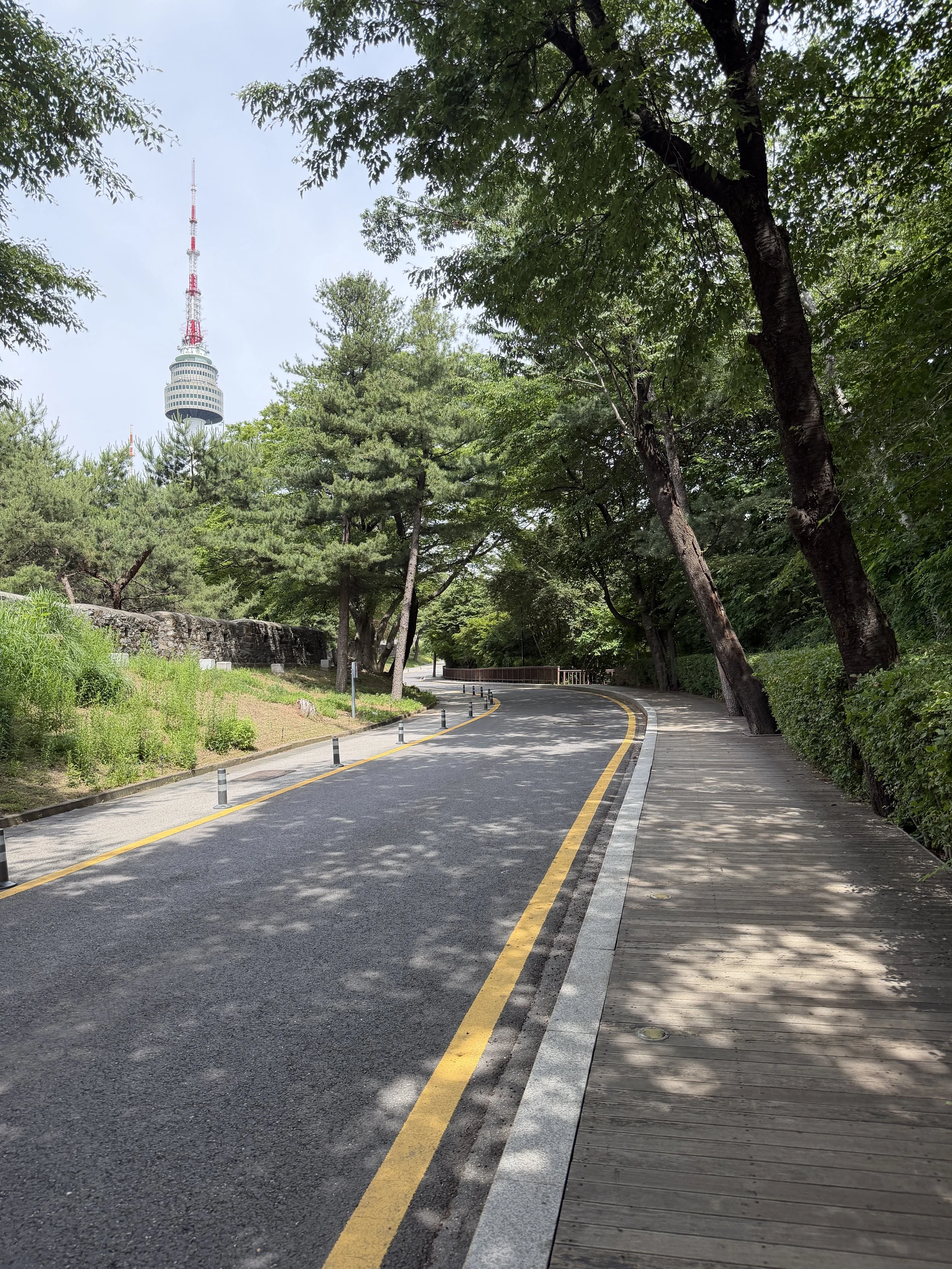
Fun fact: that the geographical central point of Seoul is on the top of Namsan at N Seoul Tower. This spot is crowded with visitors, the views overlooking Seoul are spectacular, and this section contains some of the most photographed portions of the entire Seoul City Wall Trail. If you have time and are interested, there’s an exhibit on the 2nd floor of N Seoul Tower dedicated to stories about the fortress.
Also, the hike up the hill to N Tower is almost as brutal as those stairs by the Banyan Tree.
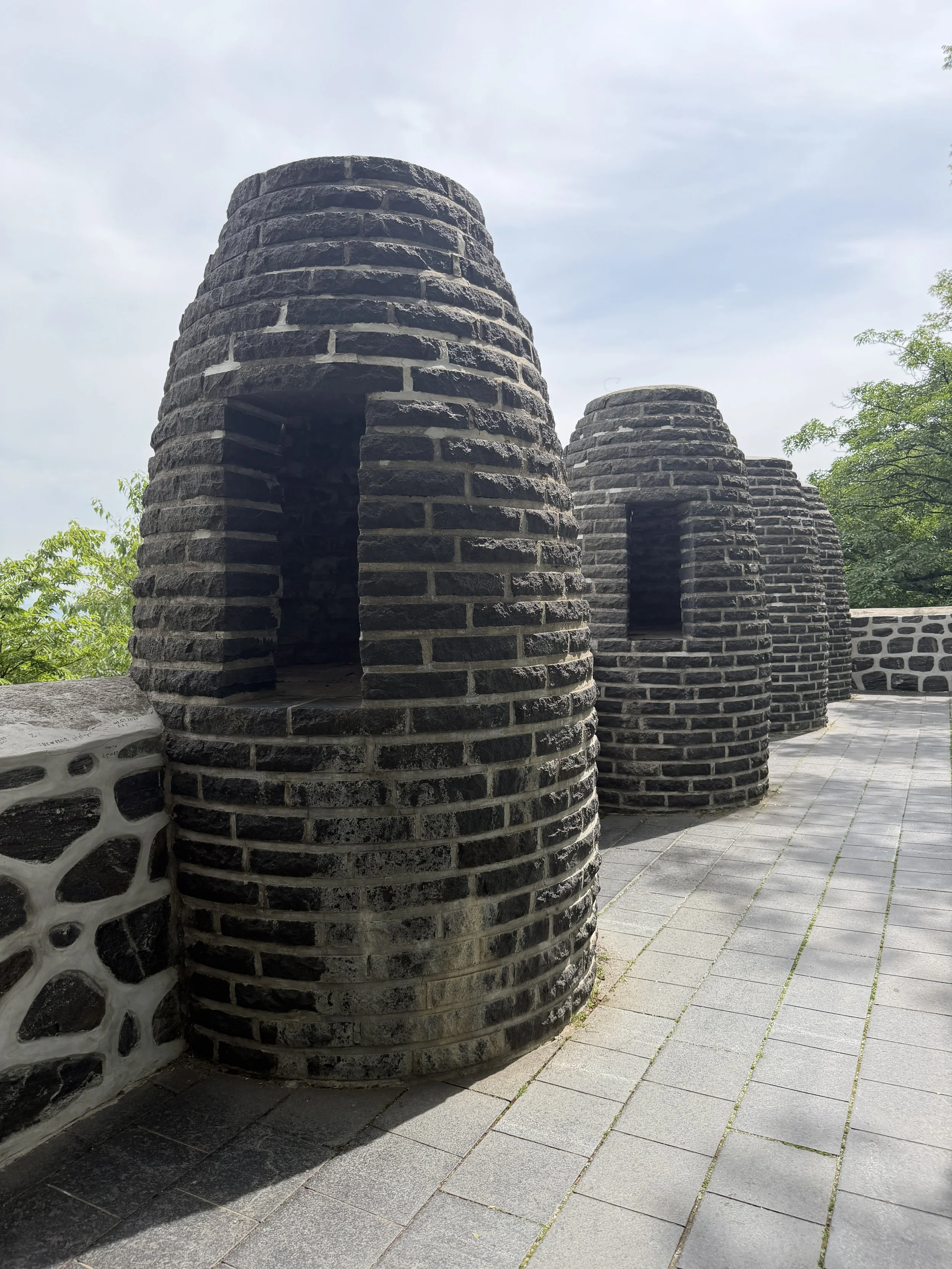
Mongmyeoksan Beacon Towers near N Seoul Tower
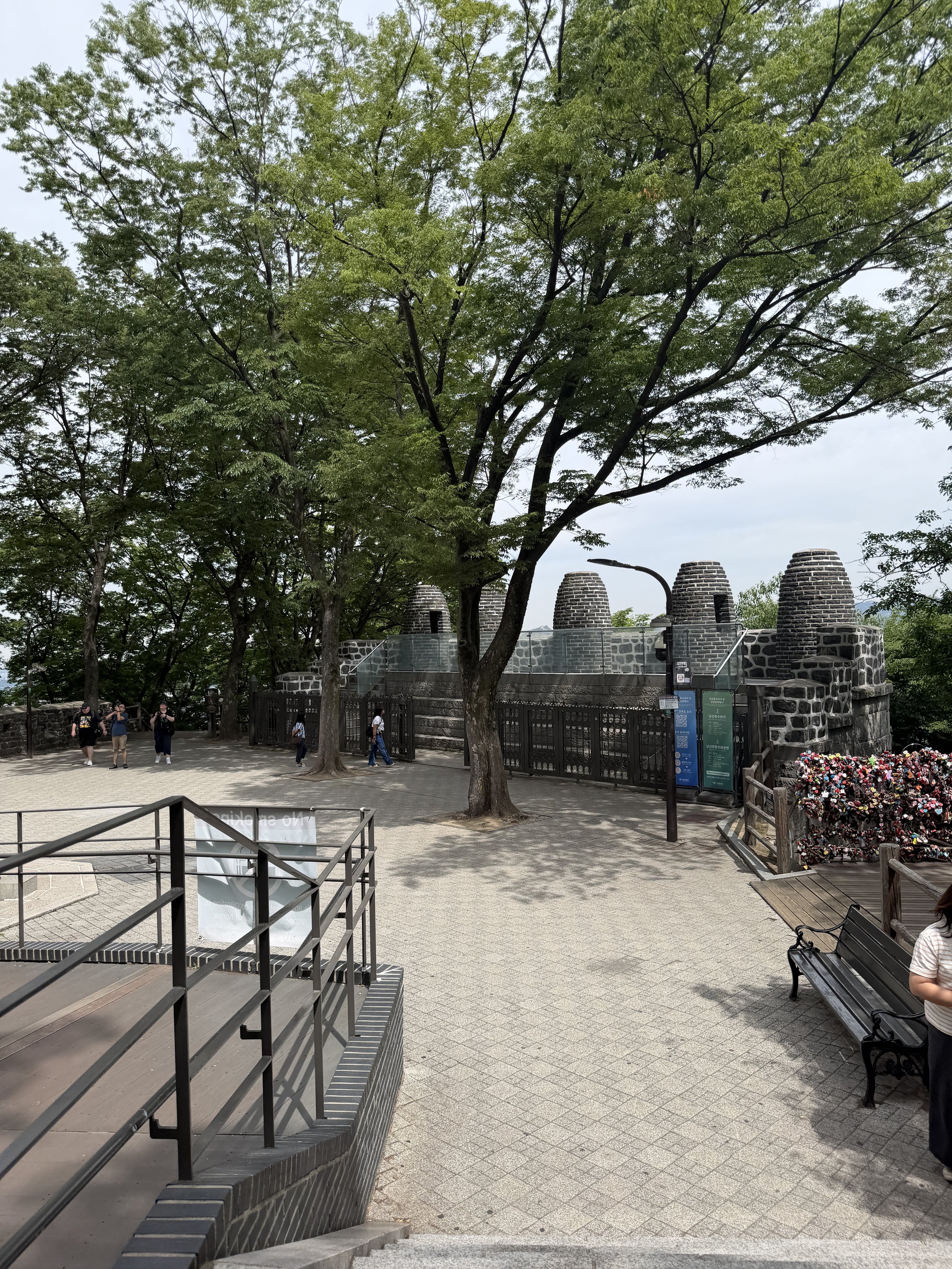
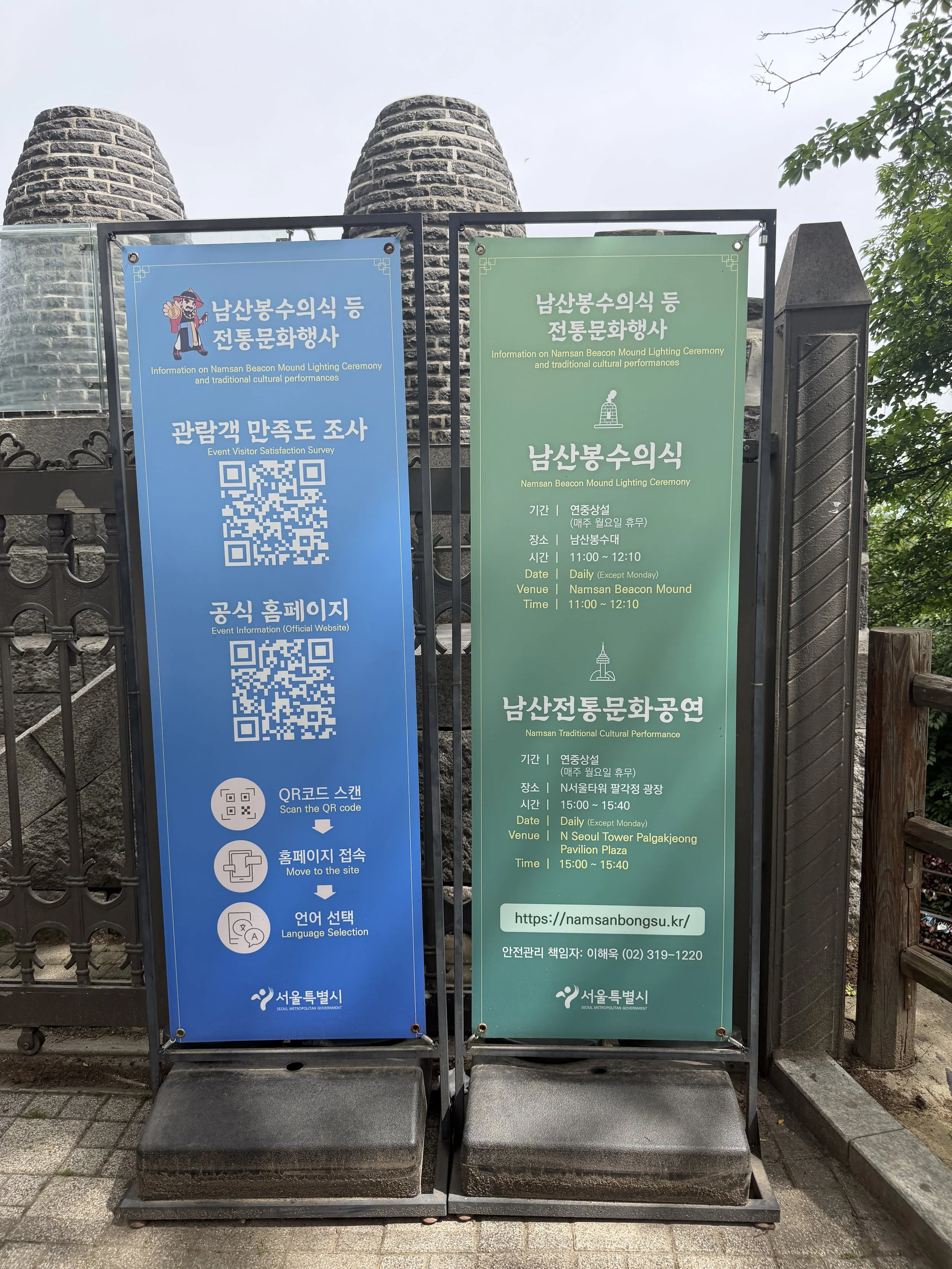
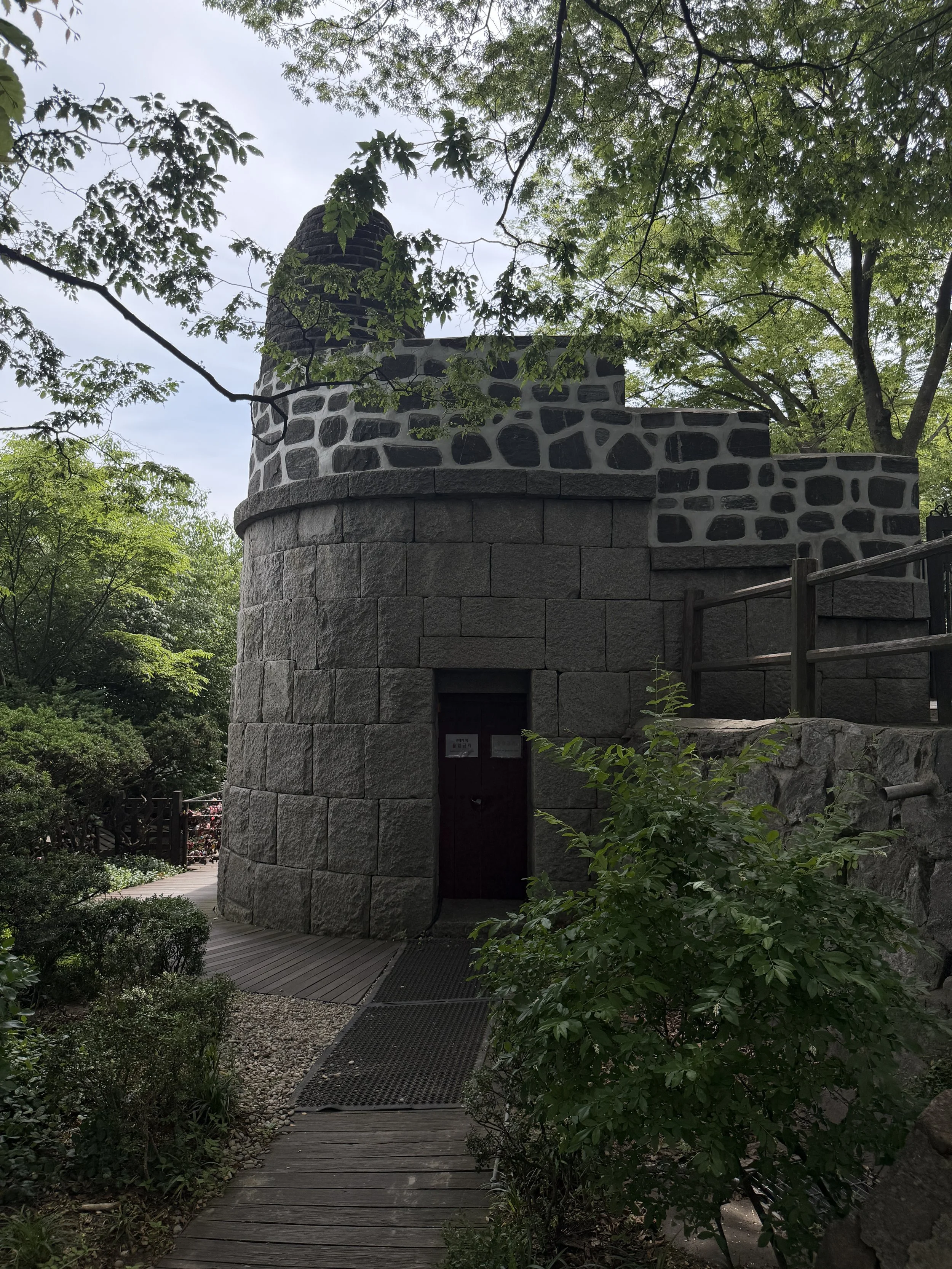
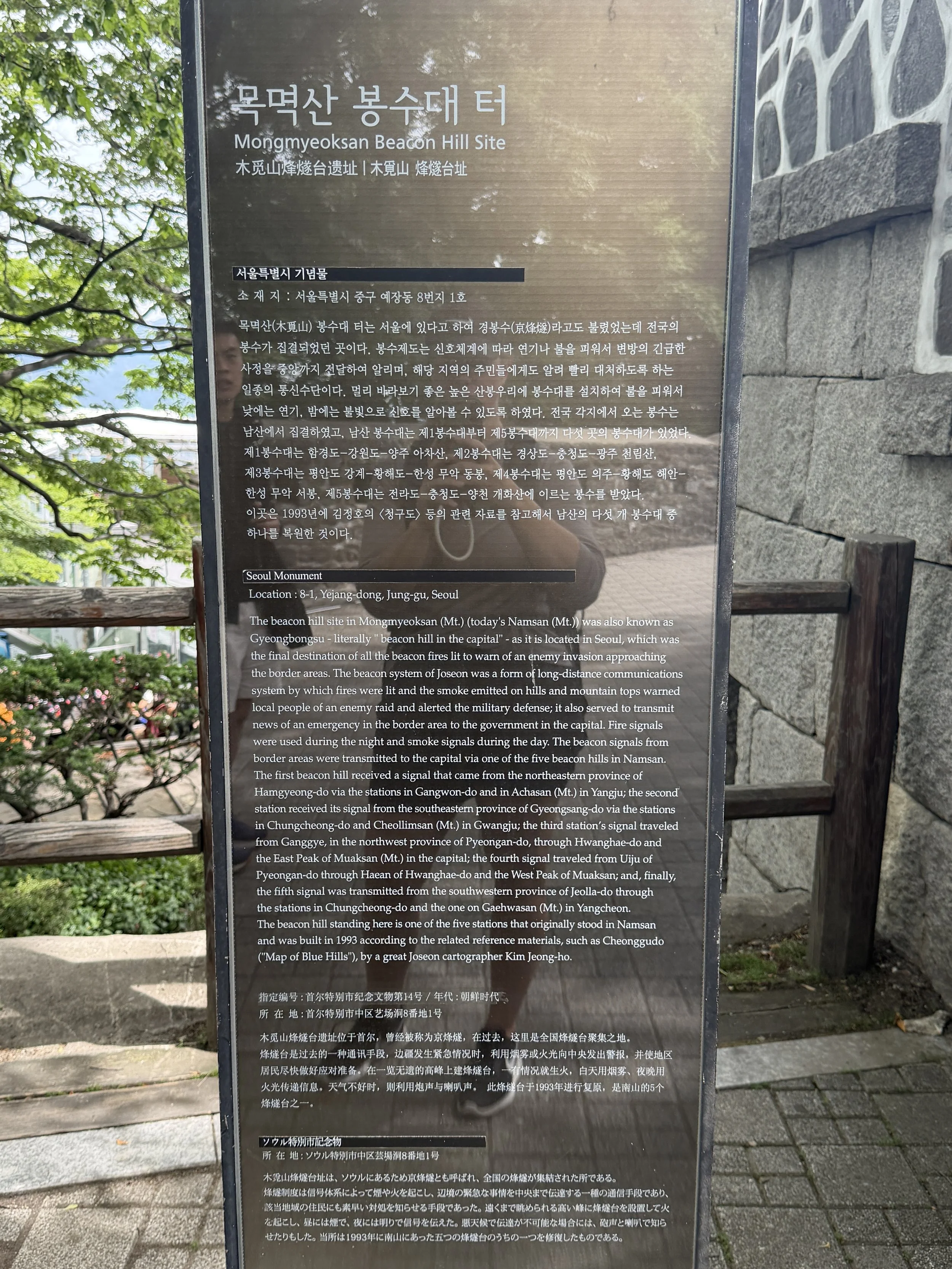
At N Seoul Tower, you'll have the option to walk around historical landmarks like the Mongmyeoksan Beacon Towers. These stone signal towers were once part of Korea's ancient communication network, used to relay messages across the country using smoke during the day and fire at night. It's a fascinating reminder that long before the observation tower became one of Seoul's most recognizable landmarks, this mountain played a vital role in the city's history.
After reaching the tower area, the hike gradually becomes easier as the route begins descending toward Hoehyeon. Make sure to stop by Jambudong Photo Island - basically a deck overlooking the city.
The Hoehyeon Excavation Site
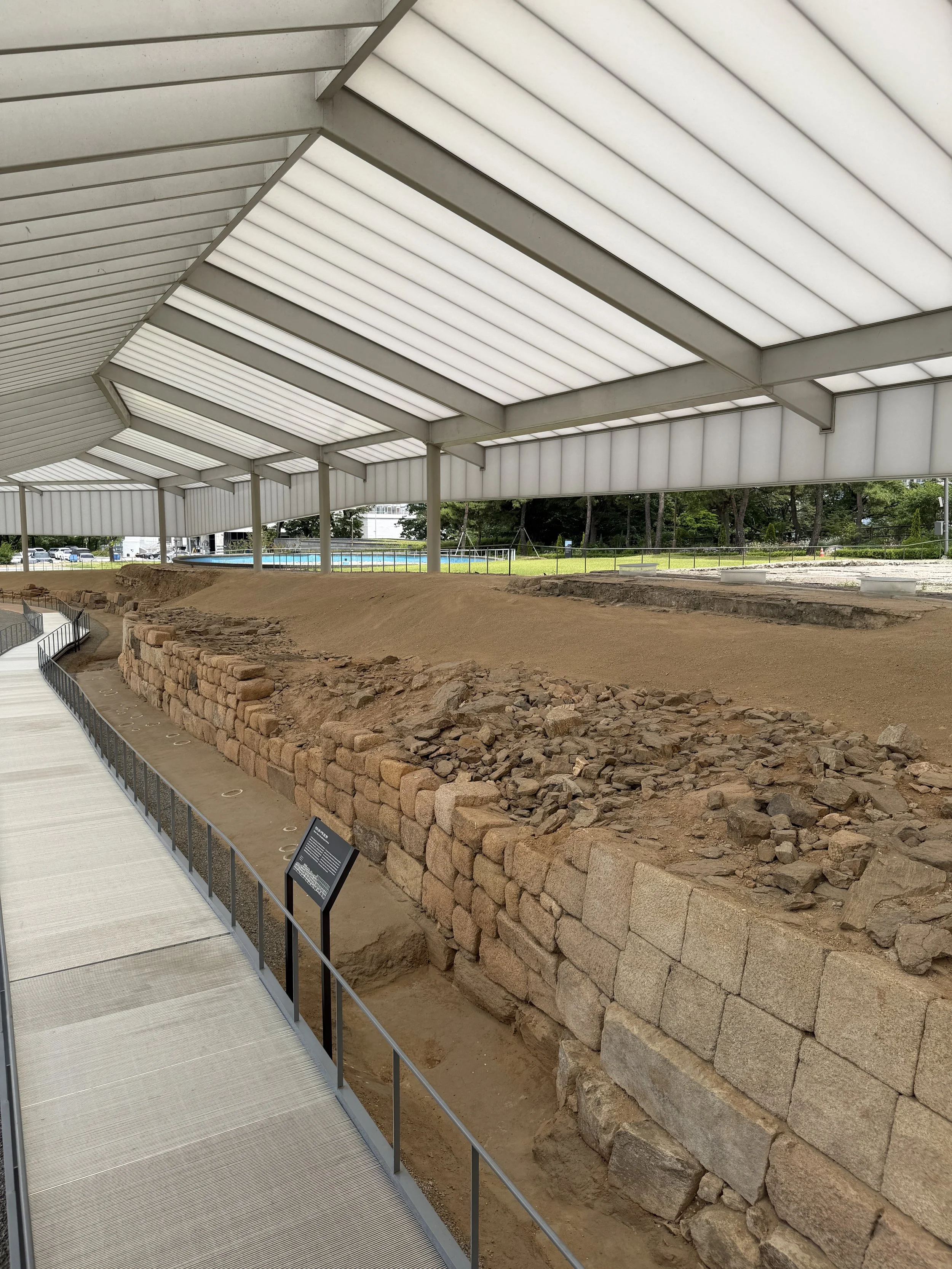
One of the most interesting historical stops on the Namsan section is the excavation site near Hoehyeon at the foot of the mountain. While much of the Seoul City Wall visible today has been restored, this area reveals another chapter of the wall's history. During the Japanese colonial period, portions of the wall were damaged, removed, or buried during the construction of a Japanese Shinto shrine on Namsan in 1925.
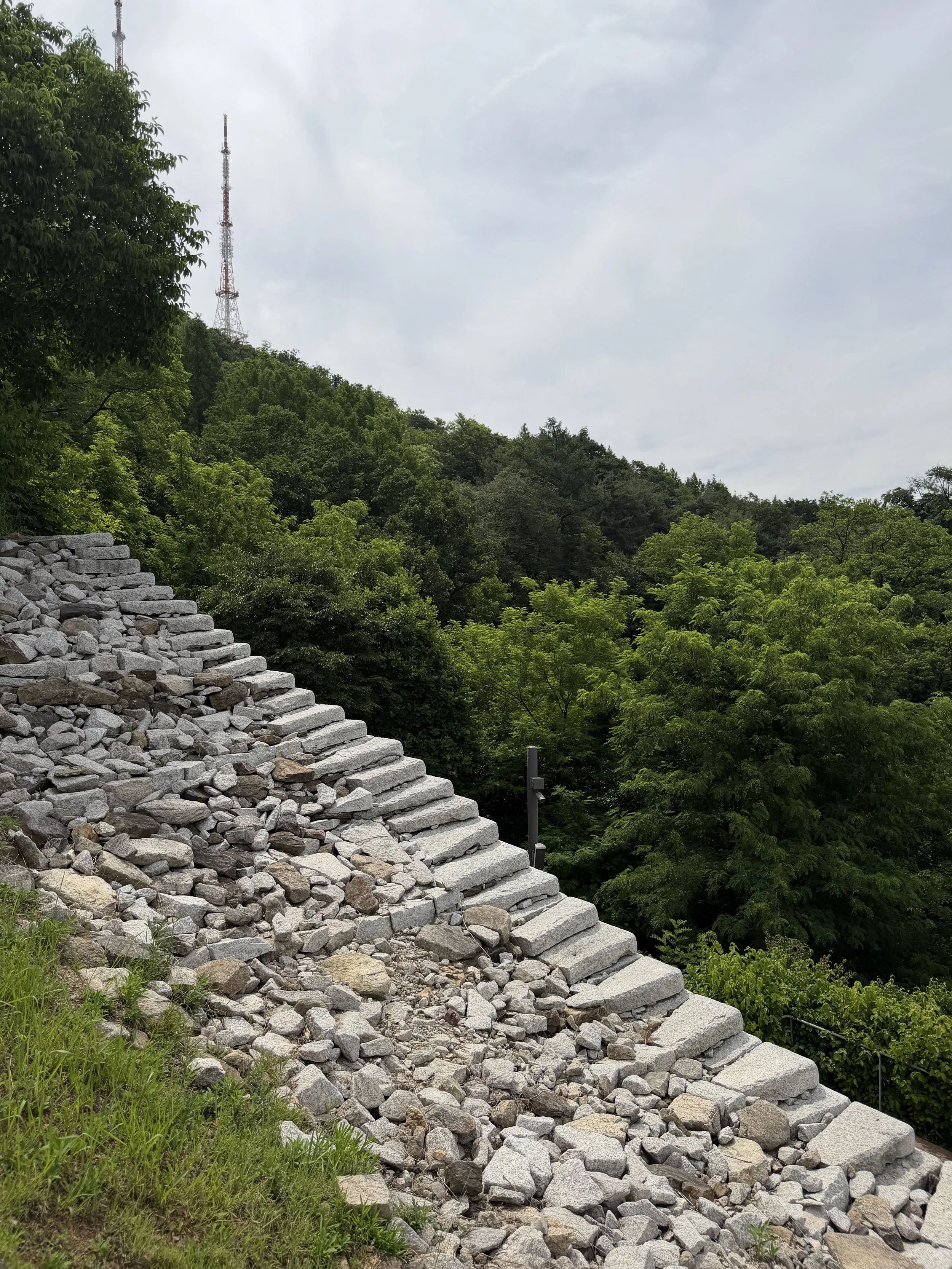
Old rocks from the Seoul City Wall that have been excavated.
For decades, parts of the original wall remained buried. Today, ongoing excavation and restoration work continues to uncover sections of the original fortifications. Standing at the open air museum provides a fascinating glimpse into both the destruction and preservation of Seoul's historic wall. It's a reminder that the Hanyangdoseong Trail is more than just a hiking route - it's a living piece of the city's history.
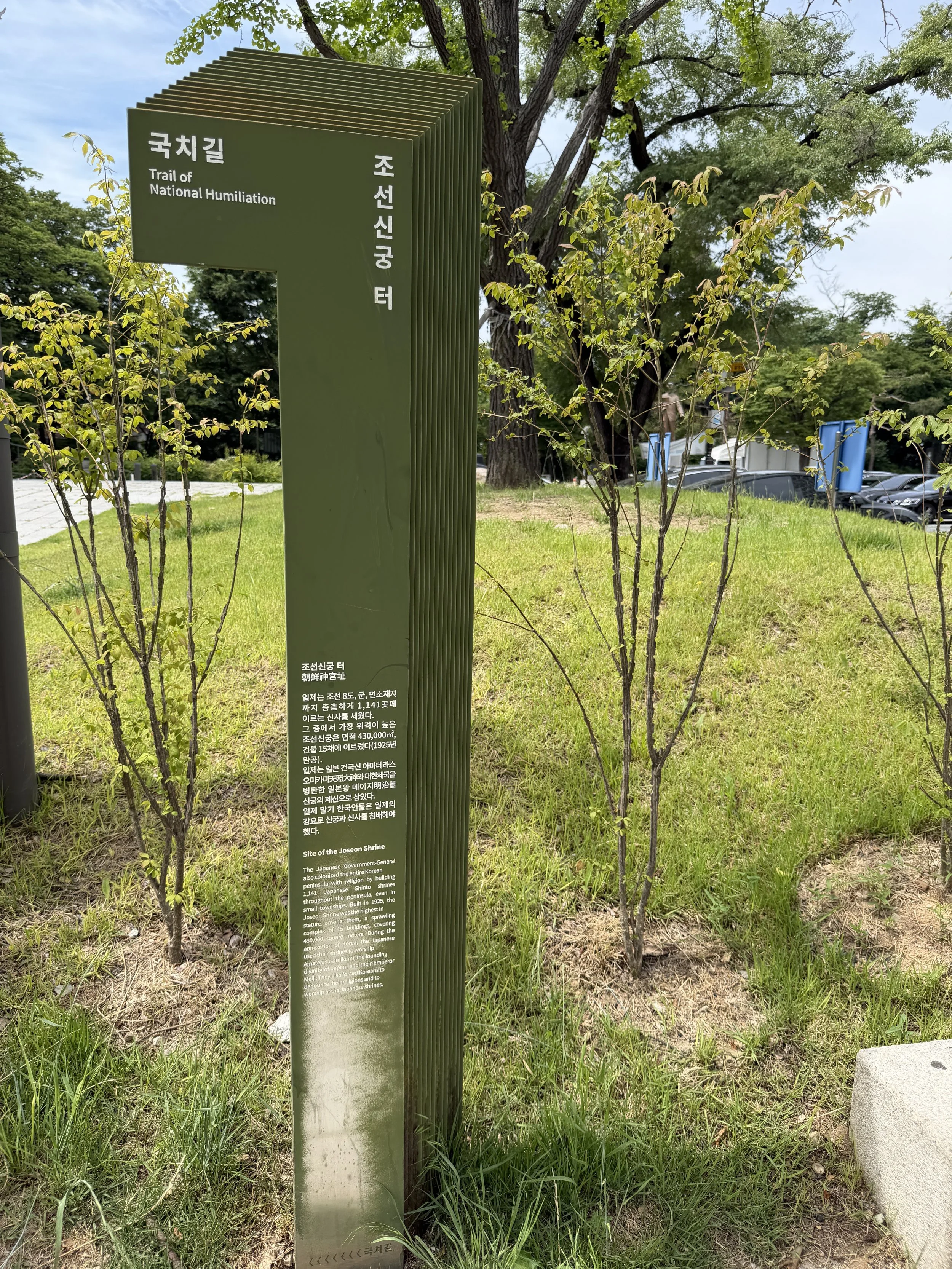
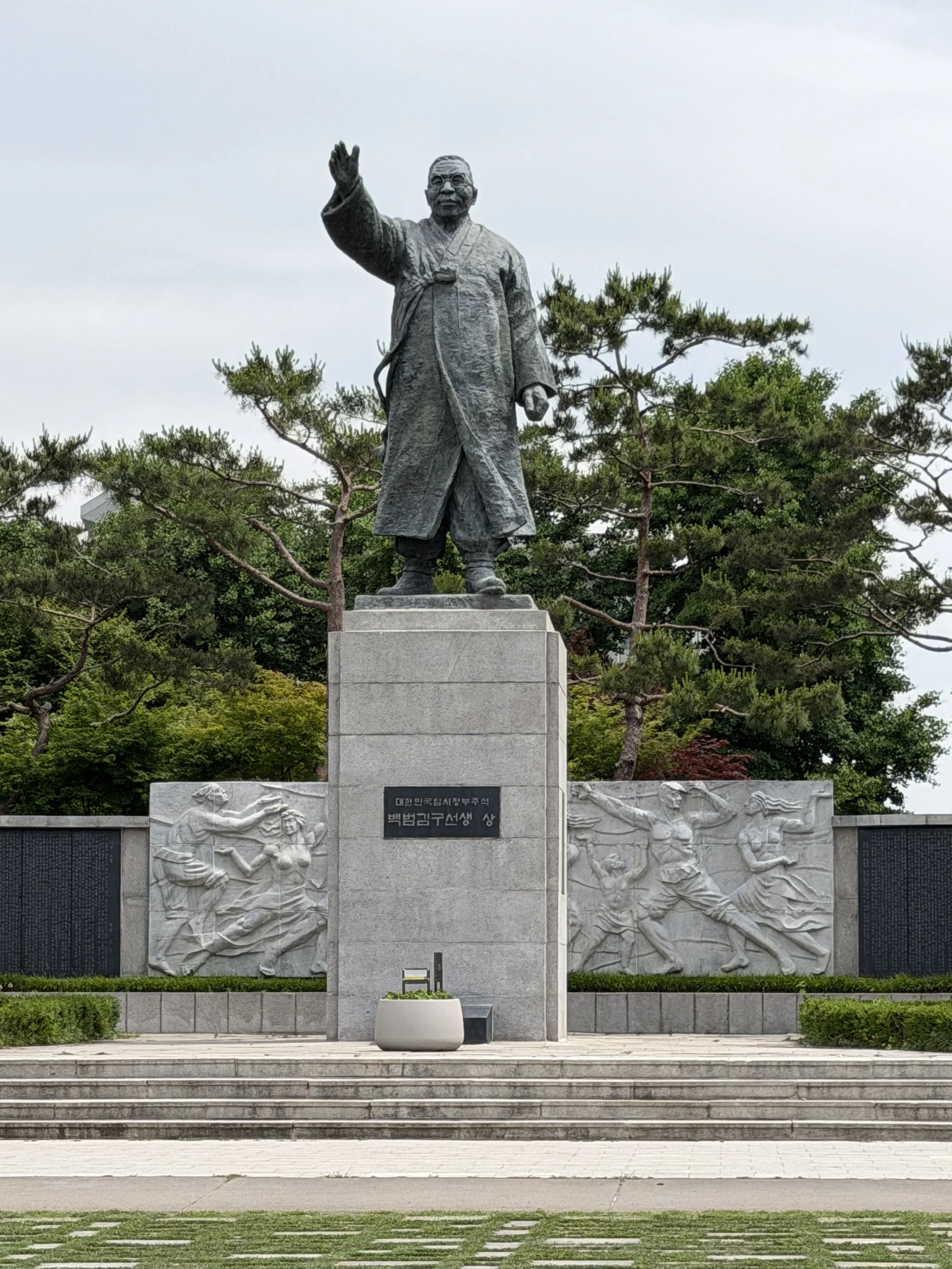
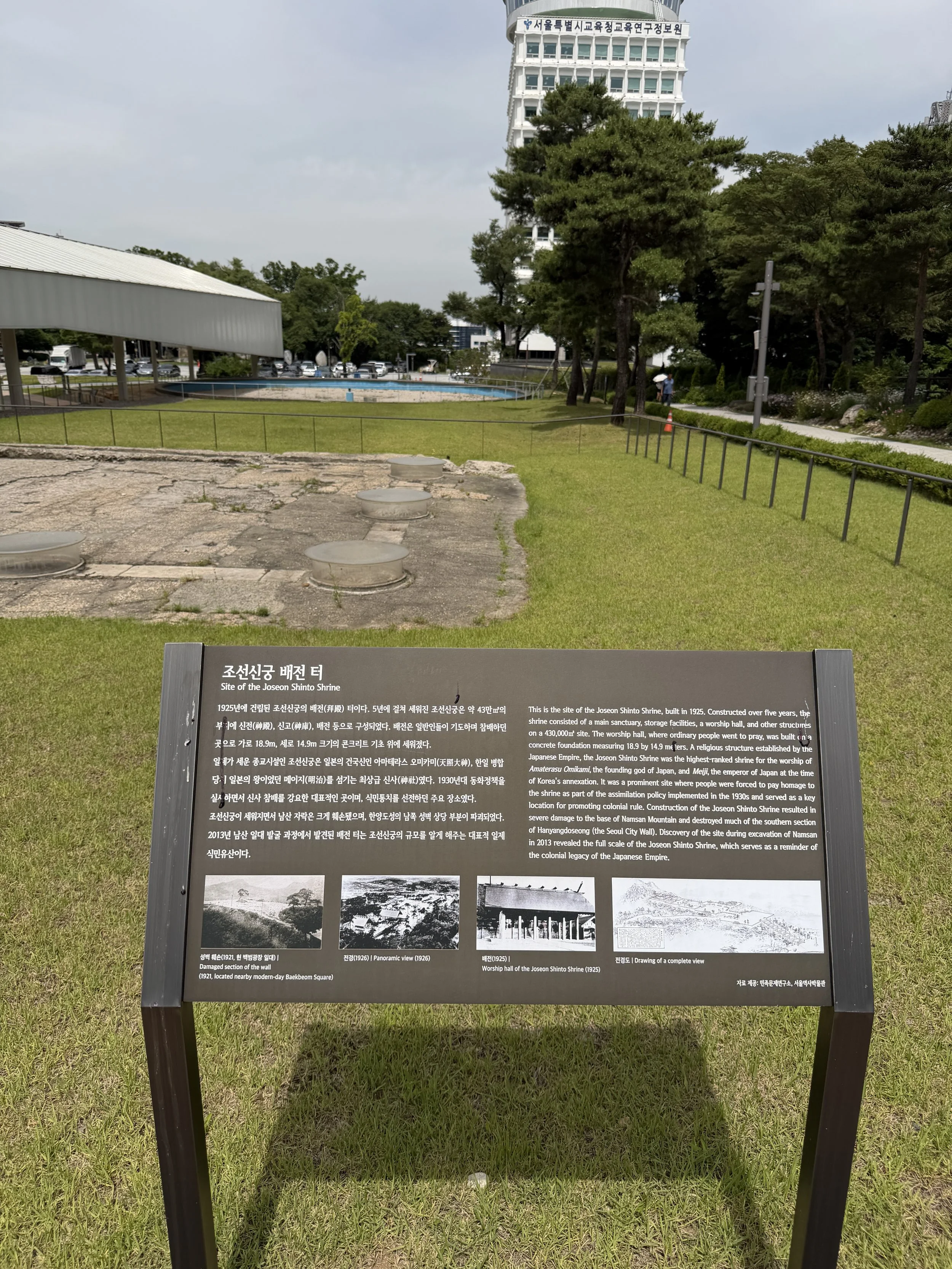
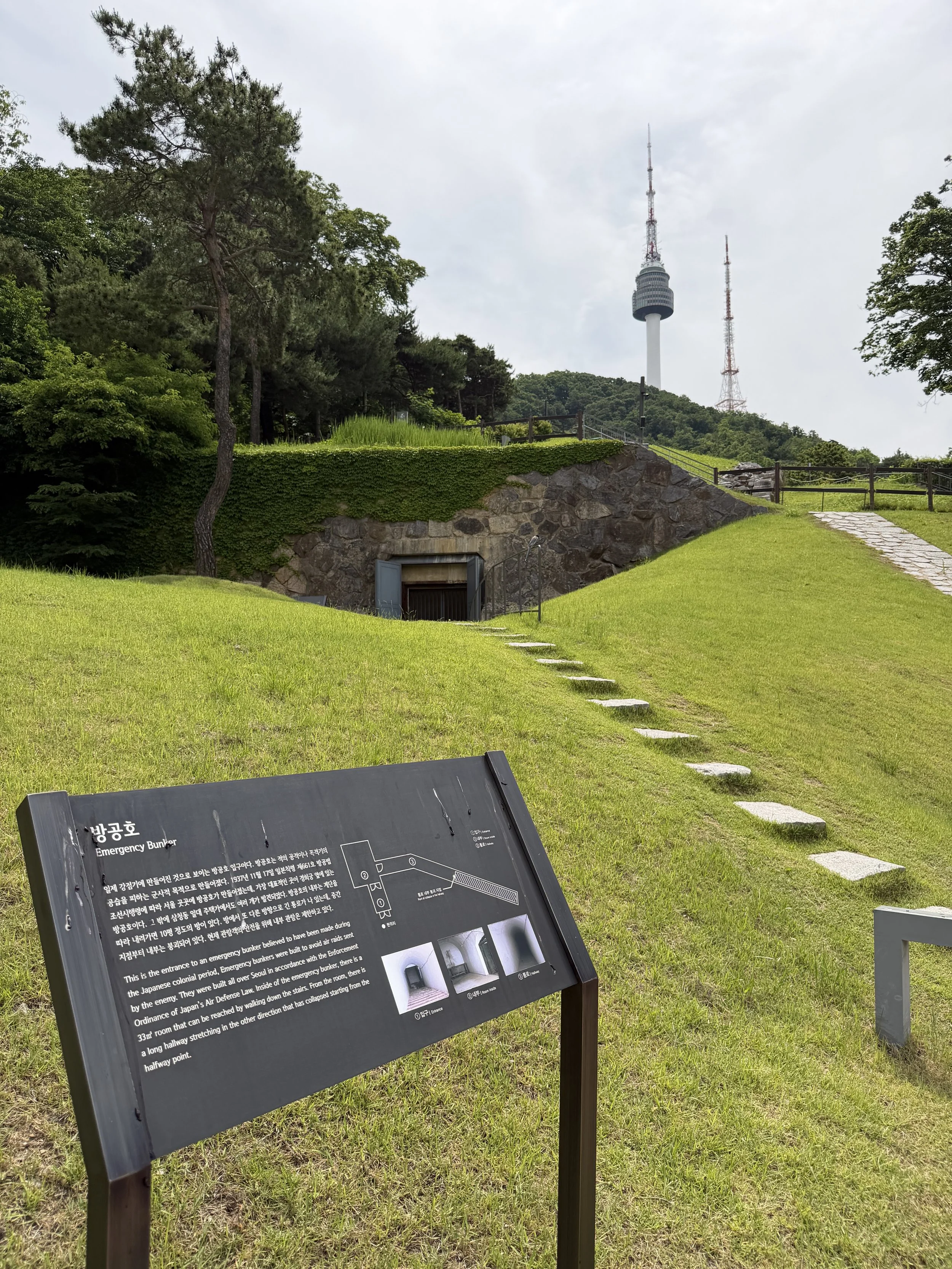
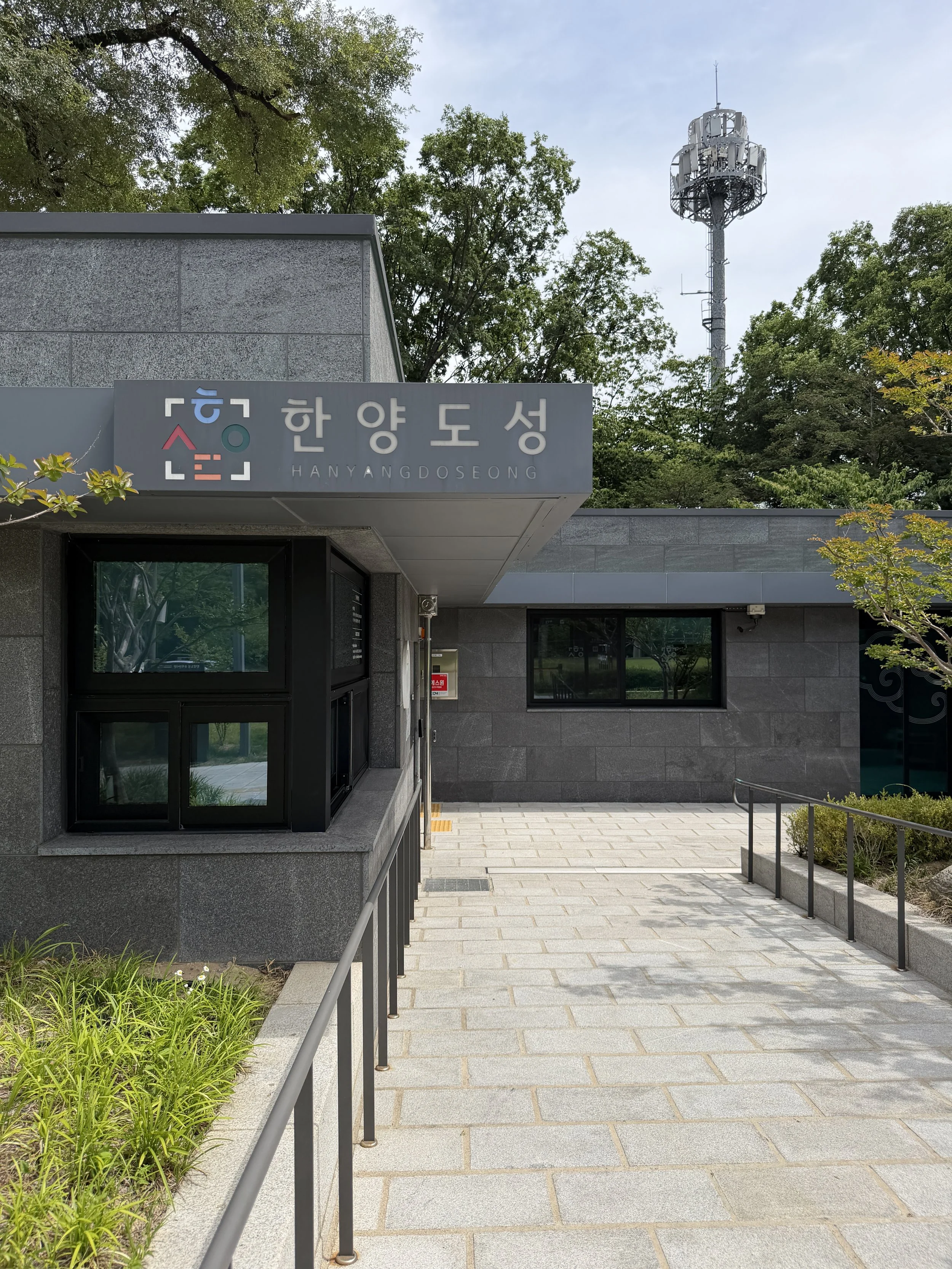
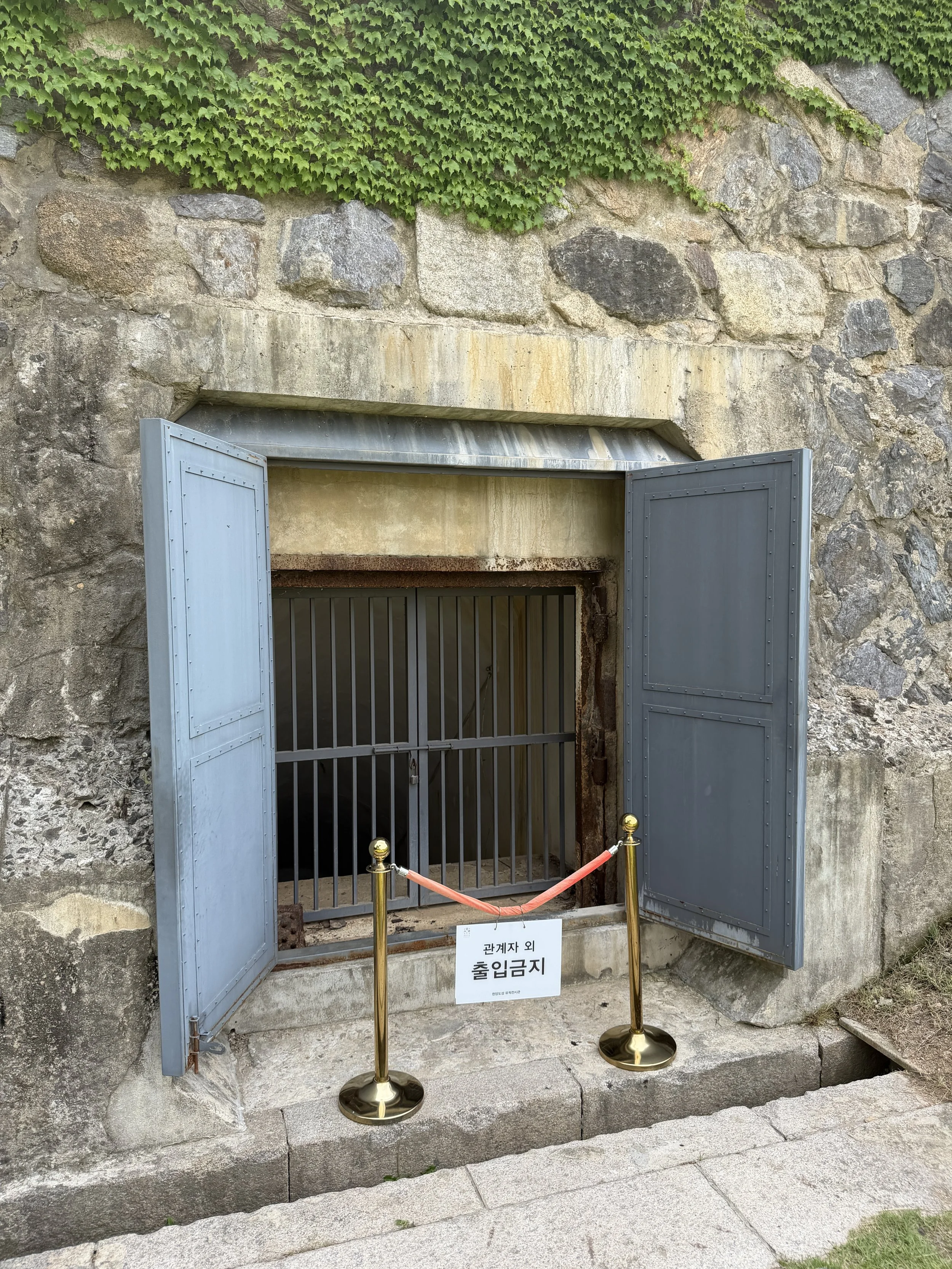

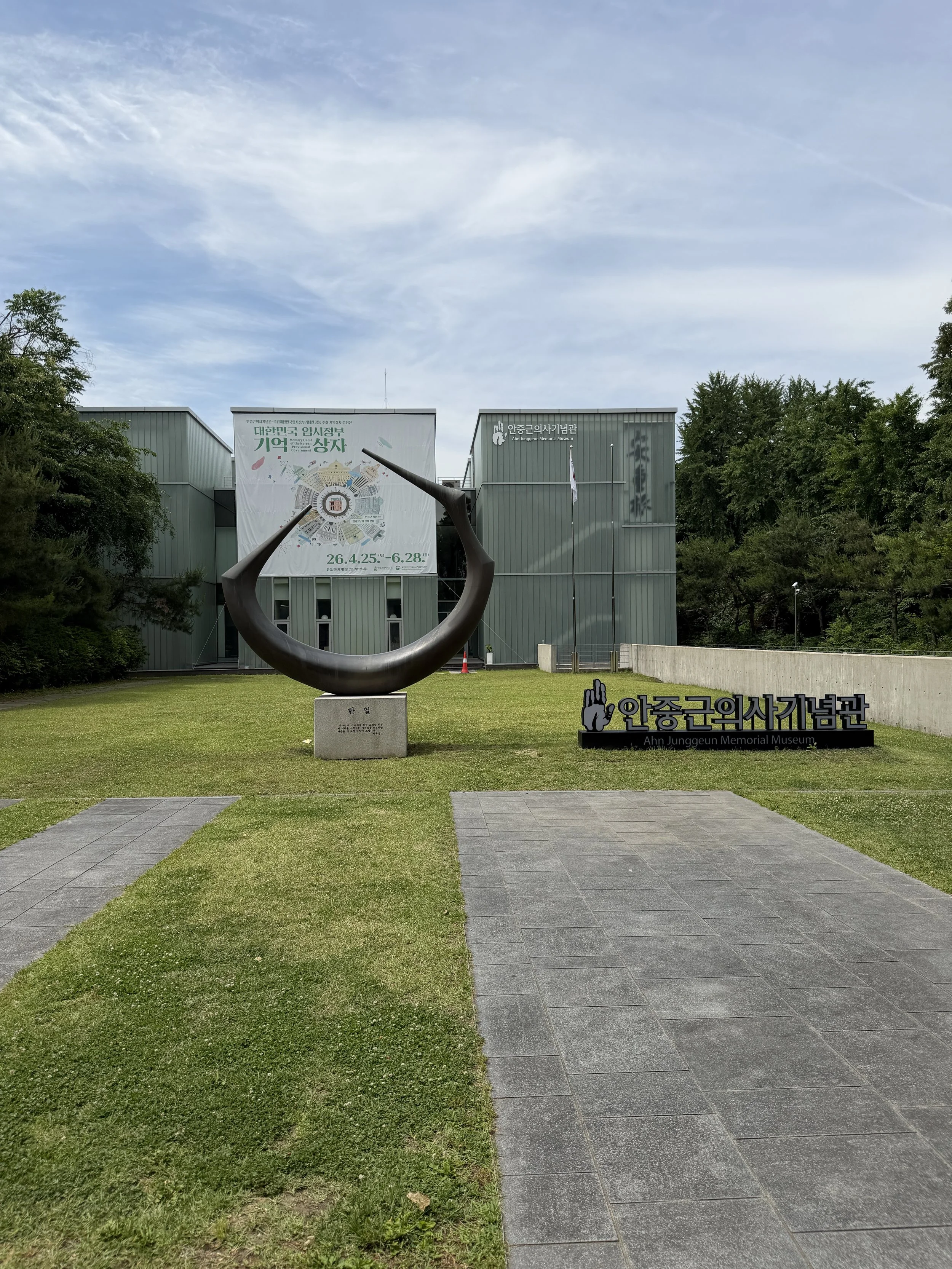
As you continue descending the mountain, you'll pass several other notable sites. In this area, you'll find an emergency bunker built into the mountainside, the Hanyangdoseong Museum, Namsan Library, and the Ahn Jung-geun Memorial Museum.
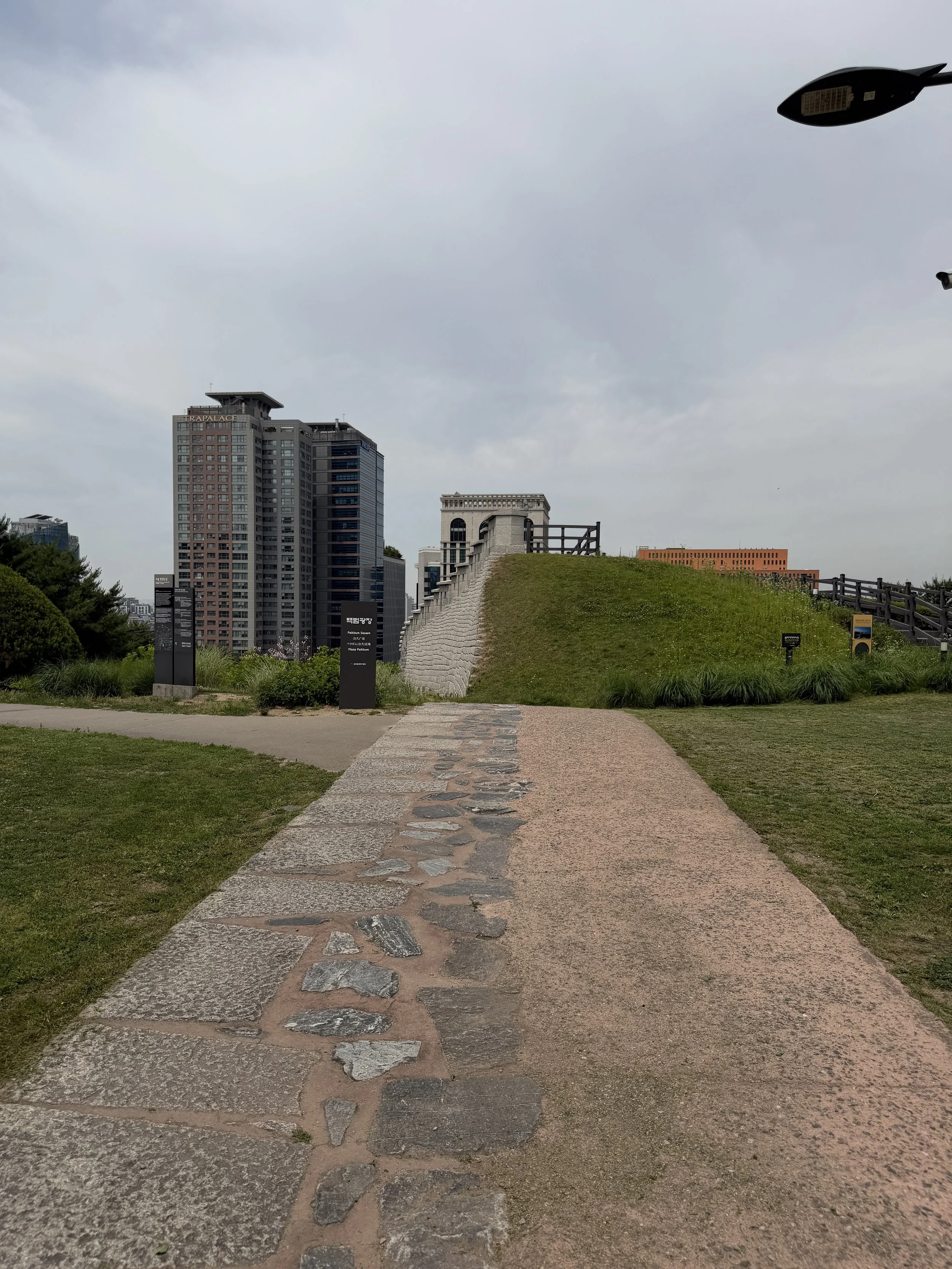
Follow these stones to continue walking Hanyangdoseong.
The trail also passes through Baekbeom Square, where several monuments honor Korean independence activists. One of the things I enjoyed most about the Namsan section was how many layers of Seoul's history could be found in a relatively small area.
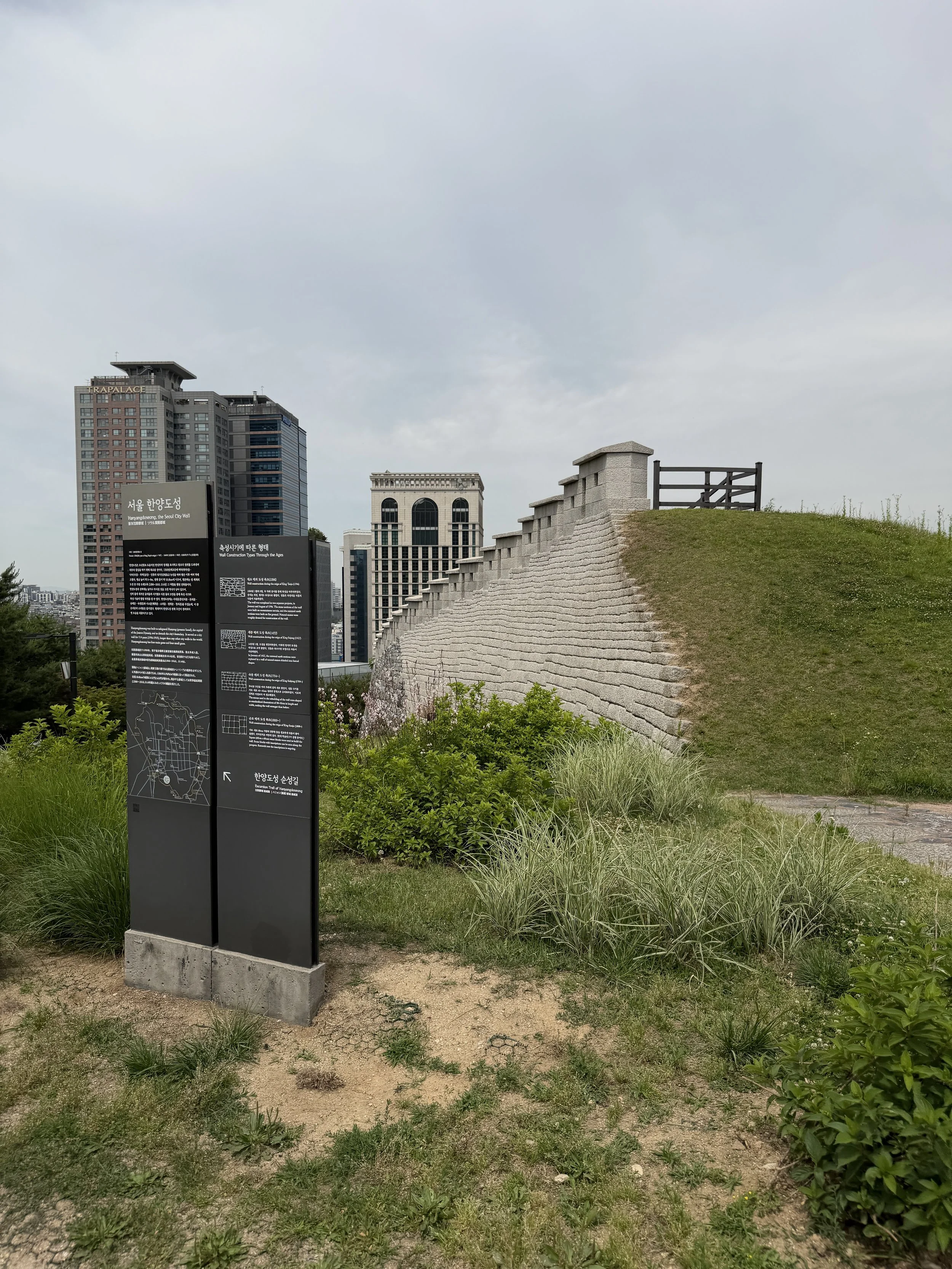
Go to the right, and around the mound, to continue hiking Hanyangdoseong.
Within a short walk, you can experience remnants of the Joseon Dynasty, learn about Korea's independence movement, and enjoy some of the city's most famous modern landmarks. This area is so rich in history, you could spend hours here and not touch on all of it.
Continue Exploring the Seoul City Wall
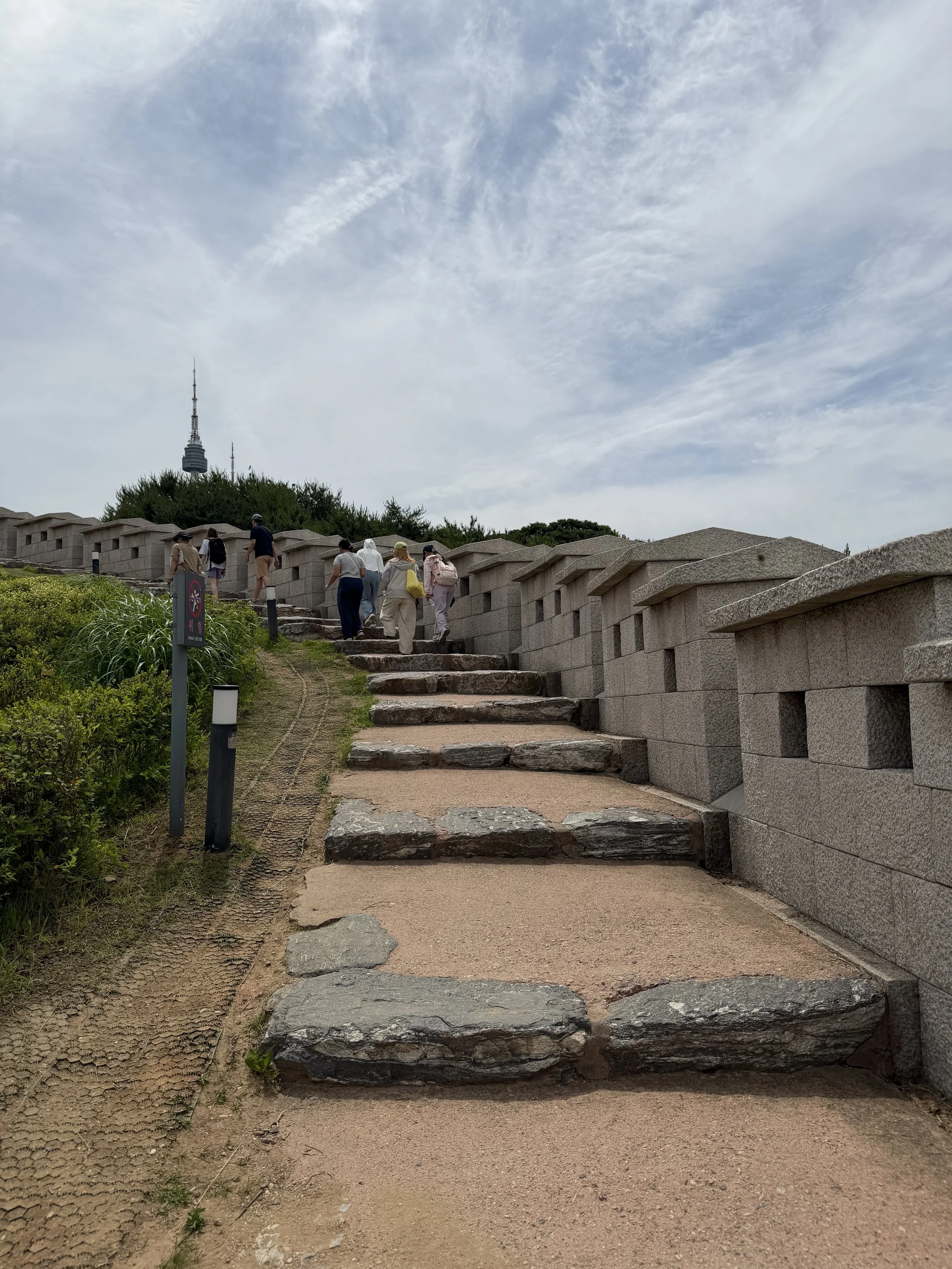
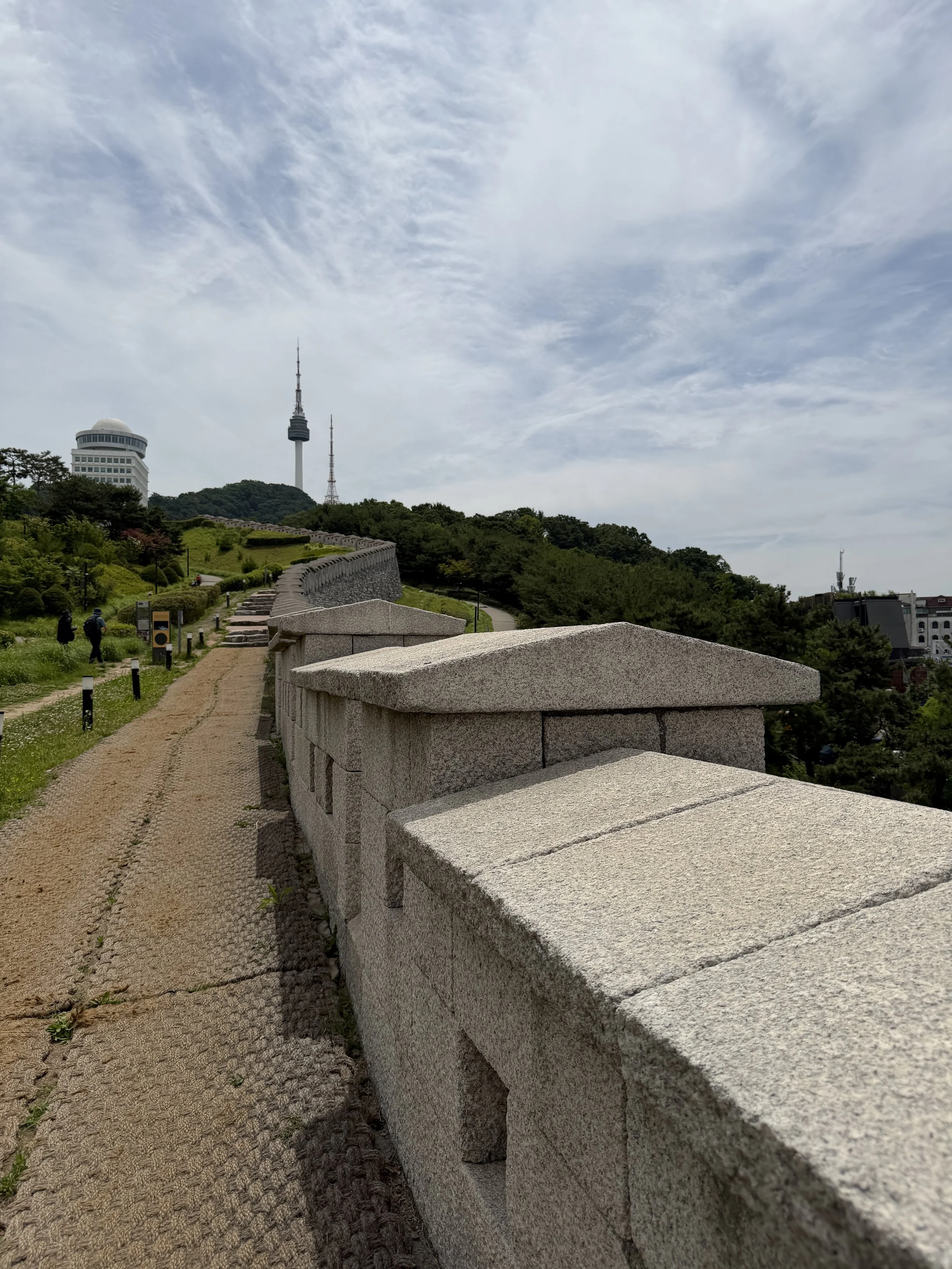
Seoul City Wall near N Seoul Tower
If you'd like to explore more sections of the Hanyangdoseong, I've written guides for the other Seoul City Wall hikes as well. Each course offers a completely different experience, from the rugged granite peaks of Inwangsan to the forested slopes of Baegaksan and the scenic climb up Namsan.
You can start with my complete overview of the Hanyangdoseong, which includes the history of the wall, information on all six hiking courses, and tips for planning your own journey around Seoul's 18.6-kilometer fortress.
Read next:
Whether you're hiking a single section or working toward completing the entire route, the Seoul City Wall offers one of the best ways to experience Seoul's history, mountains, and neighborhoods all in a single journey.