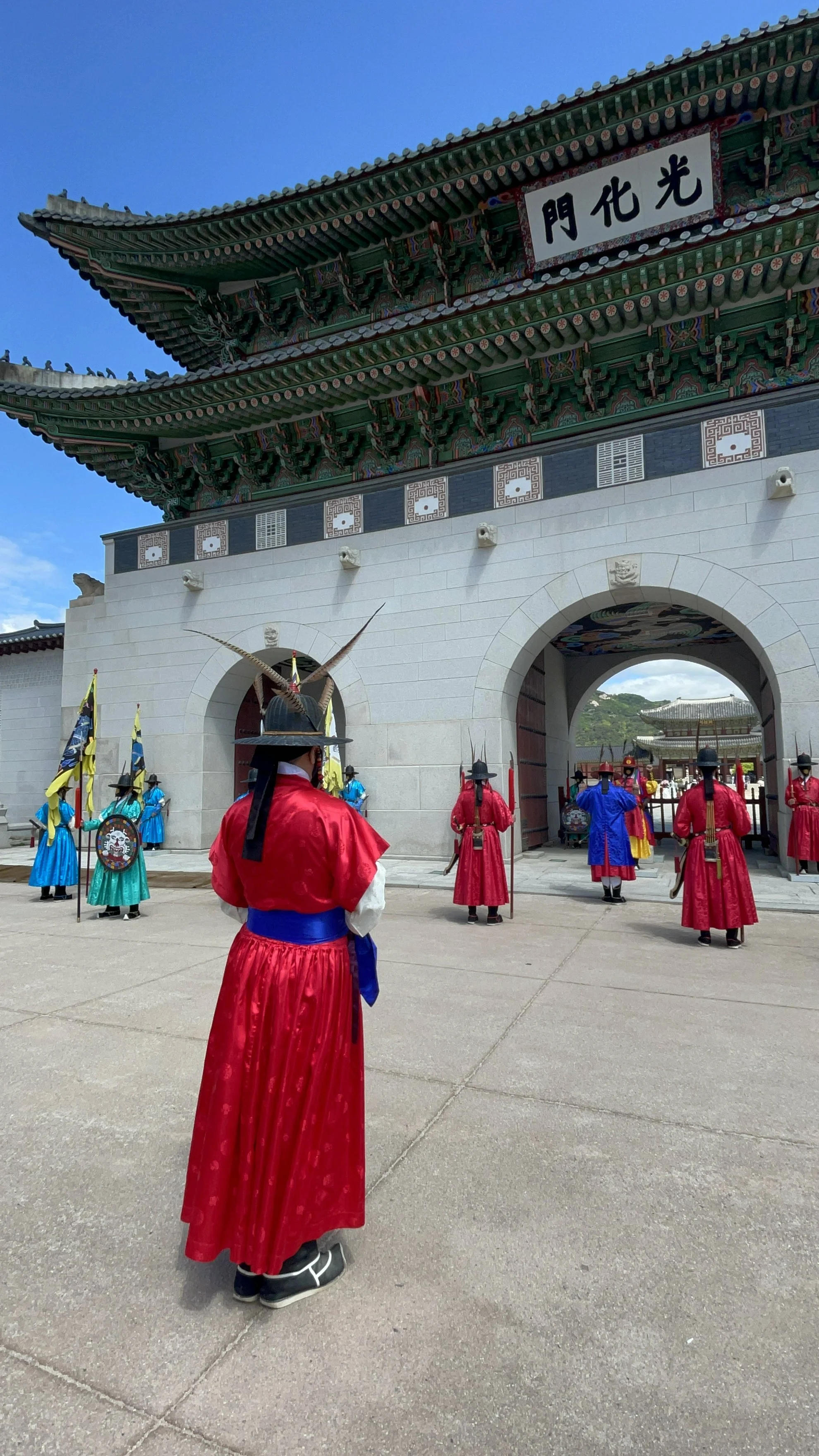
Where Old Korea Meets Modern Seoul: A Walk Through Gyeongbokgung
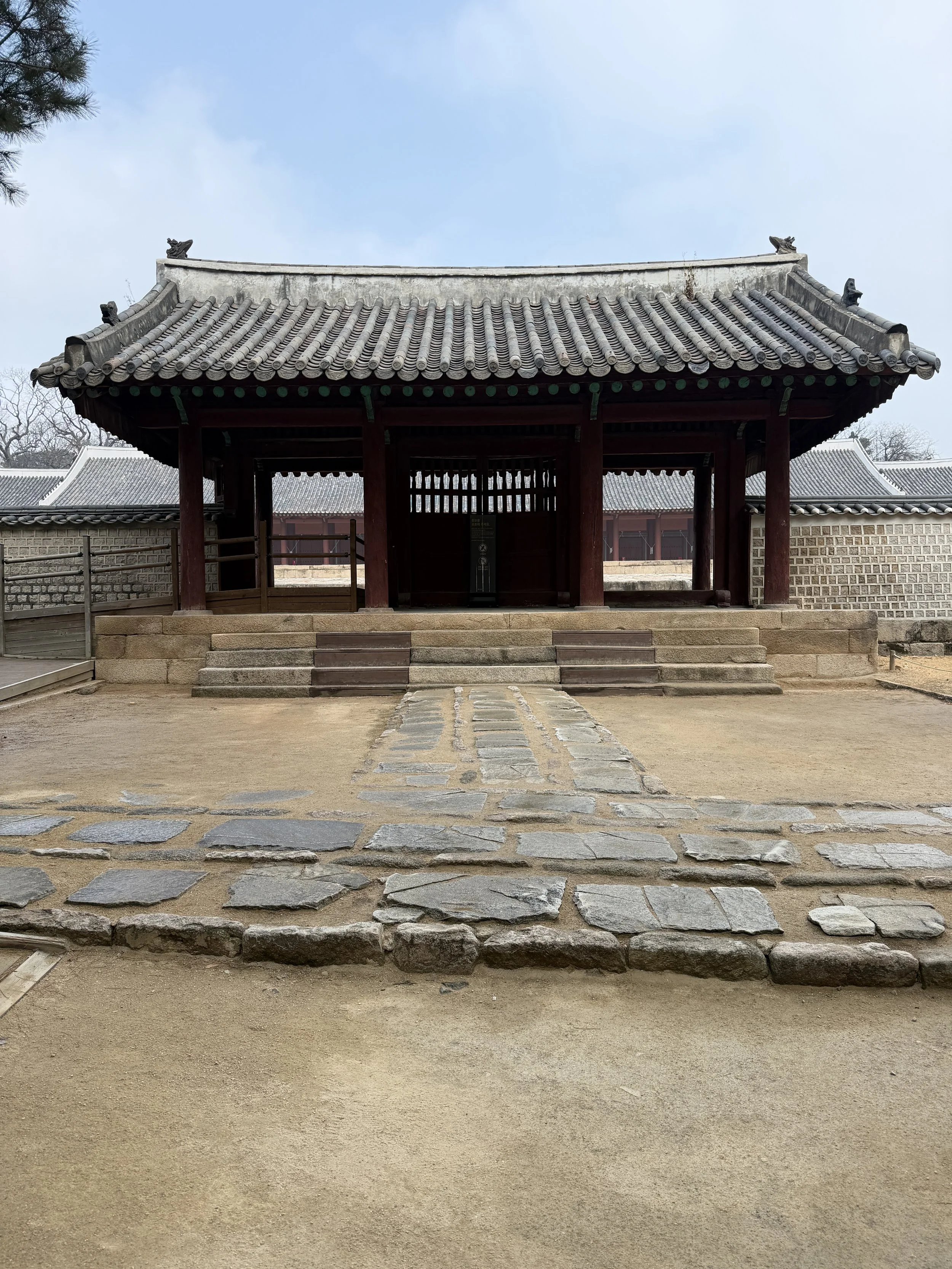
Gyeongbokgung sits at the edge of Mount Bugaksan, pressed right up against the modern center of Seoul. It’s the palace most people picture when they think of Korea’s royal past—and yet, walking through it never feels frozen in time. Traffic hums nearby, office buildings rise just beyond the walls, and still, inside the gates, everything slows.
Walking through Gyeongbokgung felt less like checking off a landmark and more like moving through a space that has been rebuilt, reimagined, and reclaimed over and over again.
Entering the Palace Grounds
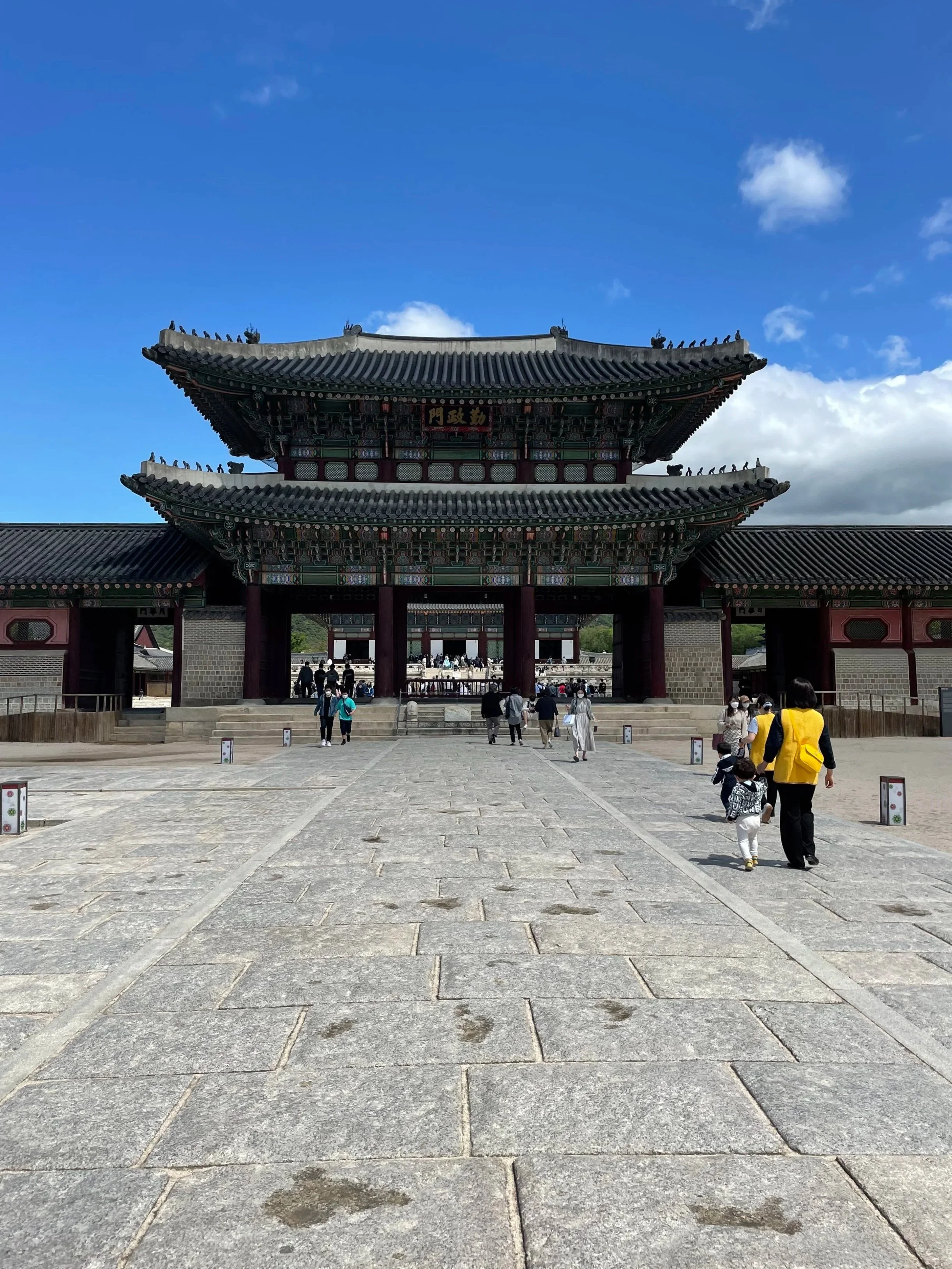
Gyeongbokgung was built in 1395, early in the Joseon Dynasty, and served as the main royal palace for centuries. Its name—“Palace Greatly Blessed by Heaven”—feels fitting once you step inside and see how deliberately the buildings align with the mountains behind them.
Passing through Gwanghwamun Gate, the palace immediately opens up. The courtyards are wide, the buildings carefully spaced, and the symmetry is striking without feeling overwhelming. Compared to some of the other palaces in Seoul, Gyeongbokgung feels more formal—designed to project authority and order rather than intimacy.
Each hall has a specific role, and even without knowing all the details, it’s easy to sense that nothing here was placed casually. This was a working palace, a political center, and a symbol of power.
Seeing the Palace in Motion
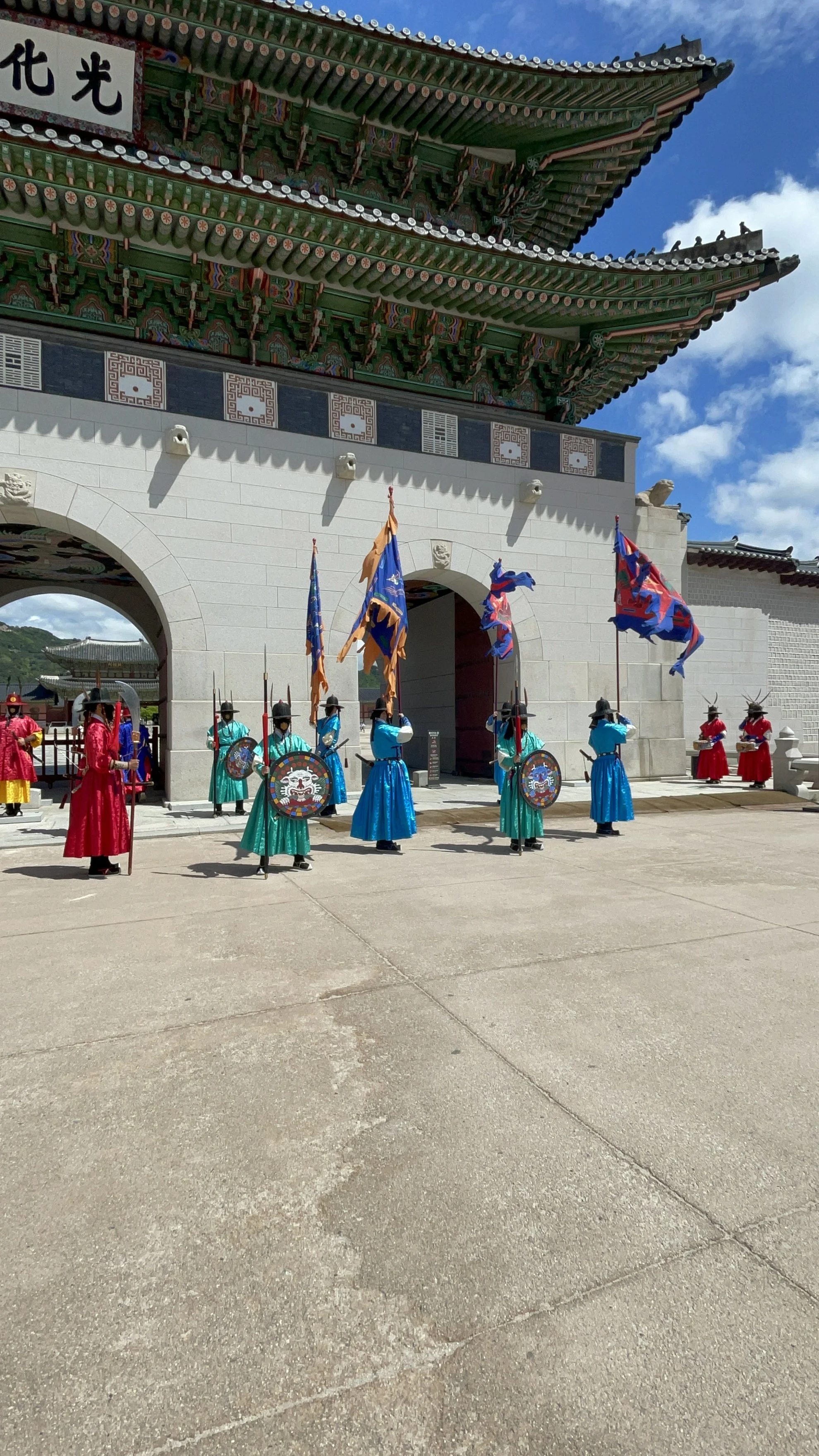
The Changing of the Guard ceremony at Gwanghwamun Gate at Gyeongbokgung
Watching the Changing of the Guard ceremony at Gwanghwamun Gate is always a memorable experience. The ceremony is formal and highly structured, but it never feels staged for spectacle. Each movement is deliberate, the uniforms carefully detailed, and the rhythm of traditional drums echoes across the stone courtyard.
For a few minutes, the modern city fades into the background. The sound carries through the gate, drawing attention not just to the guards themselves, but to the space they occupy. It becomes easy to imagine this area as it once was—active, ceremonial, and central to palace life—rather than simply an entrance visitors pass through.
Don’t Miss These Highlights
Rather than trying to see everything, I find myself taking new routes each time I visit. Here are some of the highlights at Gyeongbokgung.
Geunjeongjeon Hall
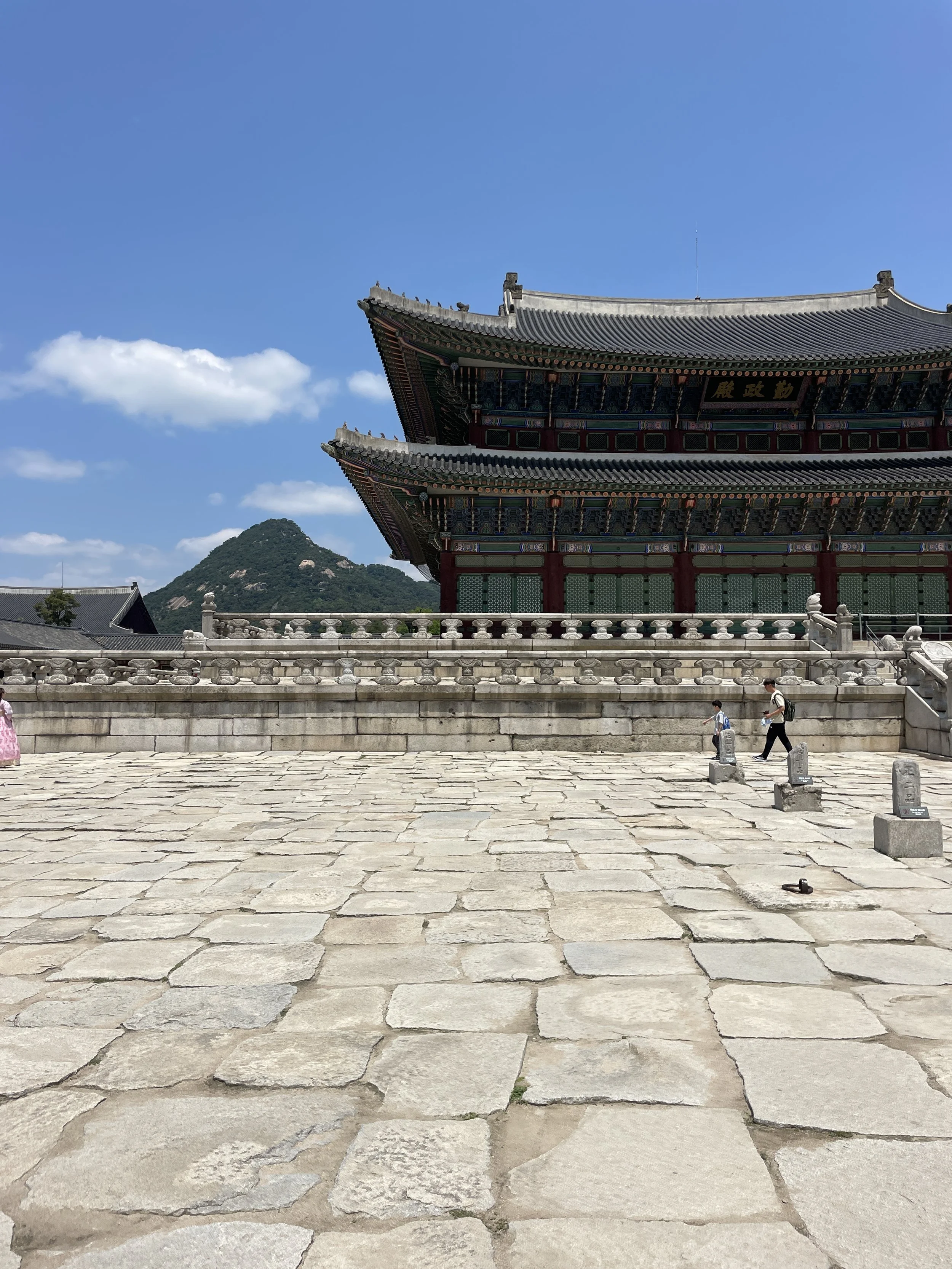
Geunjeongjeon Hall at Gyeongbokgung
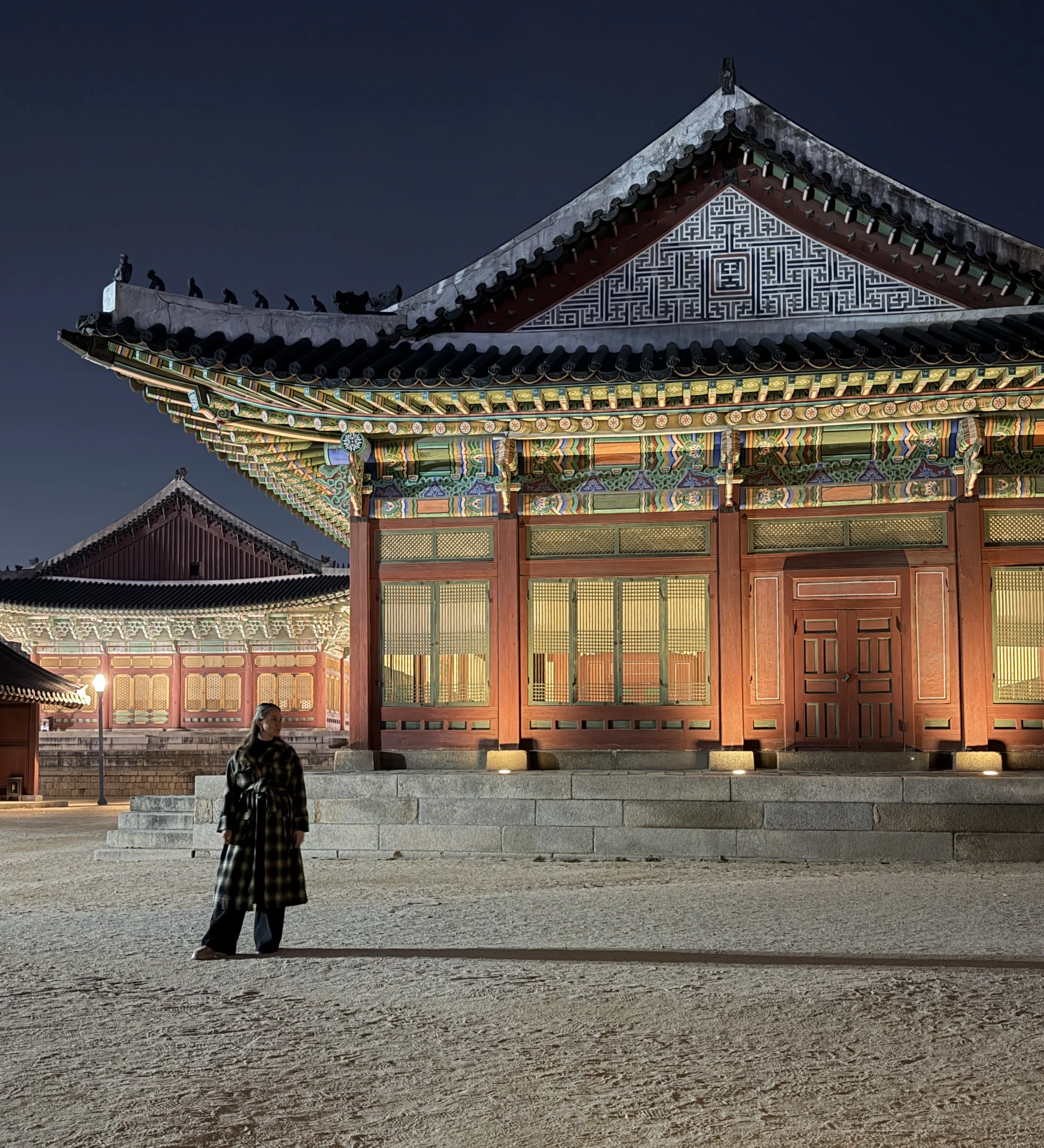
The main throne hall is imposing without being flashy. Standing in the courtyard, you can clearly see how hierarchy was physically built into the space—from the stone markers on the ground to the elevated throne itself. This hall is almost always crowded from top to bottom with visitors!
Gyeonghoeru Pavilion
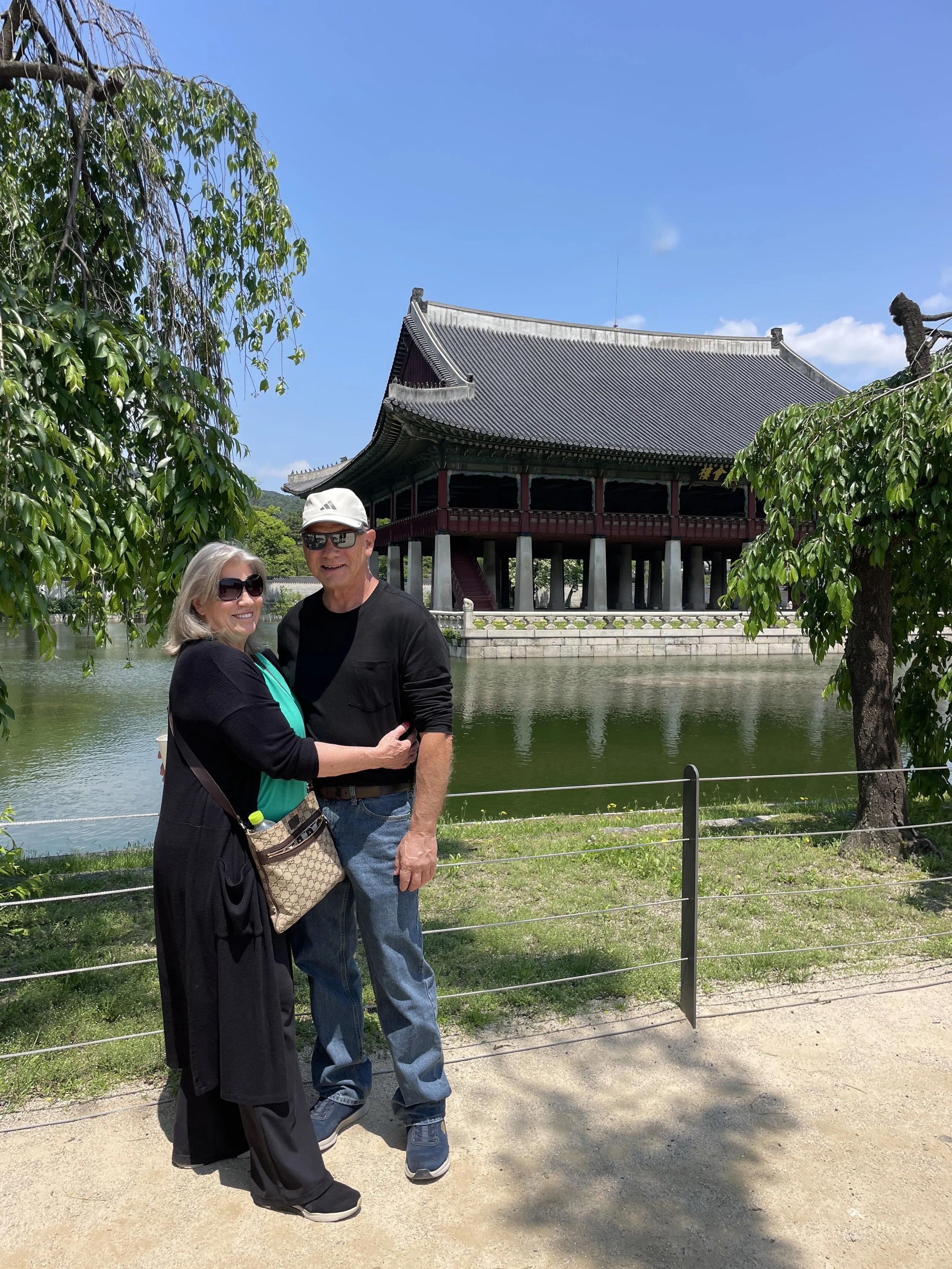
Say hello to my cute parents!
Sitting above a lotus pond, this pavilion feels more open and relaxed than the surrounding halls. It’s easy to understand why it was used for banquets—there’s a sense of balance here between architecture and nature.
Hyangwonjeong Pavilion
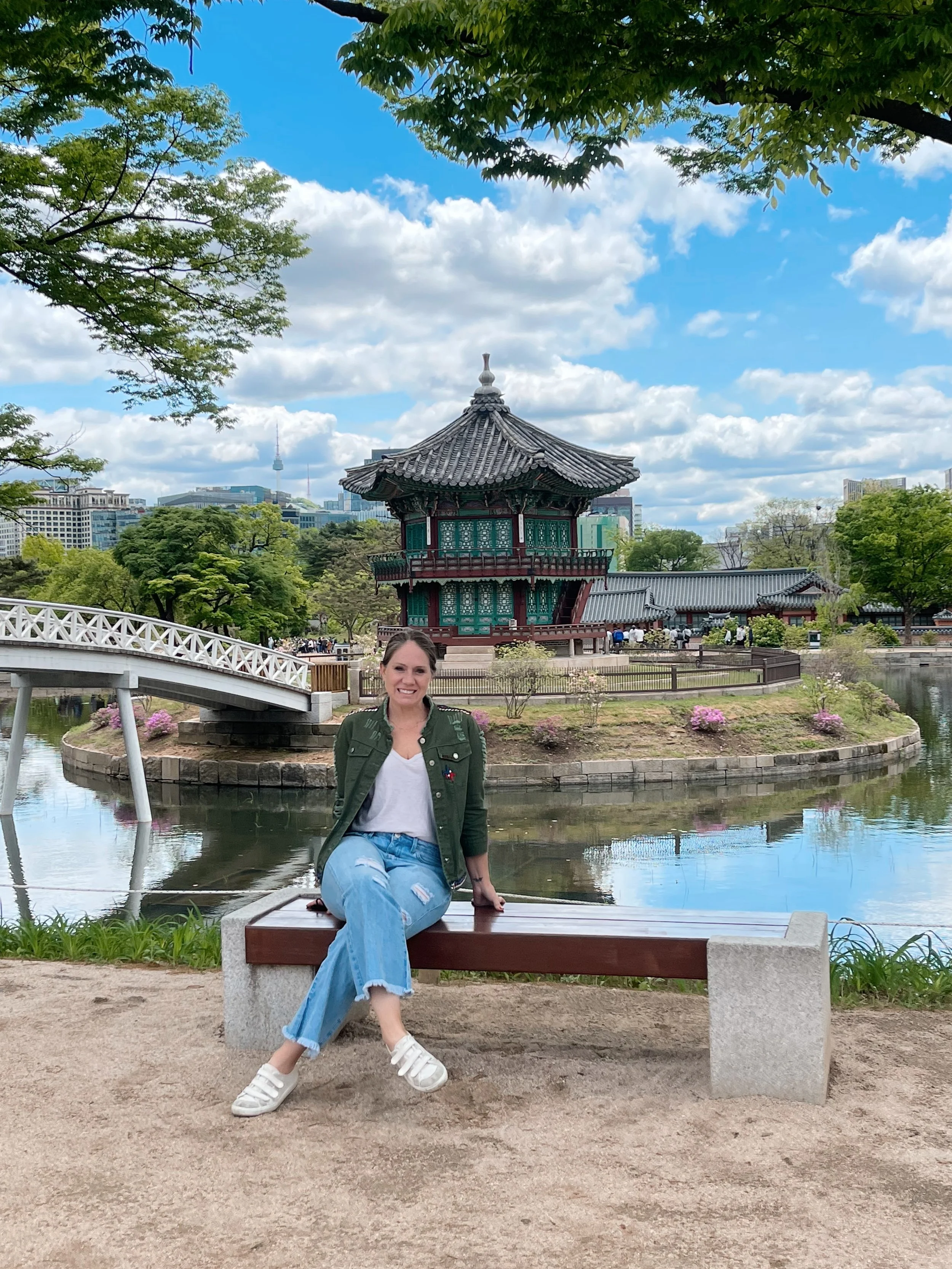
My favorite view at Gyeongbokgung - love the combination of skyscrapers combined with history.
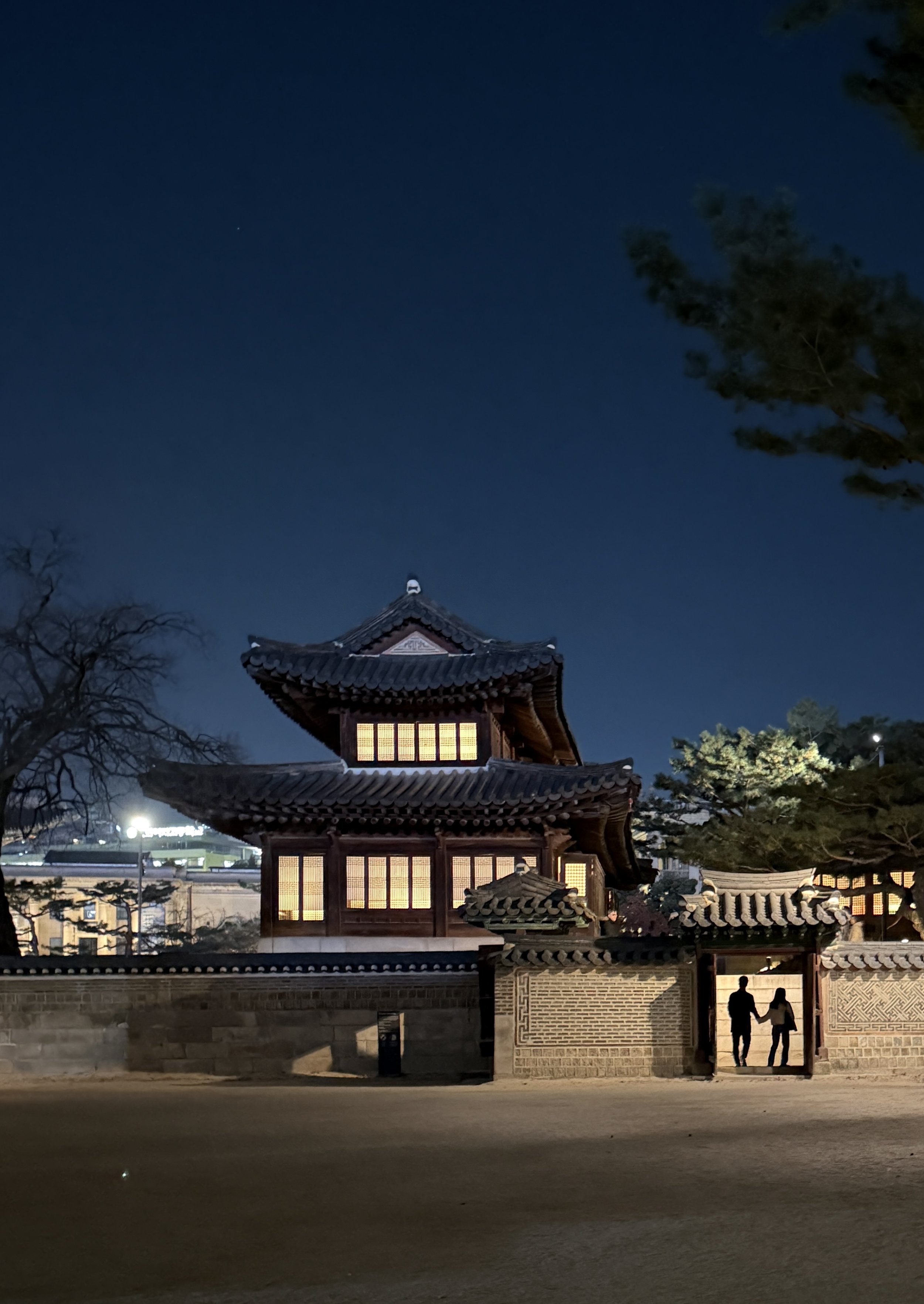
Toward the back of the palace, this is one of the quietest areas of the palace grounds. This is actually one of my favorite spots at Gyeongbokgung because it’s one of the clearest places to see old Korea and modern Korea existing side by side.
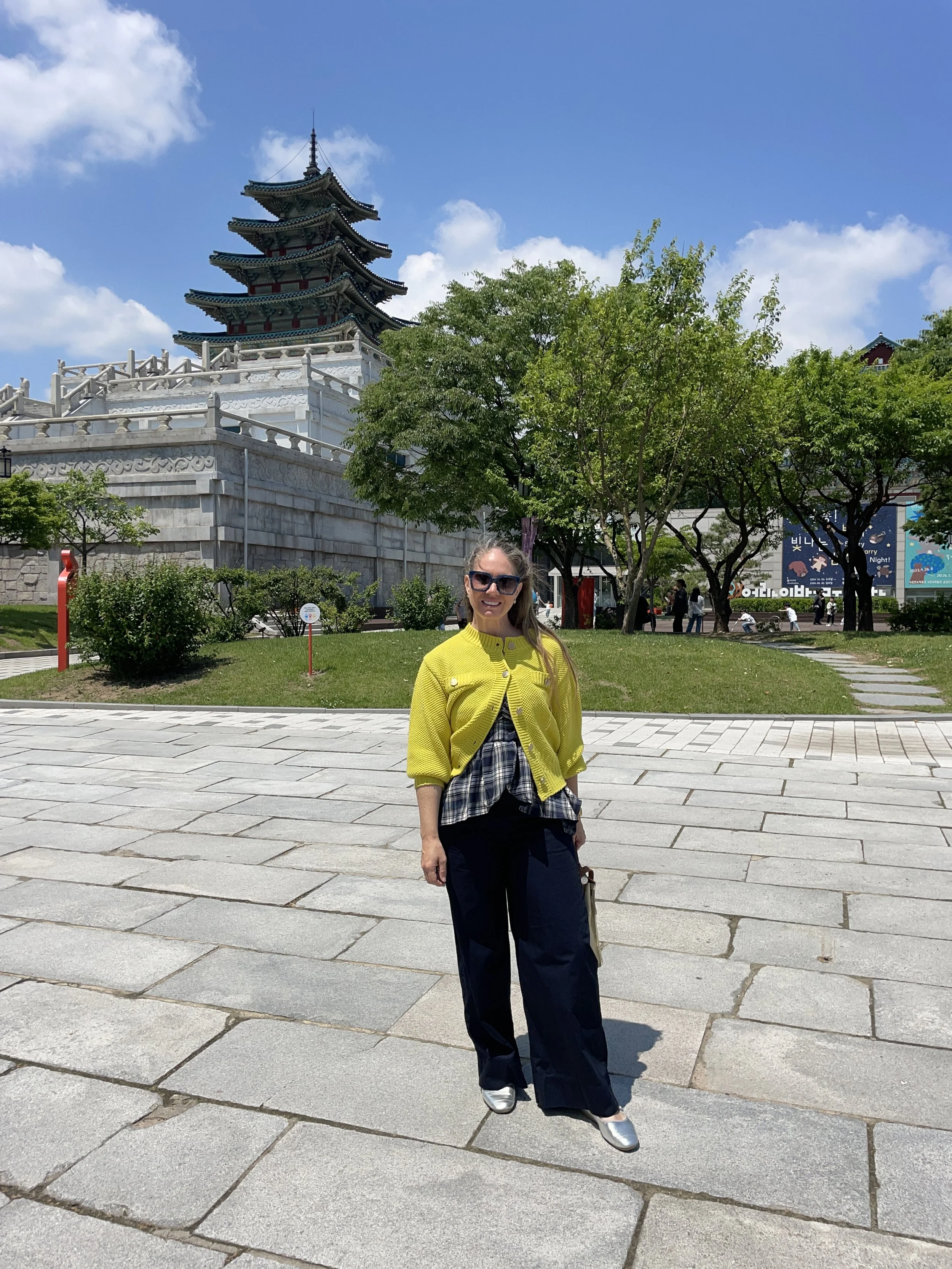
The National Palace Museum of Korea and the National Folk Museum—both located on the grounds—are worth visiting if you want more historical context, but they’re easy to skip if you’re focused on simply experiencing the palace itself.
Gyeongbokgung isn’t the most intimate palace experience in Seoul, but it may be the most grounding. It feels like a reference point—the place that helps everything else make sense. Its scale, formality, and position at the heart of the city reflect the role it once played at the center of Korean life.
Seen alongside quieter palaces like Deoksugung, Gyeongbokgung offers contrast rather than competition. Walking back out through the gates and into the city, it feels like stepping between eras, if only for a moment. In a city defined by constant movement, Gyeongbokgung slows you down.
Opening Hours & Admission
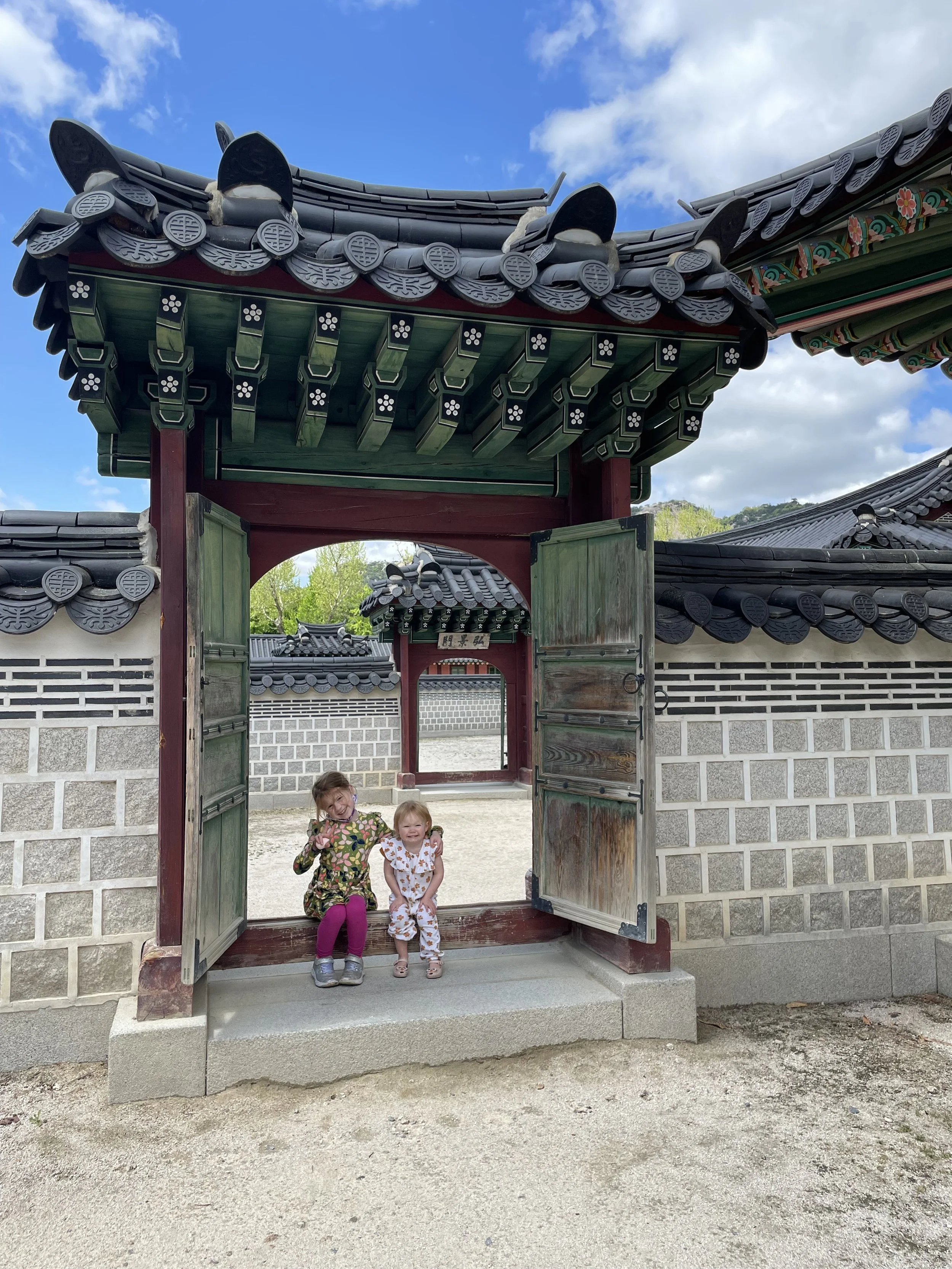
My girls were so tiny!
Unlike the other palaces, Gyeongbokgung is open on Monday and closed on Tuesdays.
Hours: Opens at 09:00 closes between 17:00/18:00 depending on the time of year
Last admission: 1 hour before closing
Admission fee: 3,000 KRW for adults, free for anyone under 18, over 65 or wearing a hanbok
Closed: Tuesdays
There are free guided tours throughout the day in several languages if you’d like to join one!
Be sure to check the Royal Palaces and Tombs Center website for the most accurate information.
Naver pin for Gwanghwamun Gate at Gyeongbokgung.
A Note on Wearing Hanbok
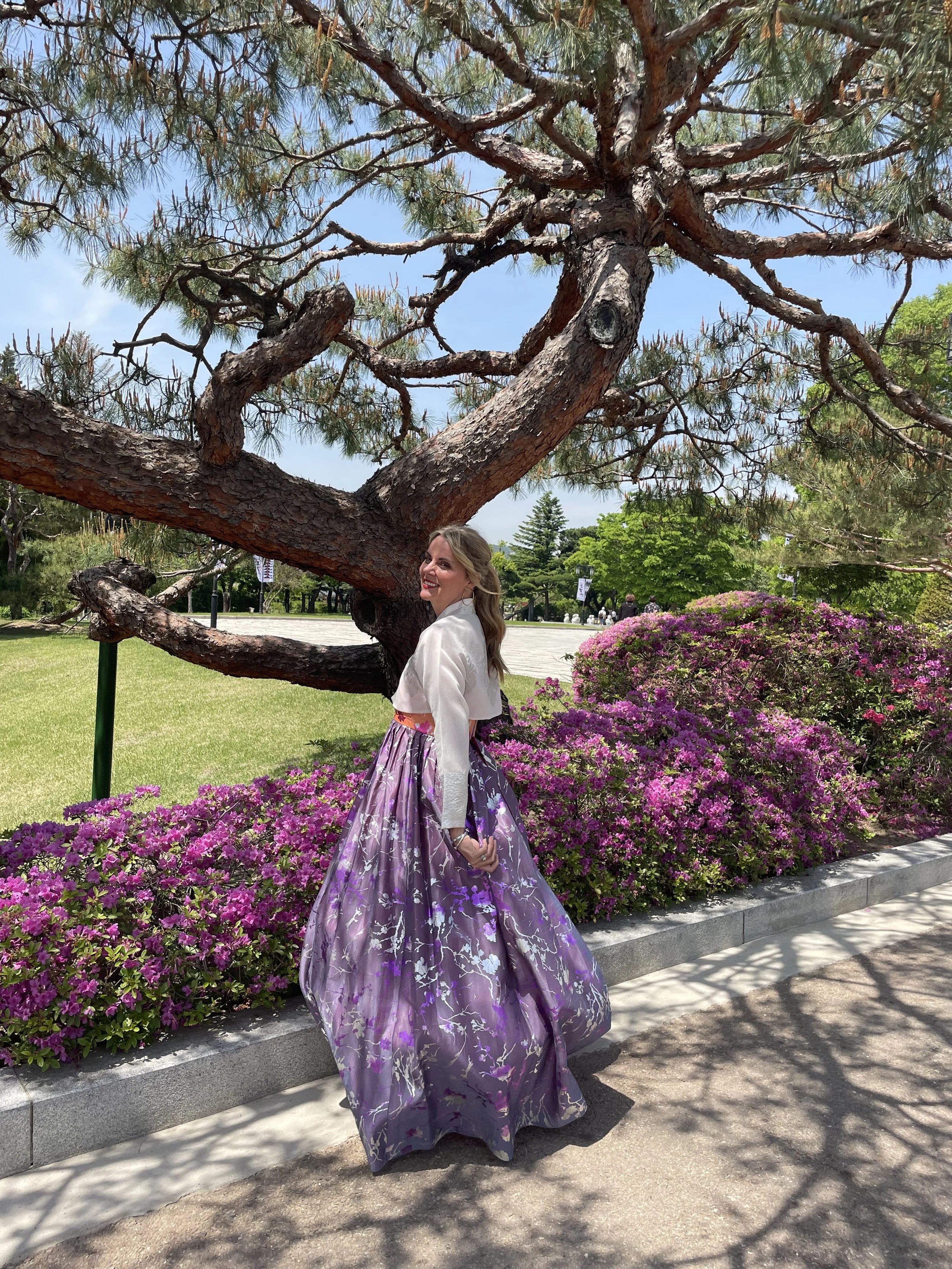
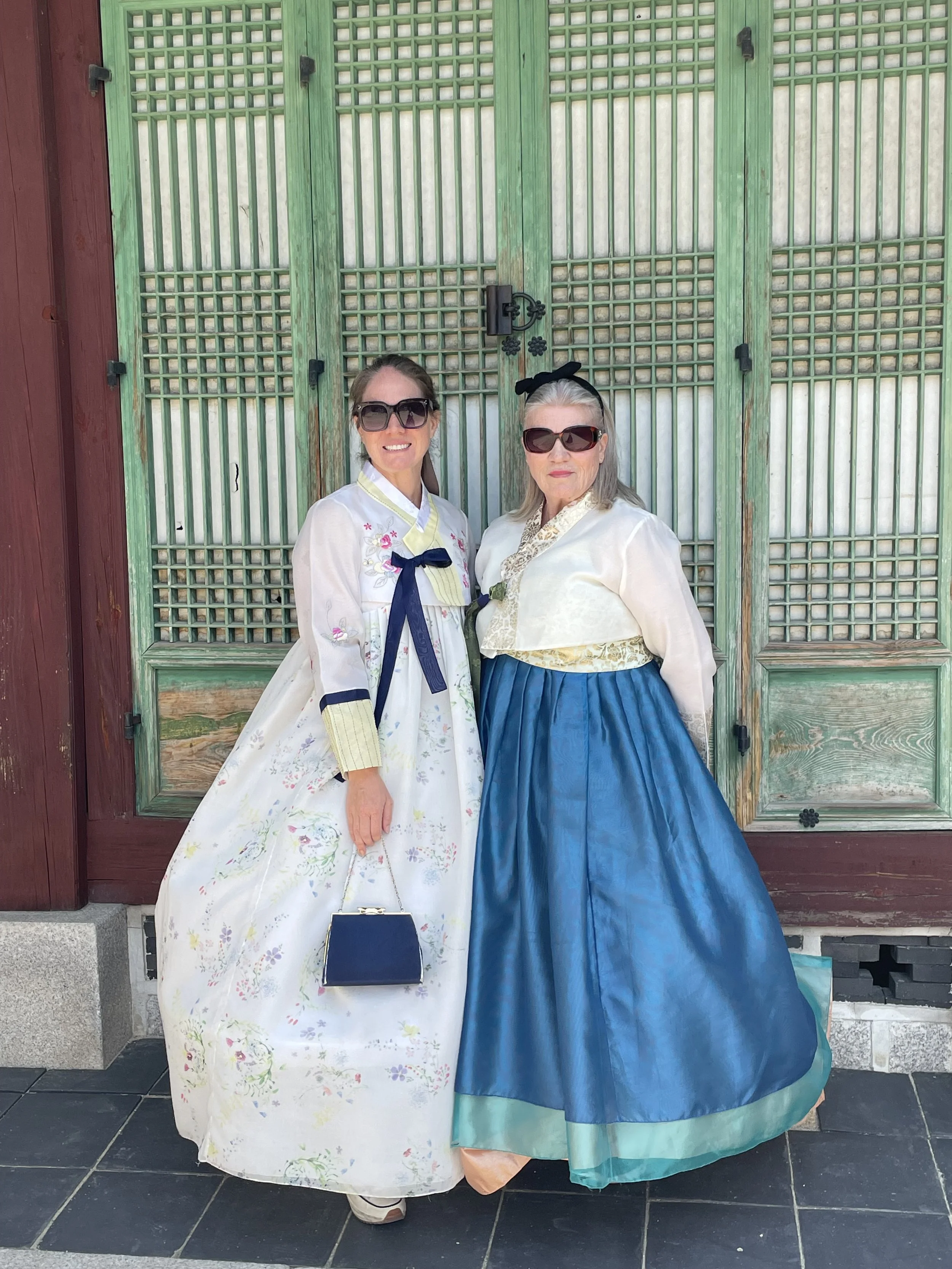
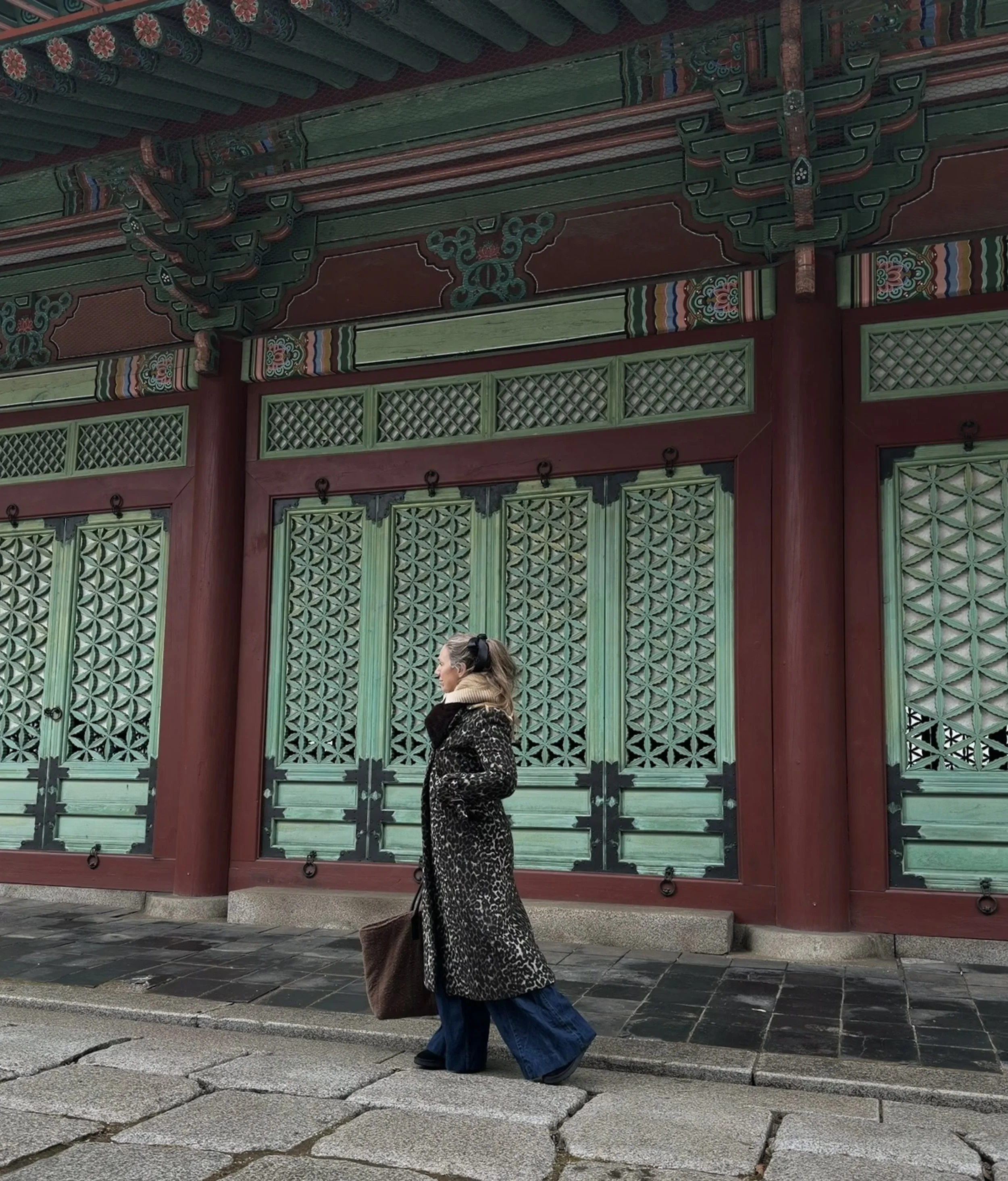
If you have the time, wearing a hanbok while visiting the palaces can be a surprisingly fun part of the experience. It’s less about dressing up for photos and more about slowing down—moving differently through the space, noticing details, and feeling a bit more present as you walk the grounds.
You’ll see people of all ages wearing hanbok throughout Gyeongbokgung, and it never feels out of place. The colors and silhouettes blend naturally with the architecture, and for many visitors, it becomes one of the most memorable parts of the day.
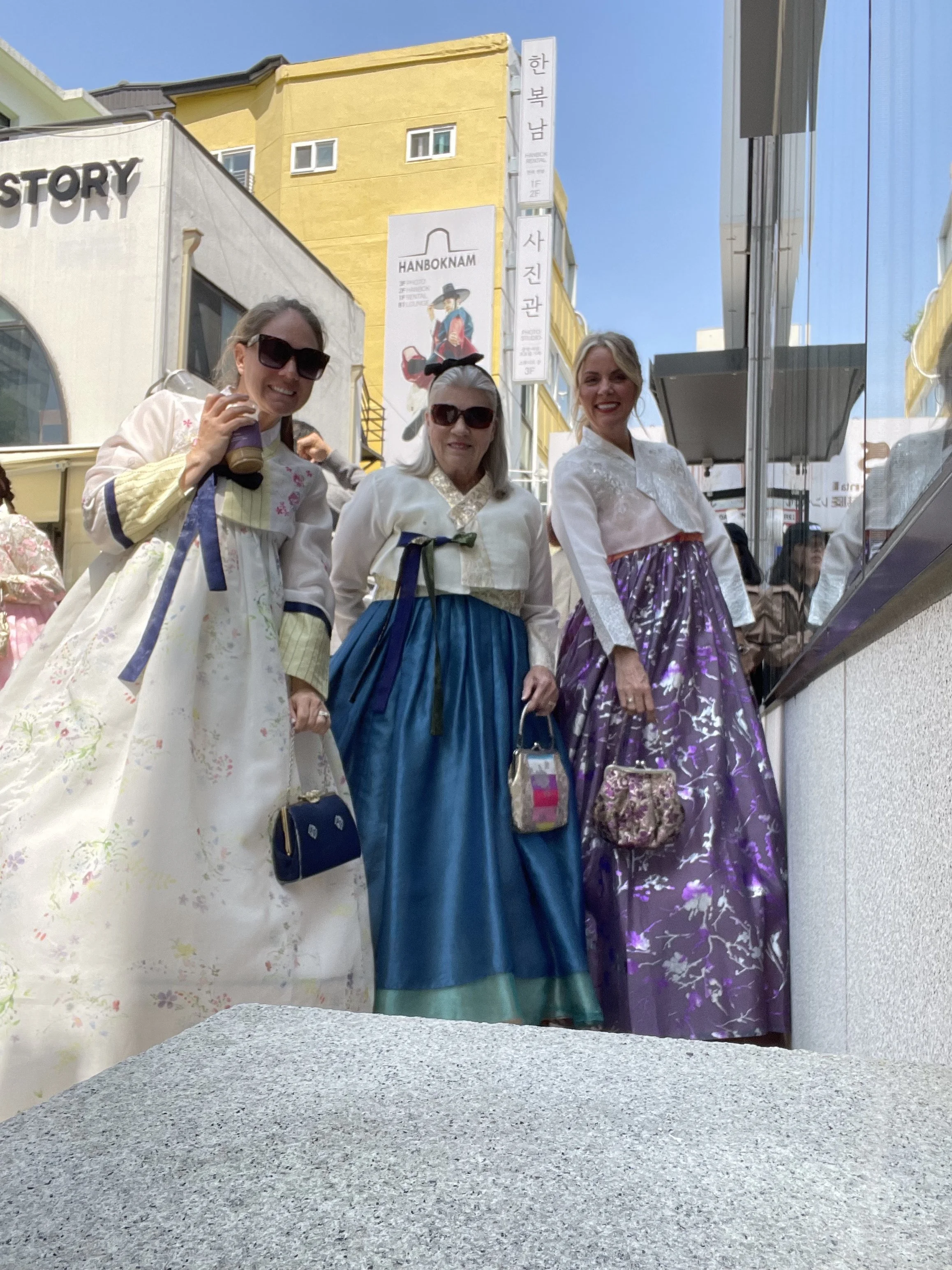
Me, my mom and my sister, Stacey, wearing hanbok to visit Gyeongbokgung!
If you’re interested in booking or browsing hanbok options ahead of time, here’s a link to a hanbok rental that includes hairstyling and has the option to upgrade with a professional photoshoot. I recommend 4+ hours in the hanbok so you’re not rushing through the palace to get back on time. If you don’t want to book ahead, you’ll have no problem finding a hanbok store nearby - they literally line the streets to the west of Gyeongbokgung!
This is the line up I have coming for my Seoul Royal Palaces Series. I’ll update links as each post goes live!