The Secret Garden at Changdeokgung Palace
The Secret Garden at Changdeokgung Palace sits high on my list of favorite places in Seoul. If I lived closer, it’s somewhere I could easily see myself returning to throughout the year. Unfortunately, my time in Seoul is always limited and tightly packed, but even so, the Secret Garden is a place I genuinely think belongs on any must-do list when visiting the city.
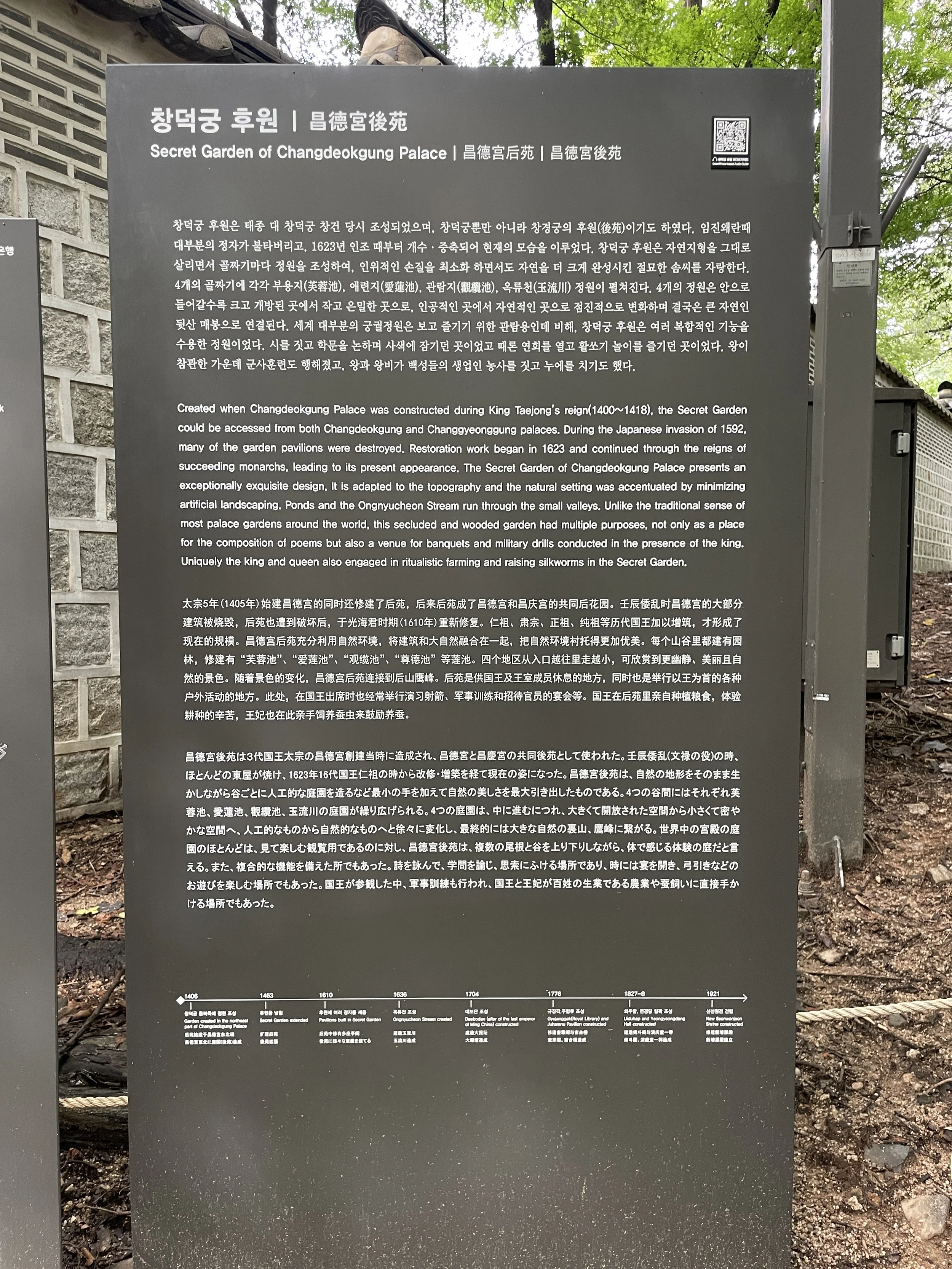
Information sign at the Secret Garden entrance
The Secret Garden was created when Changdeokgung Palace was first constructed during King Taejong’s reign in the early 1400s (1400–1418) and was historically accessible from both Changdeokgung and Changgyeonggung. (While still technically accessible from both palaces, an admission ticket to Changdeokgung is required.) Much of the garden and its pavilions were destroyed during the Japanese invasion in 1592, with restoration efforts beginning in 1623 and continuing, in various forms, through the present day. One of my favorite details is that the space wasn’t just ceremonial—the king and queen also farmed here and even raised silkworms within the garden grounds.
A Walk-Through of the Secret Garden at Changdeokgung Palace (Huwon)
Entering the Secret Garden
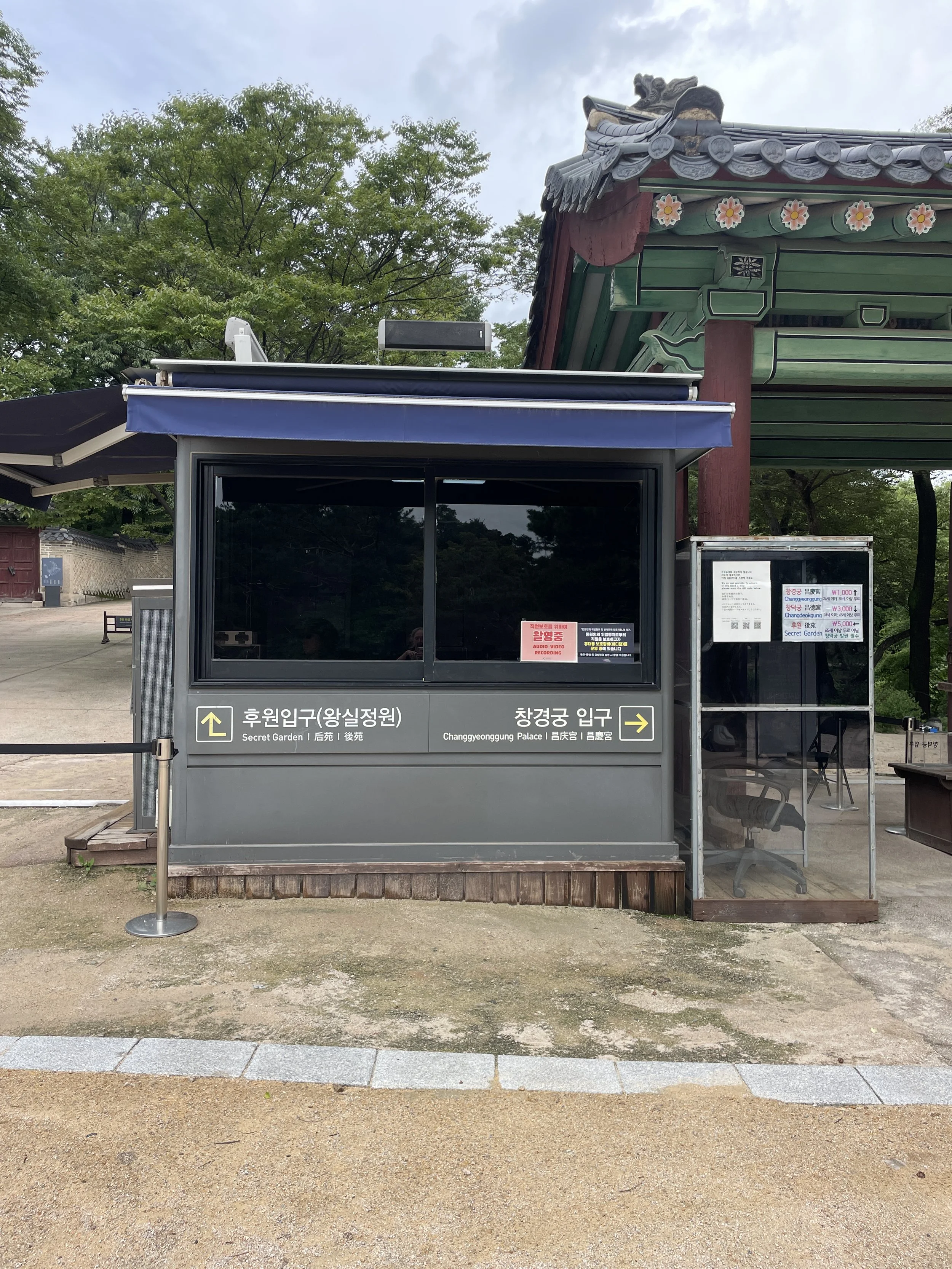
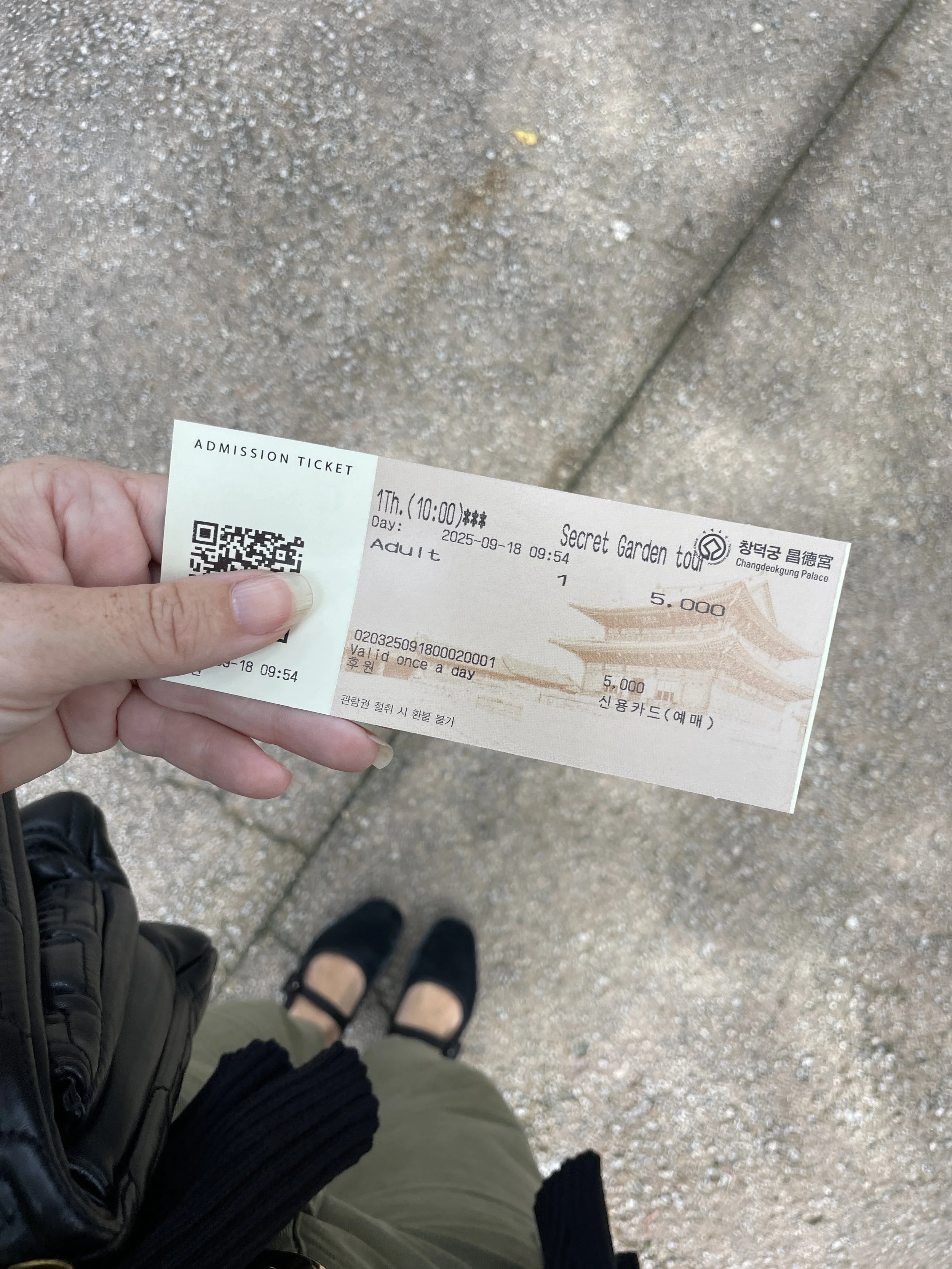
To enter the Secret Garden at Changdeokgung Palace, you’ll need a separate ticket in addition to your admission to Changdeokgung Palace. You can purchase it online here or purchase it at the gate - however, only 50 tickets are sold each day in person. If you pre-purchased your ticket, you need to show the text at the ticket booth to receive your paper copy.
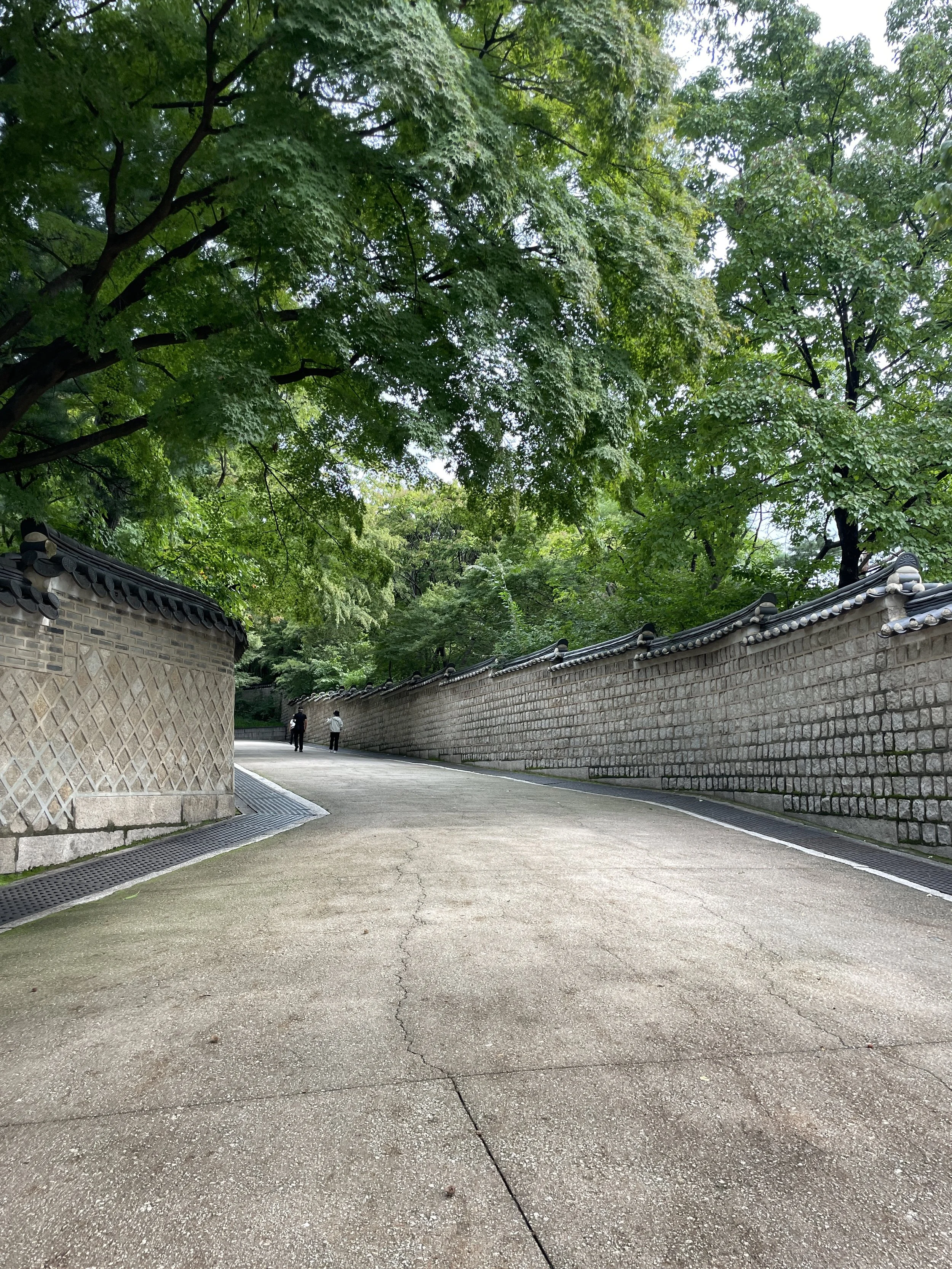
The main walkway entering The Secret Garden
The shift in atmosphere is immediate. As you pass through the entrance and leave the main palace complex behind, the energy noticeably softens. The sounds of the city fade, replaced by birds, wind through the trees, and the quiet rhythm of footsteps on the path.
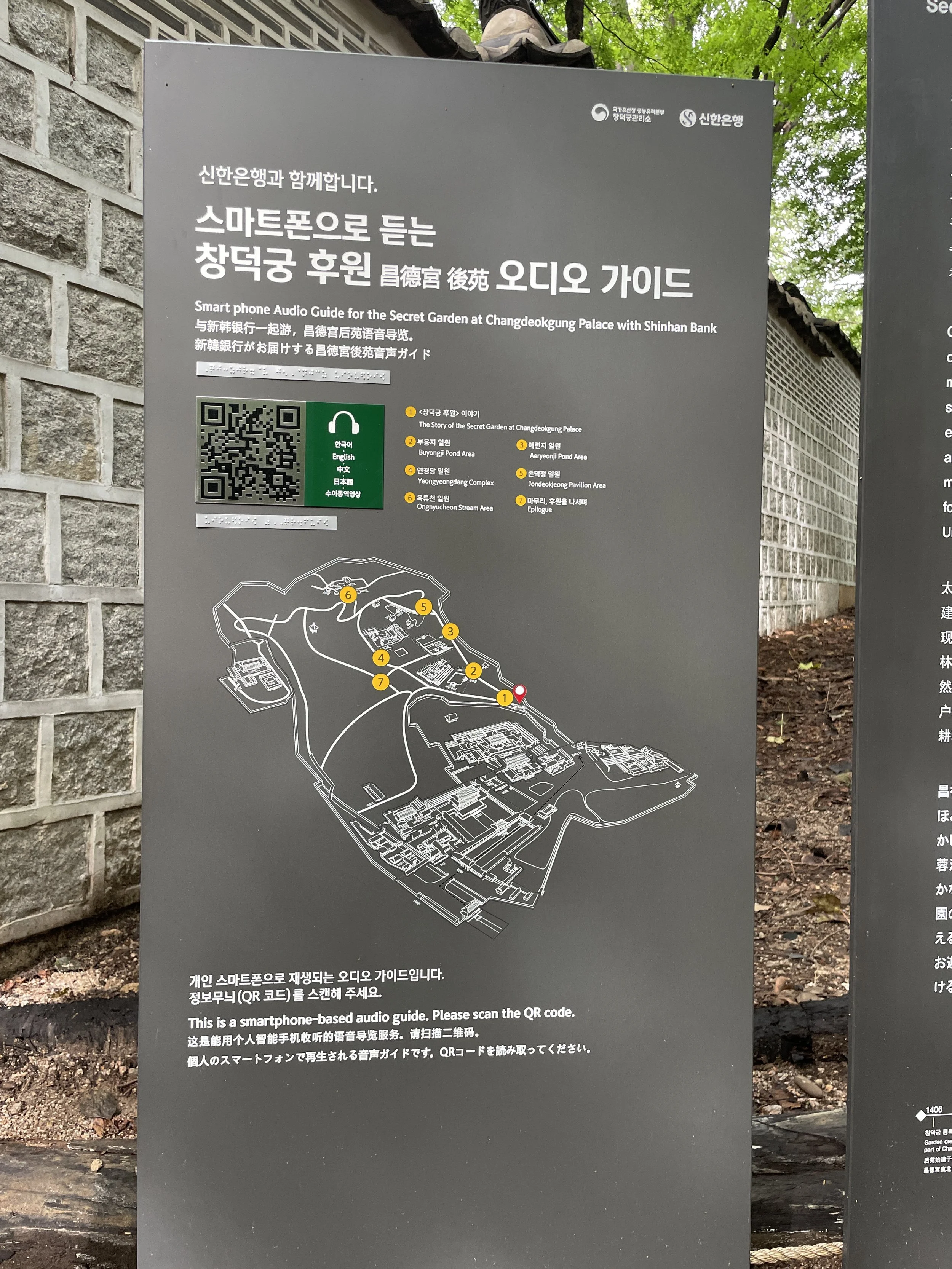
Scan the QR code on this sign for the audio tour of The Secret Garden
Near the entrance, one of the first information signs includes a QR code for a multi-language audio guide—well worth scanning before you start walking. From here, the route gently guides you forward without feeling restrictive. There’s no rush, no crowding, and no sense of being hurried along, which sets the tone for the rest of the experience.
Much of the Secret Garden feels intentionally untouched. The paths wind naturally through dense trees and shaded areas, following the land rather than reshaping it.
The walk is mostly downhill, making it easy and unhurried. Shade is abundant, and depending on the season, the garden shifts in subtle ways from fresh greens in spring and summer to muted tones in autumn.
Buyongji Pond and the Surrounding Pavilions
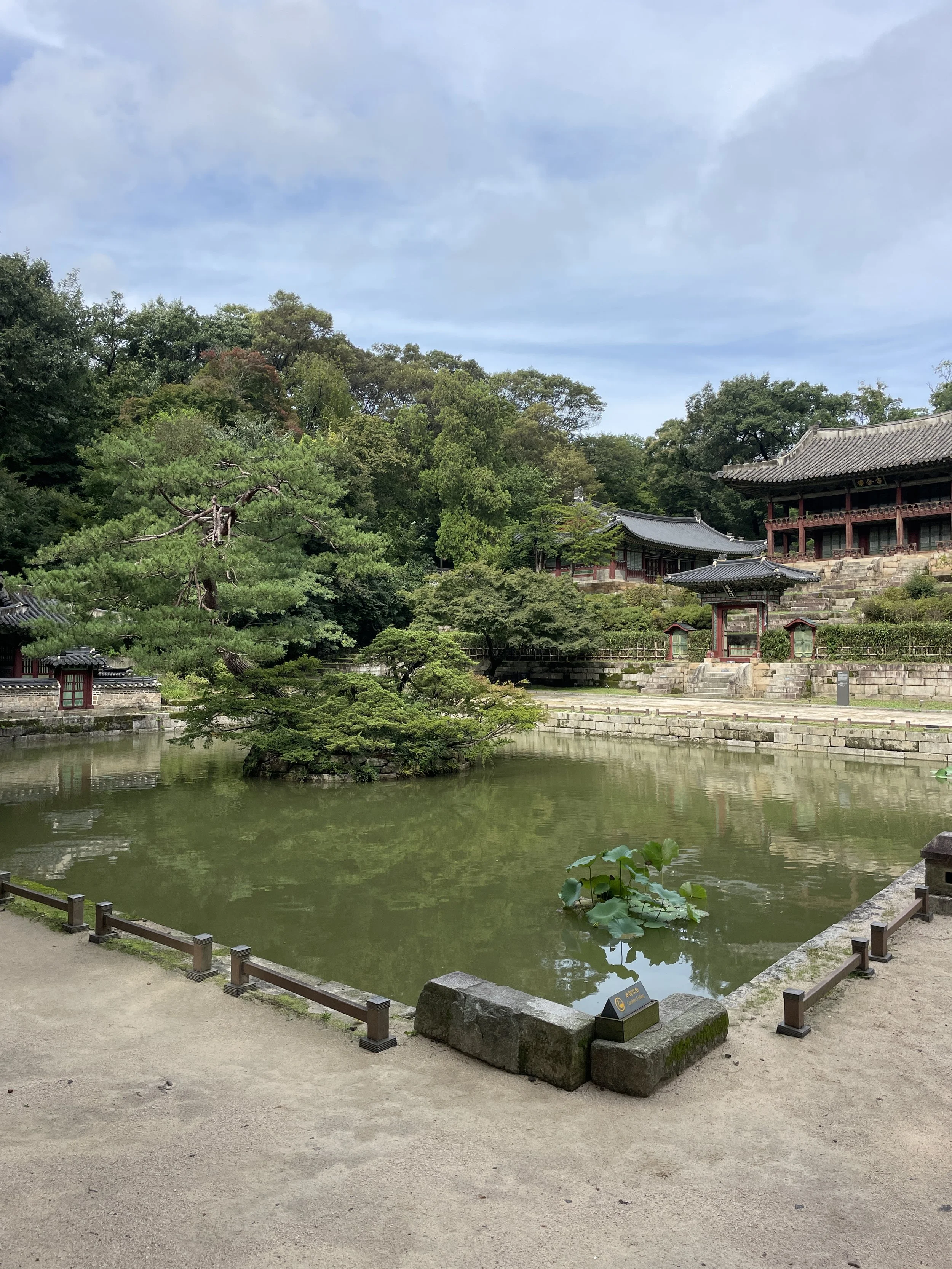
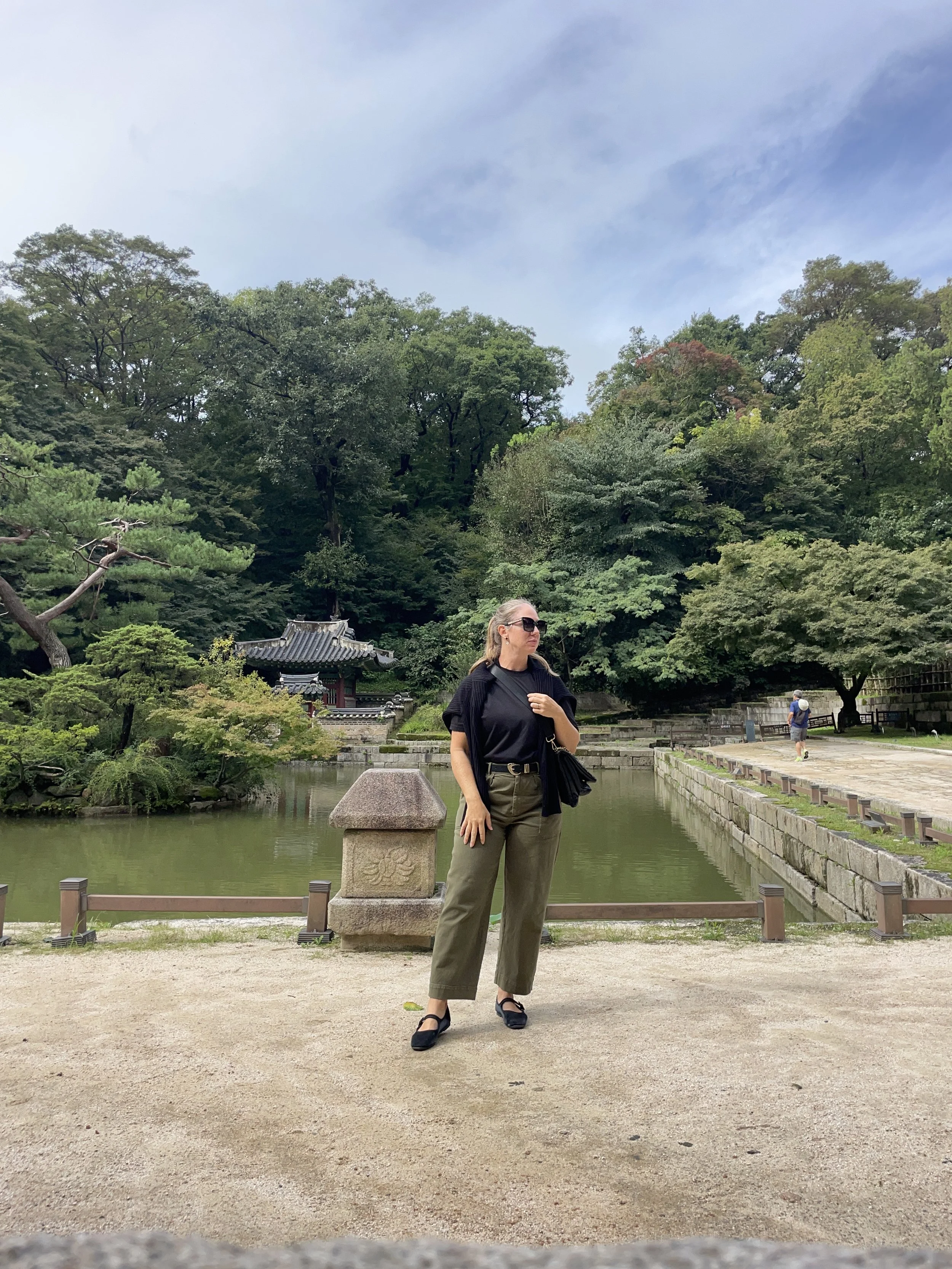
Buyongji Pond at the Secret Garden
Buyongji Pond is the emotional centerpiece of the Secret Garden. After walking through shaded forest path, the landscape opens just enough to reveal the still water of the pond, bordered by trees and framed by understated pavilions.
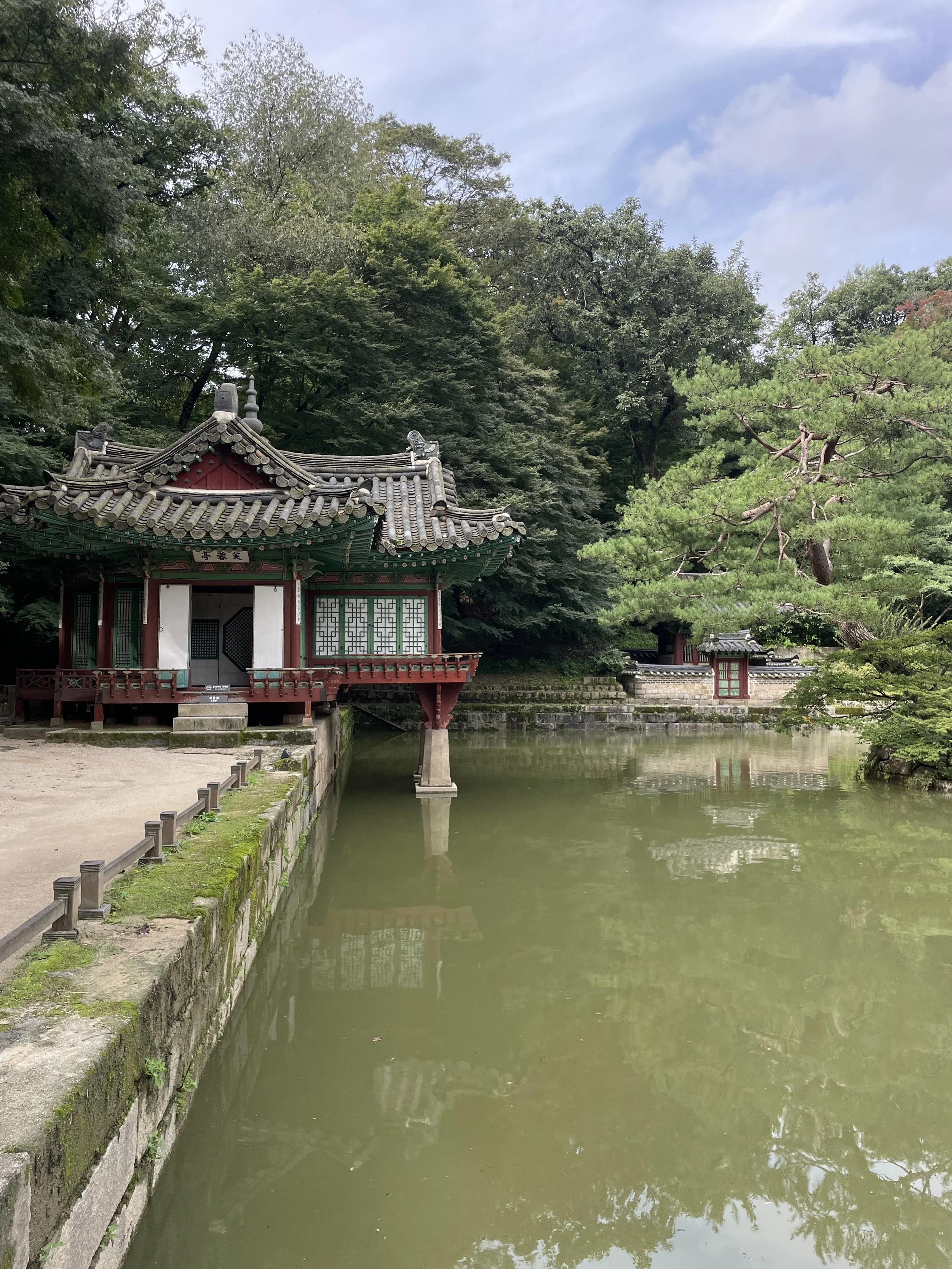
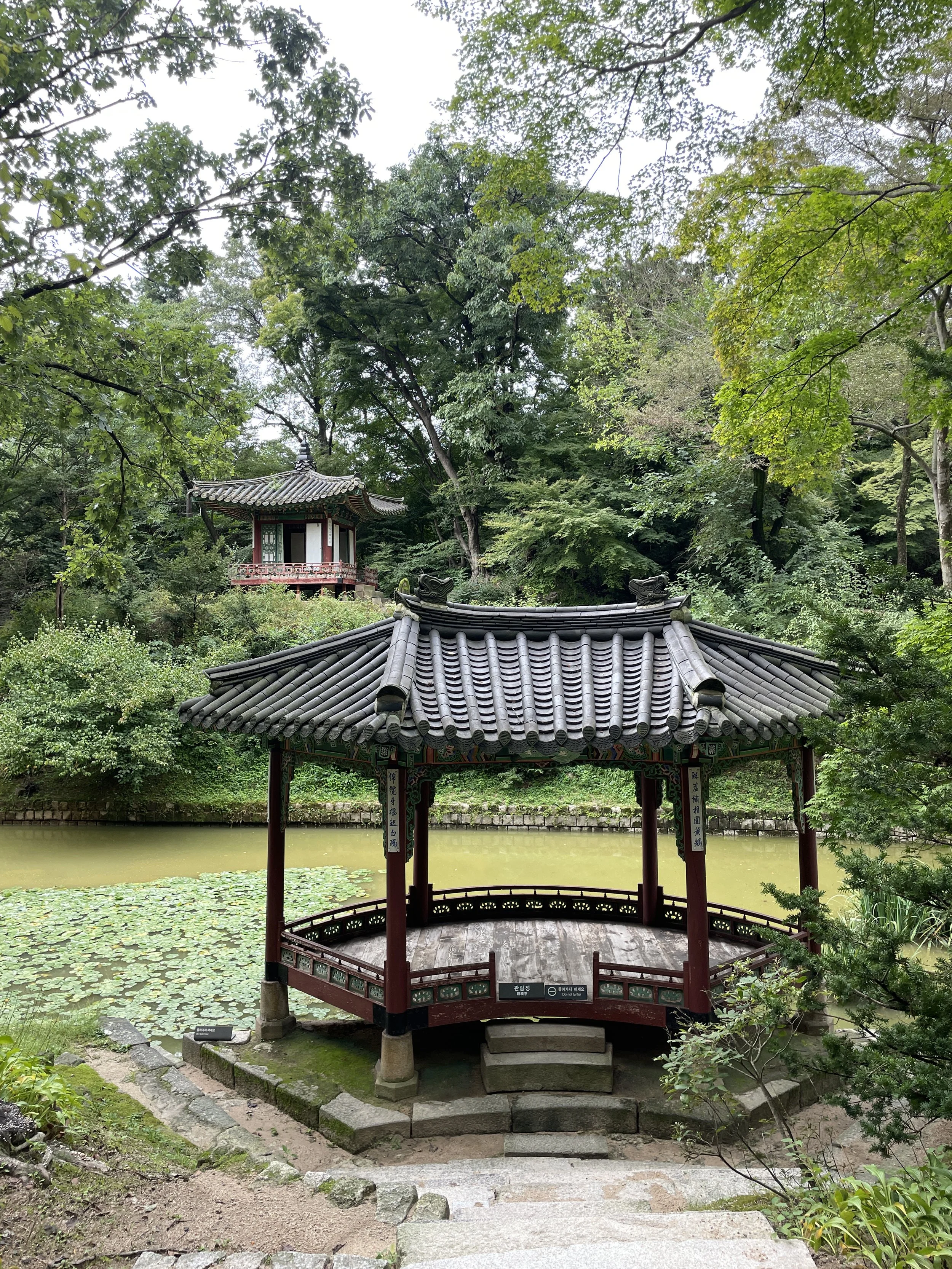
One of the small pavilions surrounding Buyongji Pond
The pond was designed with intention rather than symmetry. Its square shape contrasts softly with the surrounding natural forms, reflecting both the sky above and the structures around it. On calm days, the surface mirrors the pavilion so clearly that it’s easy to forget where the built environment ends and nature begins.

Buyongji Pond and Juhamnu Pavilion
This area wasn’t meant for ceremony or display. It functioned as a place for rest, study, and reflection—a setting where kings could write, read, or simply sit in quiet observation. The pavilions surrounding Buyongji feel human in scale, open to the air, and intentionally unadorned, reinforcing the idea that this was a space for contemplation rather than power. The royal libraries, Gyujanggak and Seohyanggak, were originally in this area as well.
Sitting high above the pond is Juhamnu Pavilion, positioned to overlook the surrounding grounds. From here, the view opens outward, offering a sweeping perspective of Buyongji and the layered landscape beyond. Unlike the intimate feeling of the paths below, Juhamnu feels expansive—designed for observation and thought, where the garden can be taken in all at once. Historically, Juhamnu served as a royal library and study space, reinforcing the idea that this part of the garden was meant as much for learning and reflection as for quiet retreat.
Aeryeonji Pond and Uiduhap
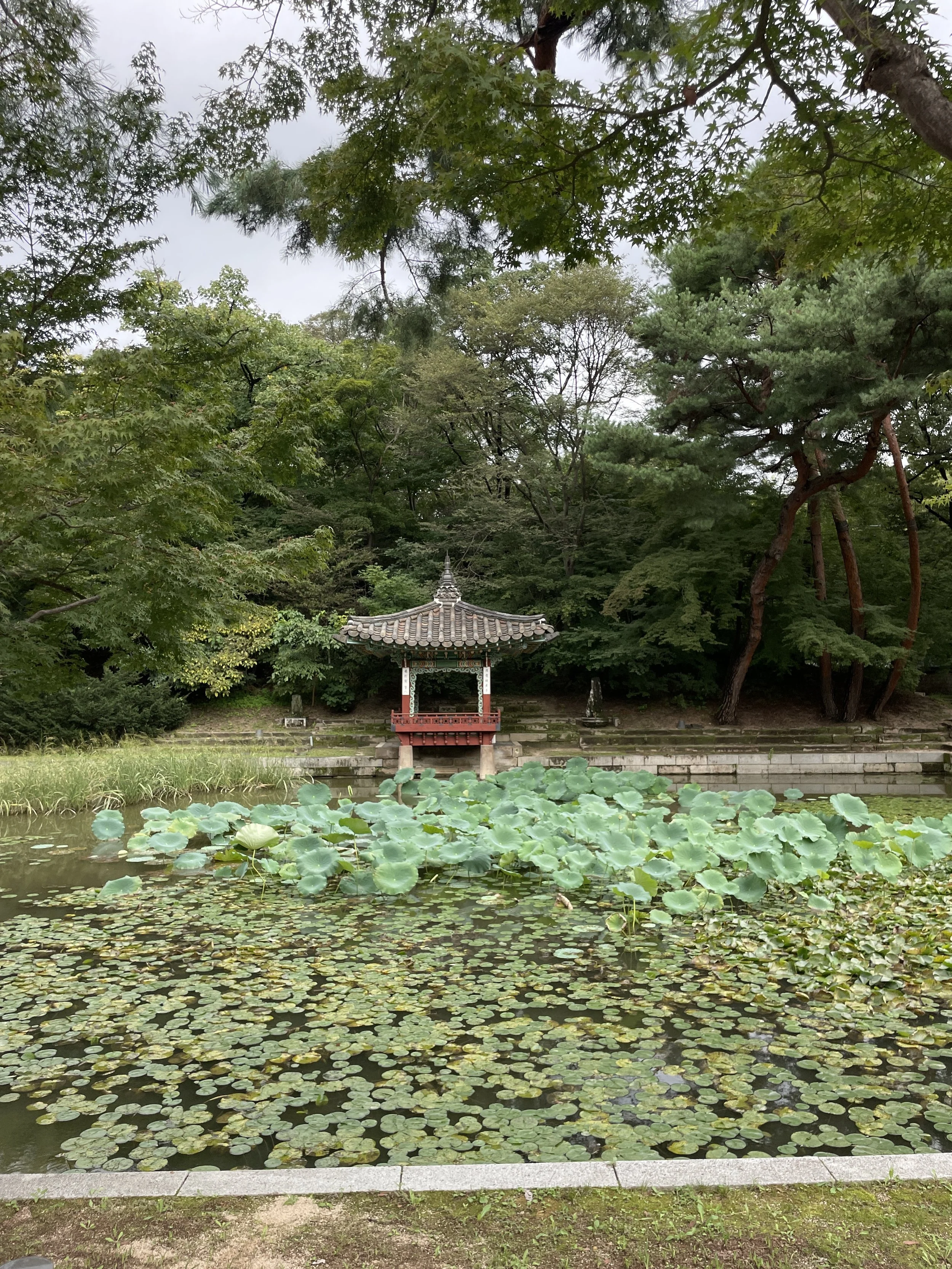
Aeryeonji Pond
After the openness of Buyongji and the elevated views from Juhamnu Pavilion, Aeryeonji Pond feels more intimate by comparison. Tucked slightly away from the main visual axis of the garden, this area draws you inward rather than outward. It was constructed during the reign of King Sukjong by Crown Prince Hyomyeong who has been noted for his tremendous intelligence.
The pond is smaller and more enclosed, surrounded by trees and low vegetation that soften the space and absorb sound. Here, the garden feels less like a destination and more like a pause. It’s the kind of place where time stretches quietly, where the absence of movement becomes part of the experience.
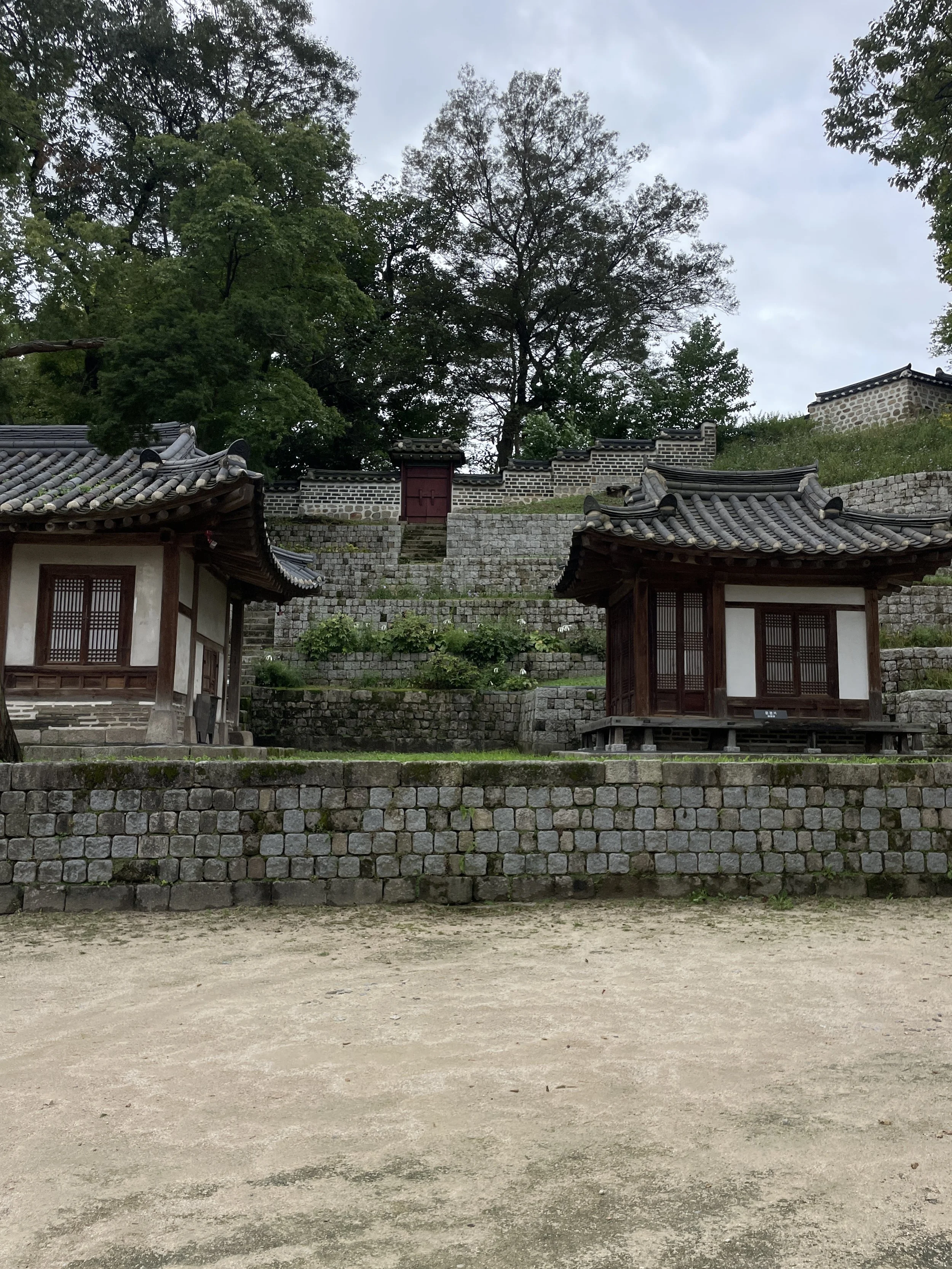
The unadorned pavilion of Uiduhap at the Secret Garden
Opposite Aeryeonji Pond stands Uiduhap, which the Crown Prince used as his study, despite its modesty. Unlike most traditional Korean pavilions, it is not adorned with the traditional vivid paintwork.
Despite sharing the garden with a tour group, the space felt entirely my own - the sound never carried, and the quiet remained undisturbed.
Yeongyeongdang Complex
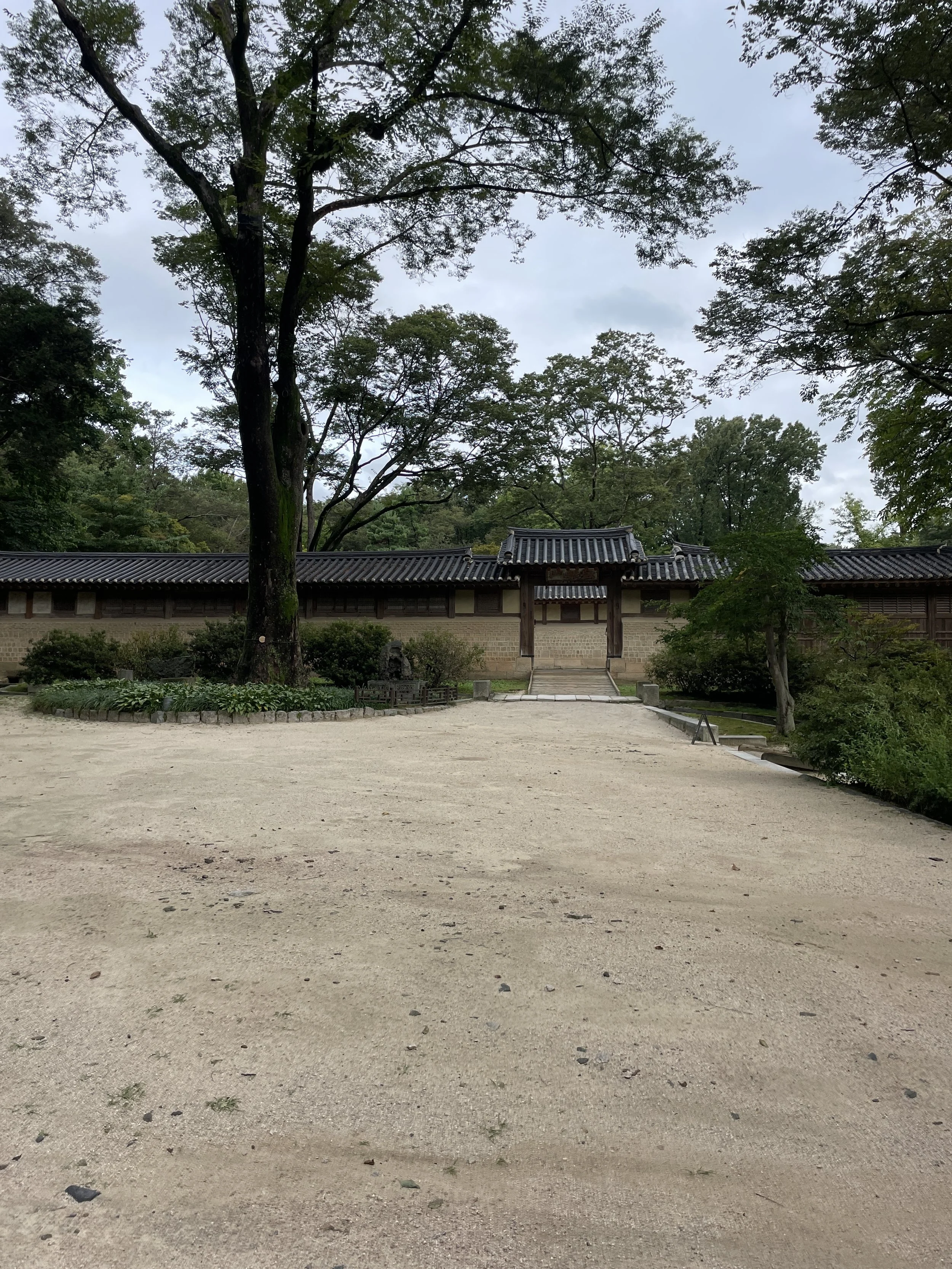
Walking into the Yeongyeongdang Complex
Situated just beyond Aeryeonji Pond, the Yeongyeongdang complex feels notably different from the pavilions and open garden spaces that come before it. Crown Prince Hyomyeong built the Yeongyeongdang Residence to hold the Jinjakyre ceremony for his father in 1828.
What we see today is not what Yeongyeondang was originally. In 1865, just 40 years after it was built, King Gojong built the king’s and queen’s quarters and modeled them after the Joseon literati. Inside you’ll see Seonhyangjae, the study, is modeled with Chinese-style walls and Wetsern-style blinds.
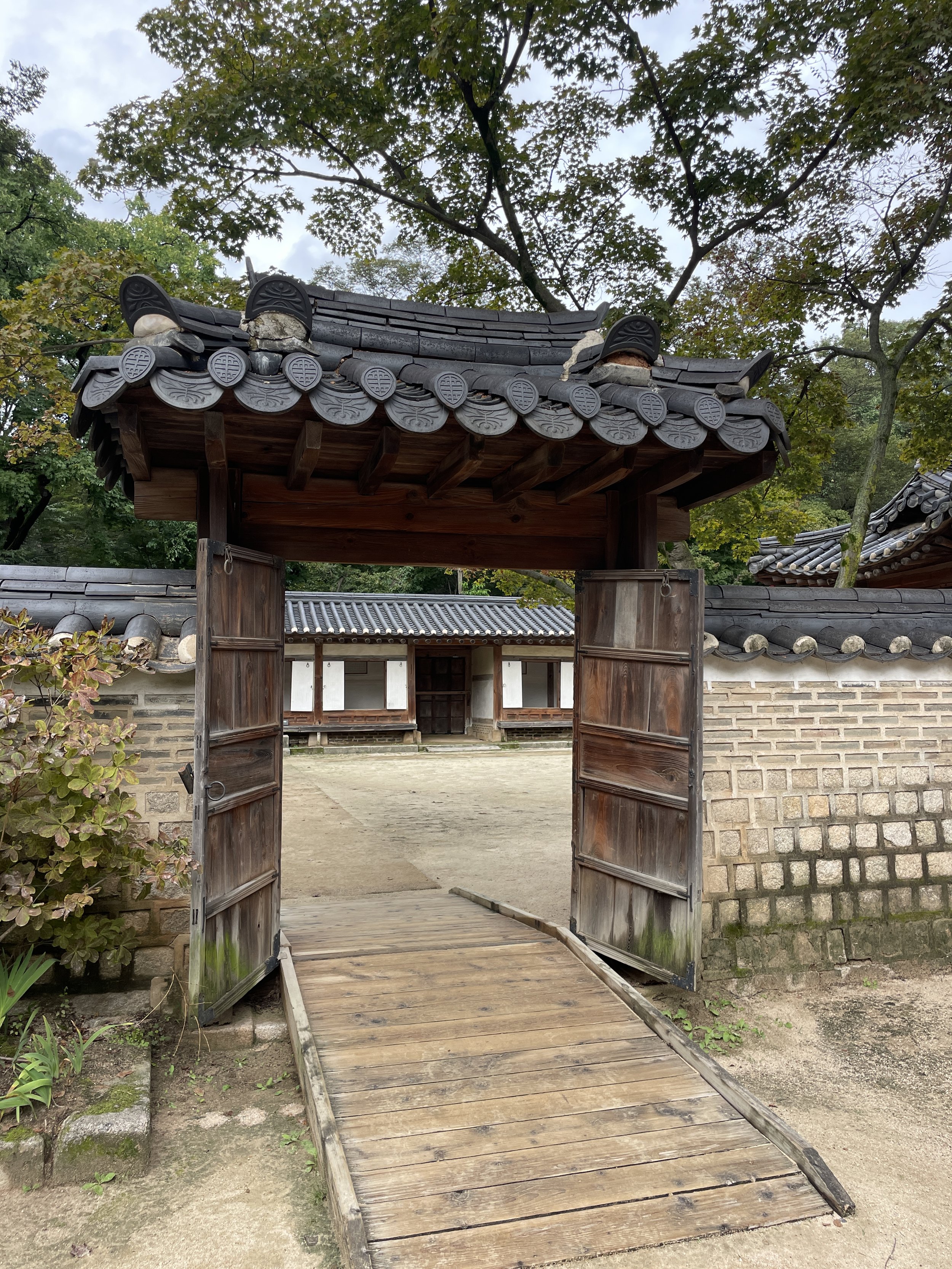
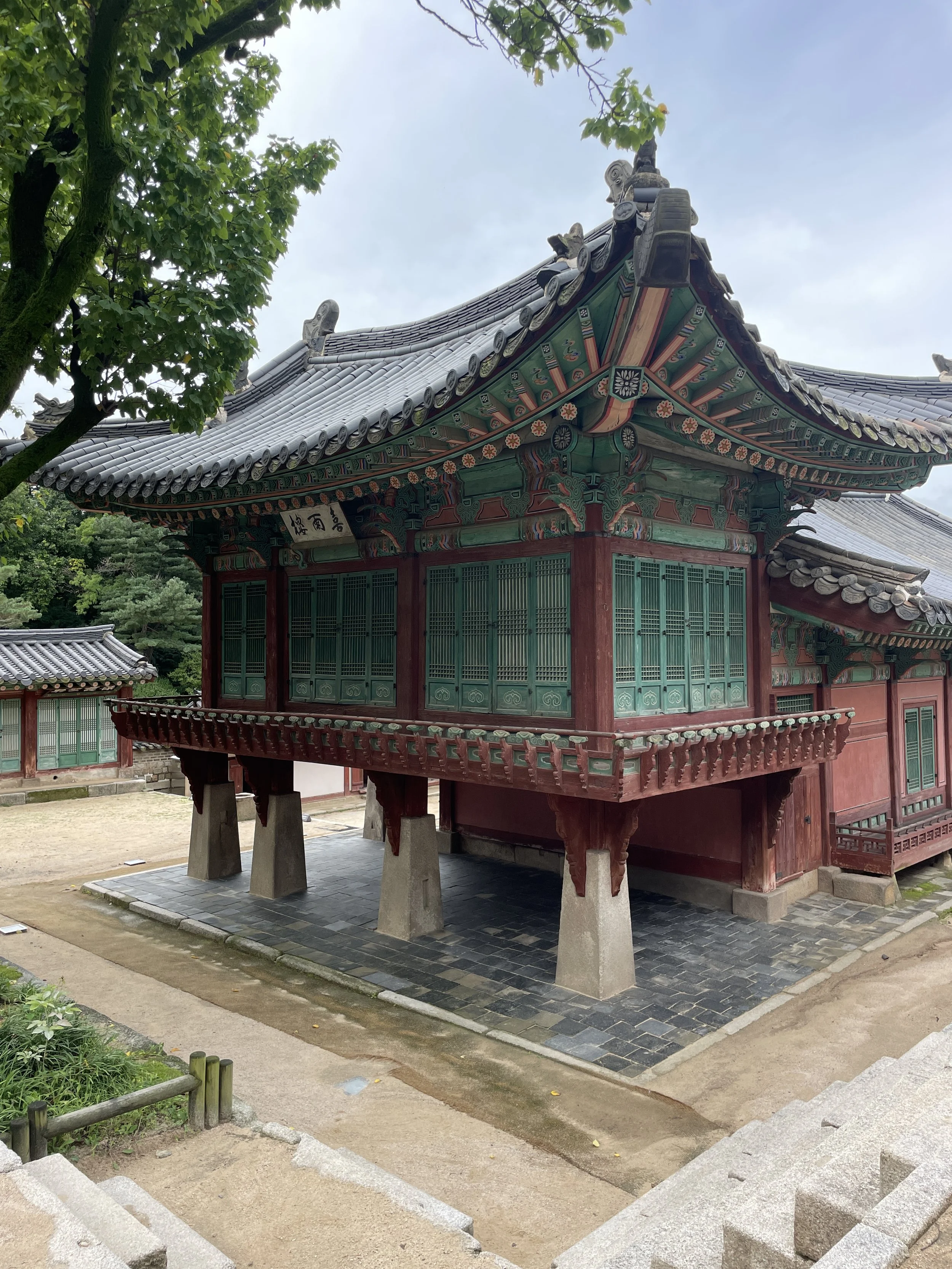
More unadorned pavilions in the Secret Garden
Low buildings, simple lines, and enclosed courtyards create a sense of everyday life rather than royal spectacle. Walking through Yeongyeongdang feels less like touring a palace and more like stepping quietly into someone’s home that’s been shaped by study, routine, and thoughtful living.
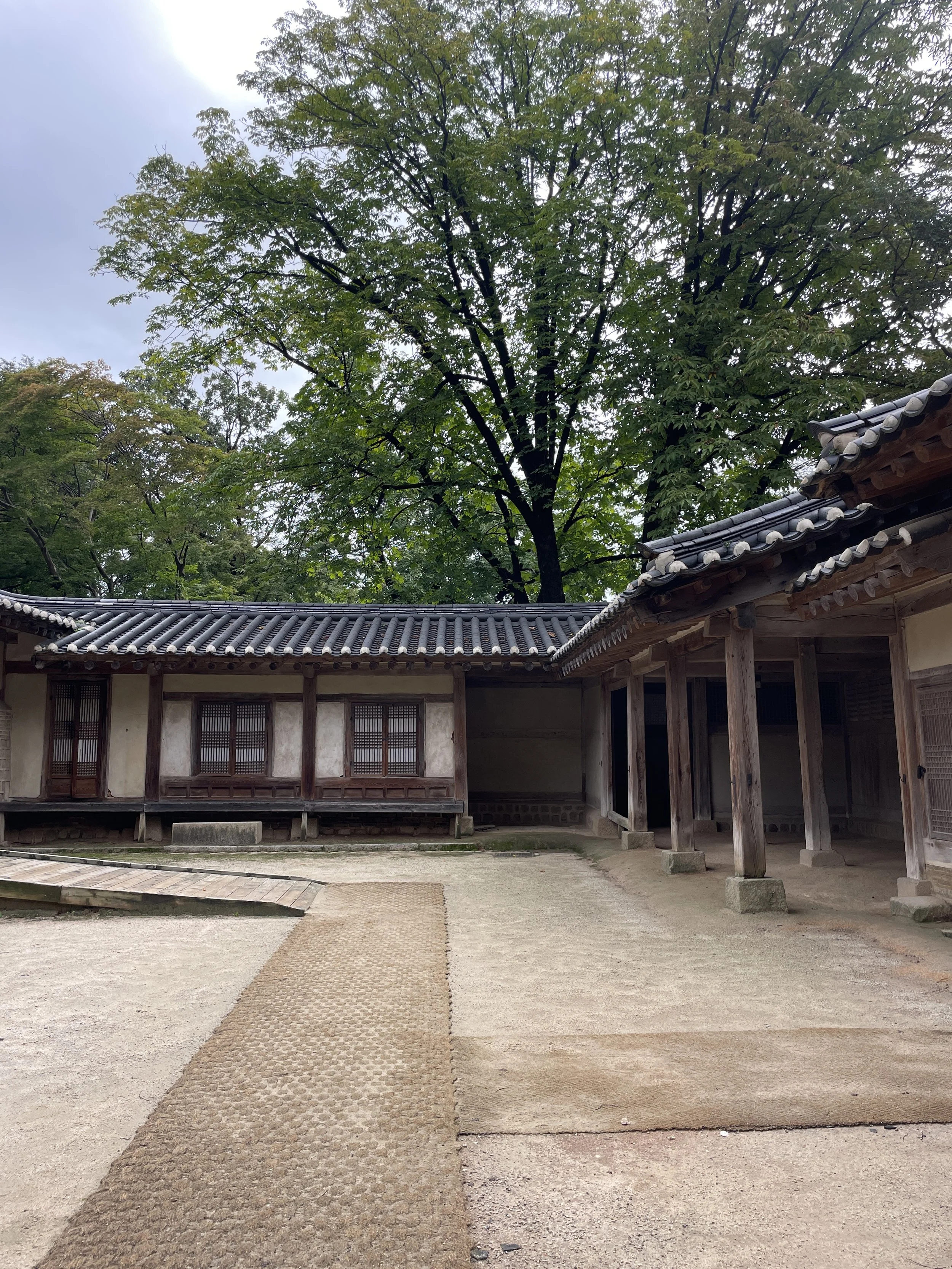
More unadorned, Chinese-style buildings in the Secret Garden
Compared to the reflective openness of the ponds, Yeongyeongdang feels inward-looking, offering a glimpse into how scholarship and daily life were woven into the rhythm of the garden.
Jondeokjeong Pavilion
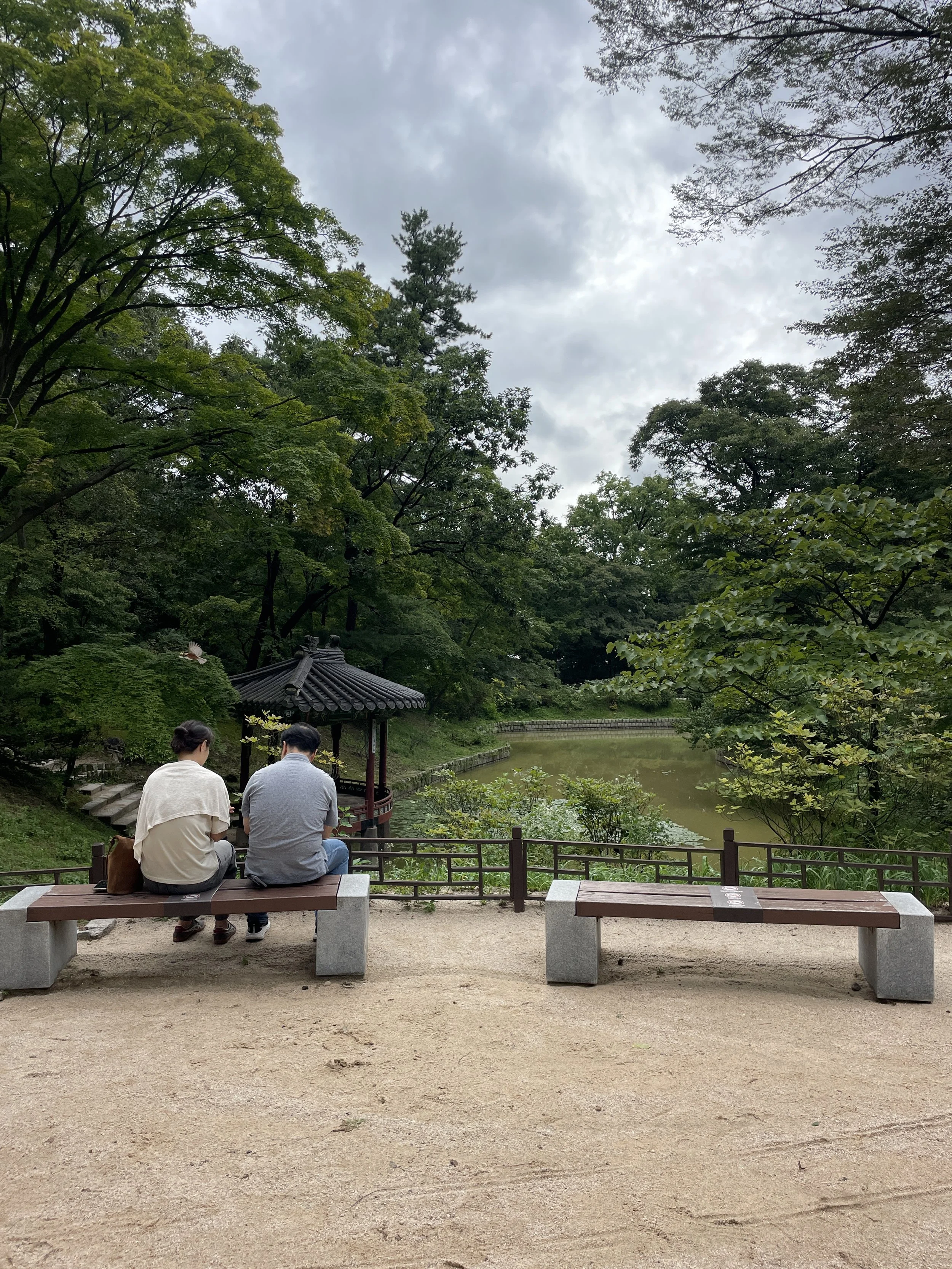
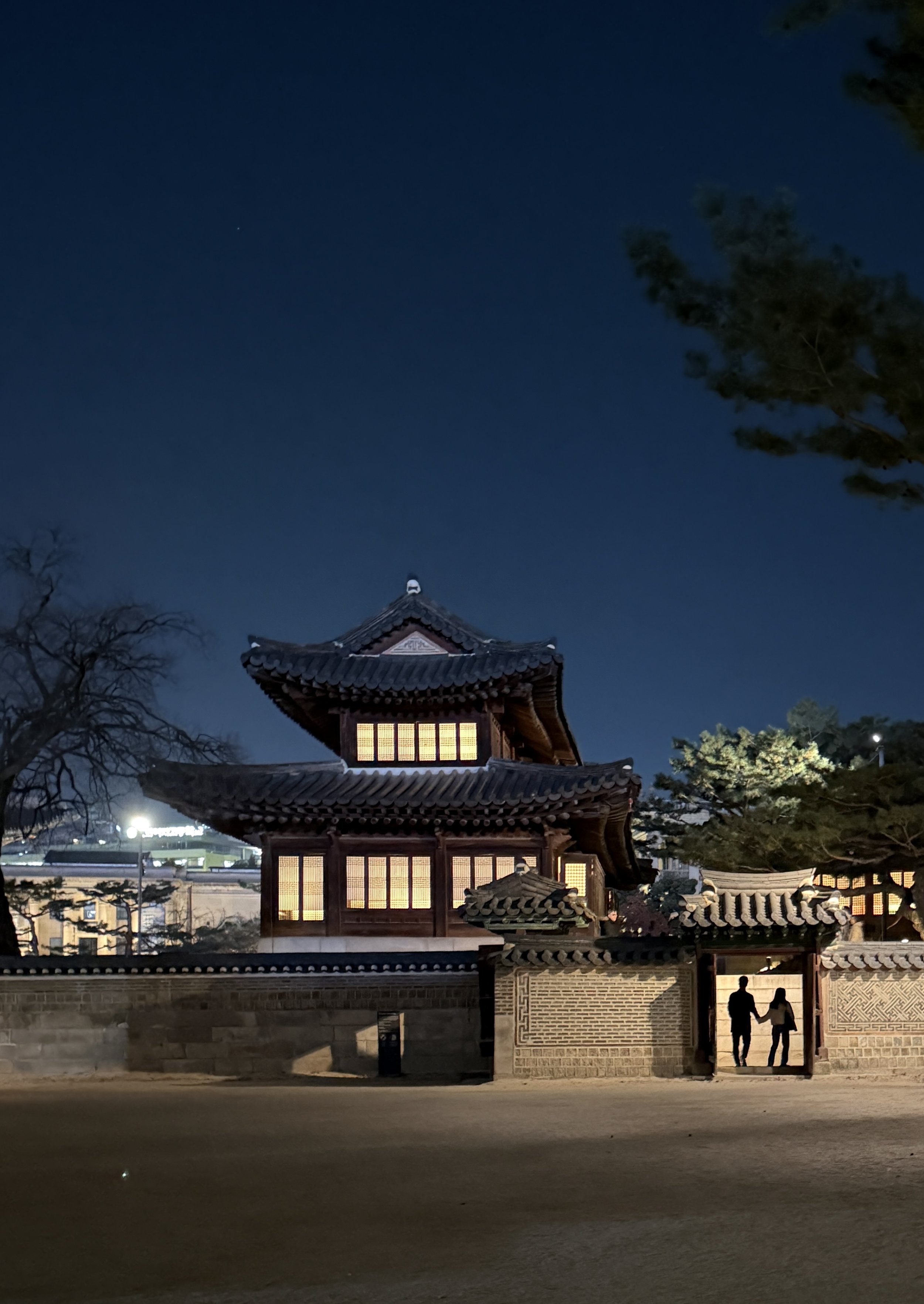
A couple taking a rest near Pyeomusa
From Yeongyeongdang, a back pathway connects you to Jondeokjeong Pavilion and Pyeomusa, however, they’re also accessible from the main garden pathway.
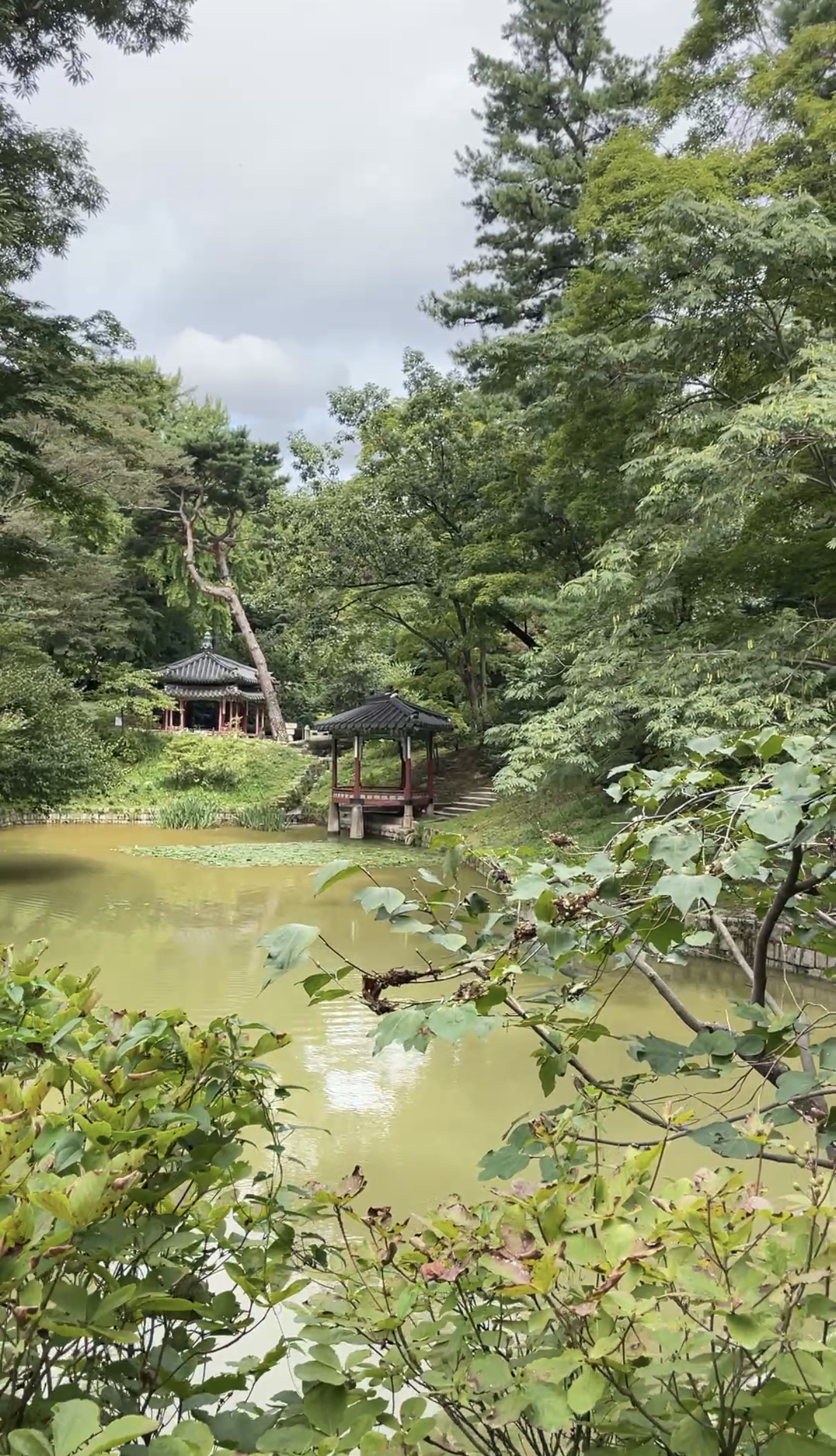
Once several different ponds, they were all combined into one curved pond during the Japanese occupation. Each of the pavilions surrounding the pond are unique. Jondeokjeong has a two-tiered hexagonal roof, Gwallamjeong has a fan-shaped roof, and Pyeomusa has a gambrel roof.
Seungjaejeong Pavilion sitting opposite Gwallamjeong
You can also see Seungjaejeong Pavilion sitting opposite Gwallamjeong. Both Gwallamjeong and Seungjaejeong were built after the 1830’s while Jondeokjeong was built in 1644 - a reminder that some places in the Secret Garden have been watching history unfold for much longer than others.
Opening Hours & Admission
The Secret Garden has the most limited hours of all of the palaces.
Hours: Opens at 10:00am, closes between 16:10-17:30 depending on the time of year
Last admission: 15:00-16:00 depending on the time of year
Admission fee: 5,000 KRW for adults, 2,500 KRW for youth
Closed: Mondays
Be sure to check the Royal Palaces and Tombs Center website for the most accurate information.
This is the line up I have coming for my Seoul Royal Palaces Series. I’ll update links as each post goes live!