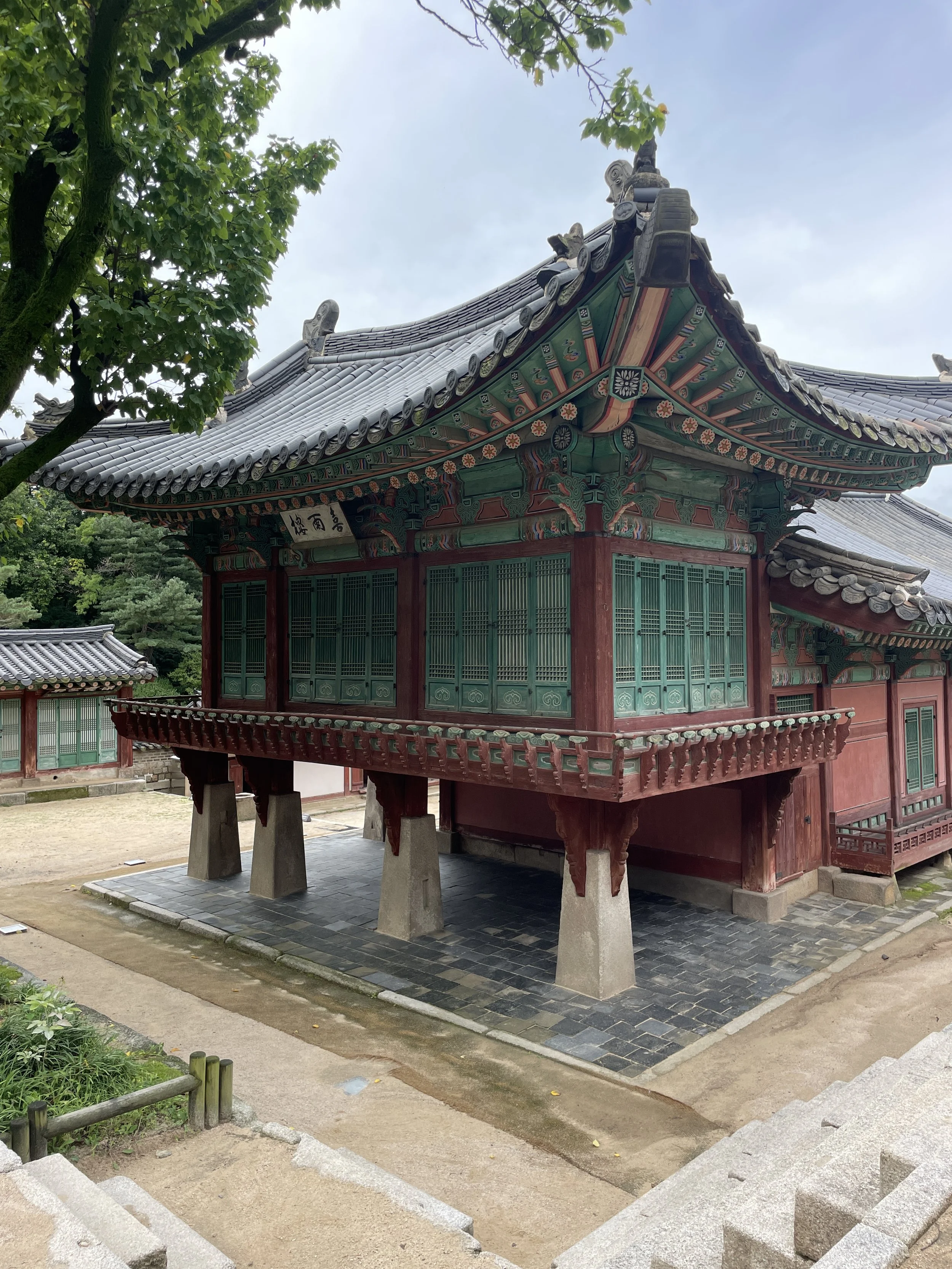
Changgyeonggung Palace and Its Many Surprises
Most people visiting Seoul head straight for Gyeongbokgung or the Secret Garden at Changdeokgung.
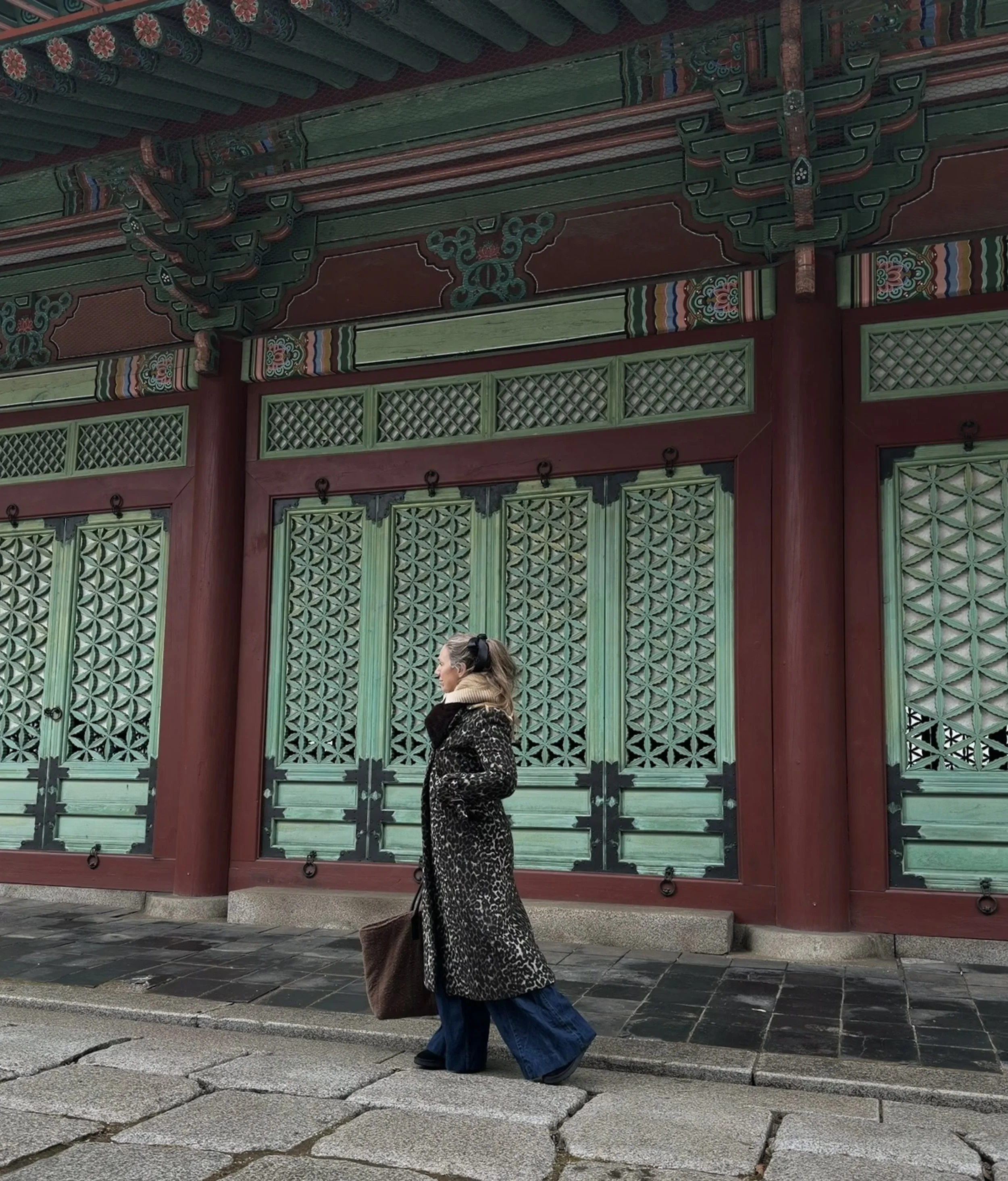
But tucked quietly next door is a palace that feels completely different. Instead of wide, exposed courtyards and stretches of open stone, this palace is noticeably greener. Tree-lined pathways curve through the grounds, sunlight filters softly through the leaves, and much of the walk is shaded — something you quickly learn to appreciate on warmer days in Seoul.
Welcome to Changgyeonggung Palace (창경궁).
A Palace Built for Family, Not Just Ceremony
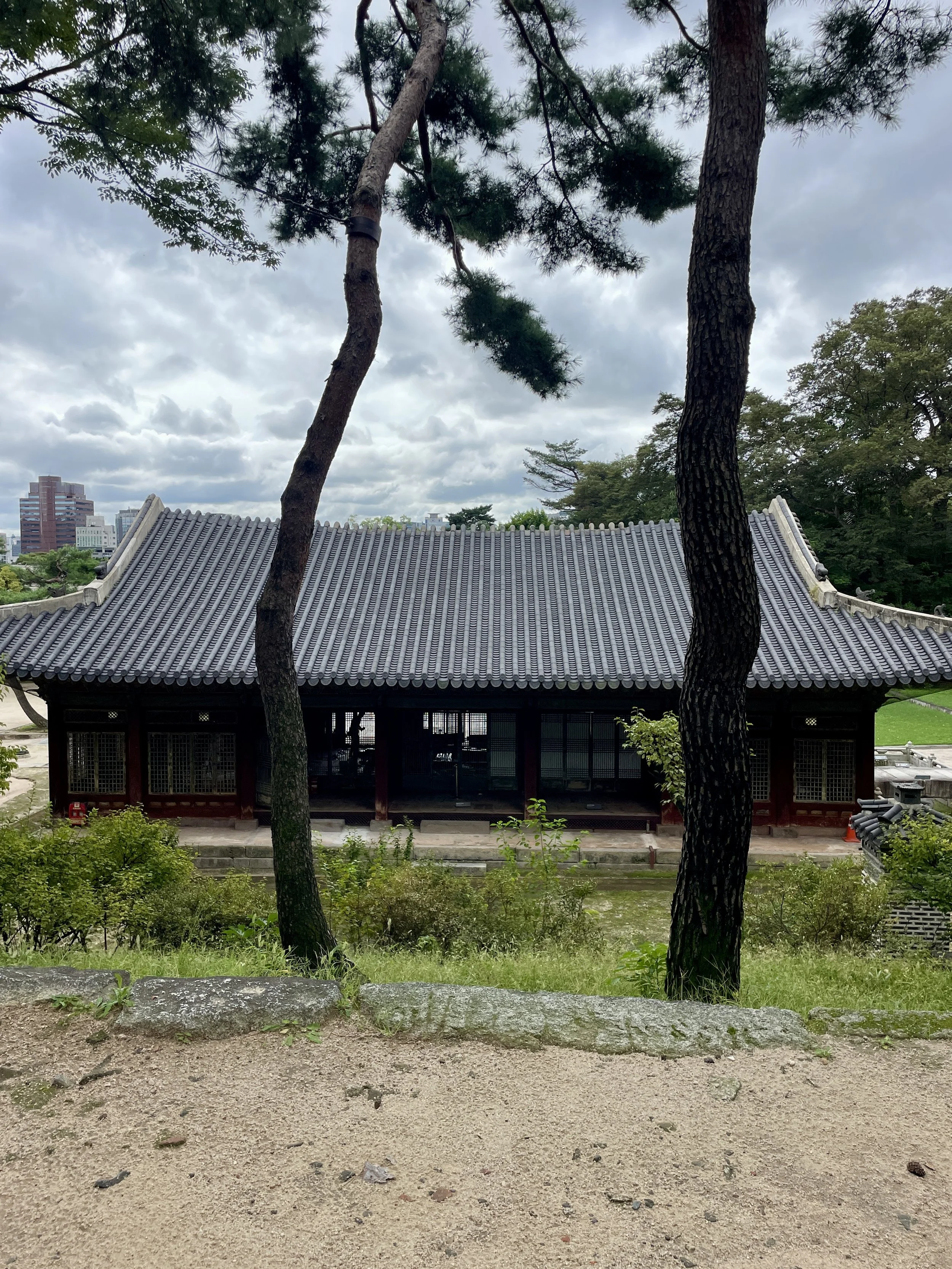
Coming into Changgyeonggung from Changdeokgung.
Originally constructed in 1483 by King Seongjong, Changgyeonggung was built to house queens, dowagers, and other royal family members. That purpose still lingers in the atmosphere.
While Changdeokgung Palace and the Secret Garden feel poetic and ceremonial, Changgyeonggung feels more residential. More intimate. It feels lived in.
Like many historic sites in Korea, Changgyeonggung carries a complicated past.
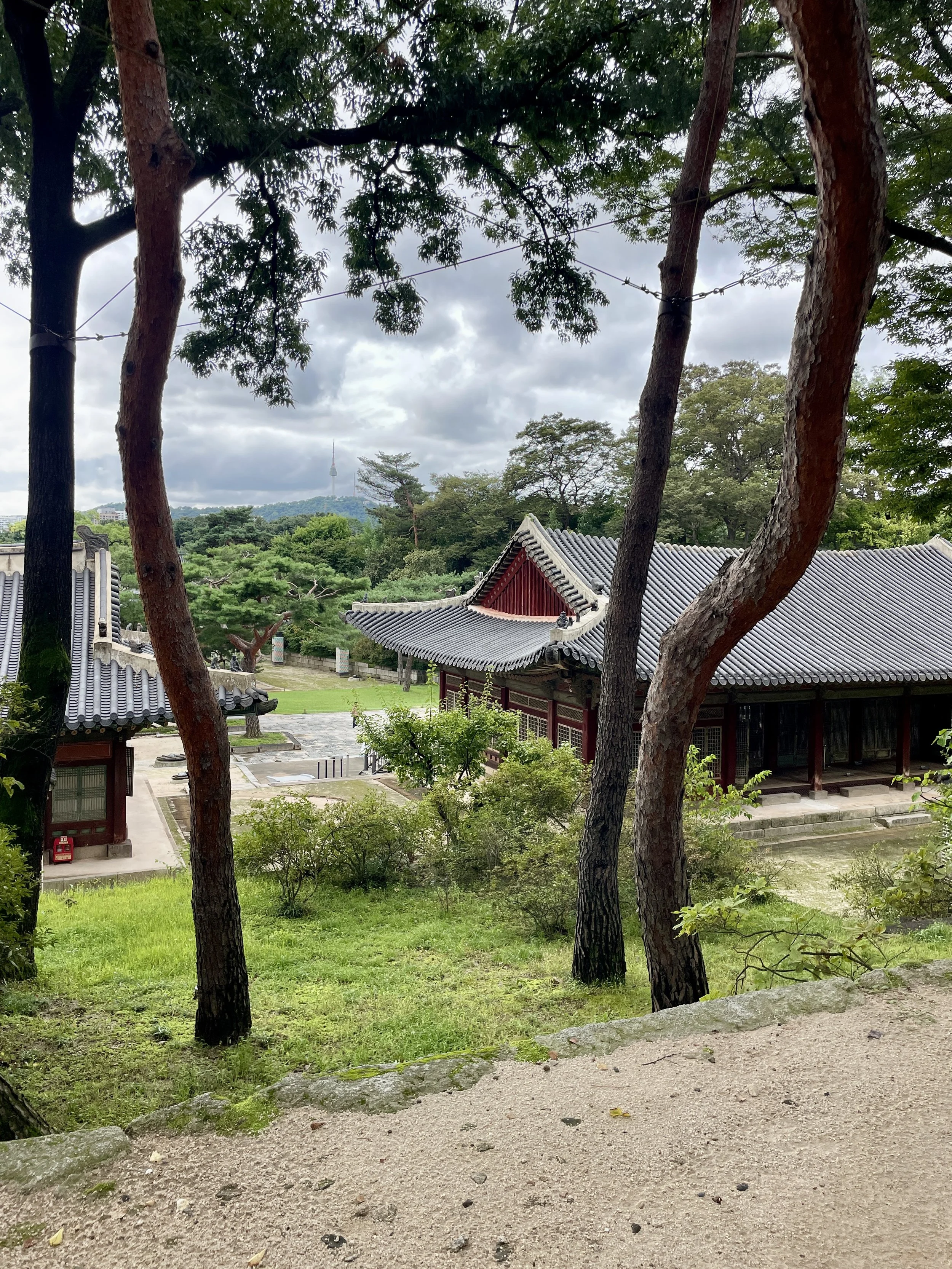
Loved this view of Namsan Tower from the woods at Changgyeonggung.
During the Japanese occupation, the palace was renamed Changgyeongwon and converted into a zoo and botanical garden in an attempt to diminish its royal significance and the dignity of the space was stripped away. Thanks to restoration efforts, much of the palace has been returned to its former identity — but that layered history still adds depth to the visit.
Highlights Inside Changgyeonggung
Myeongjeongjeon Hall (명정전)
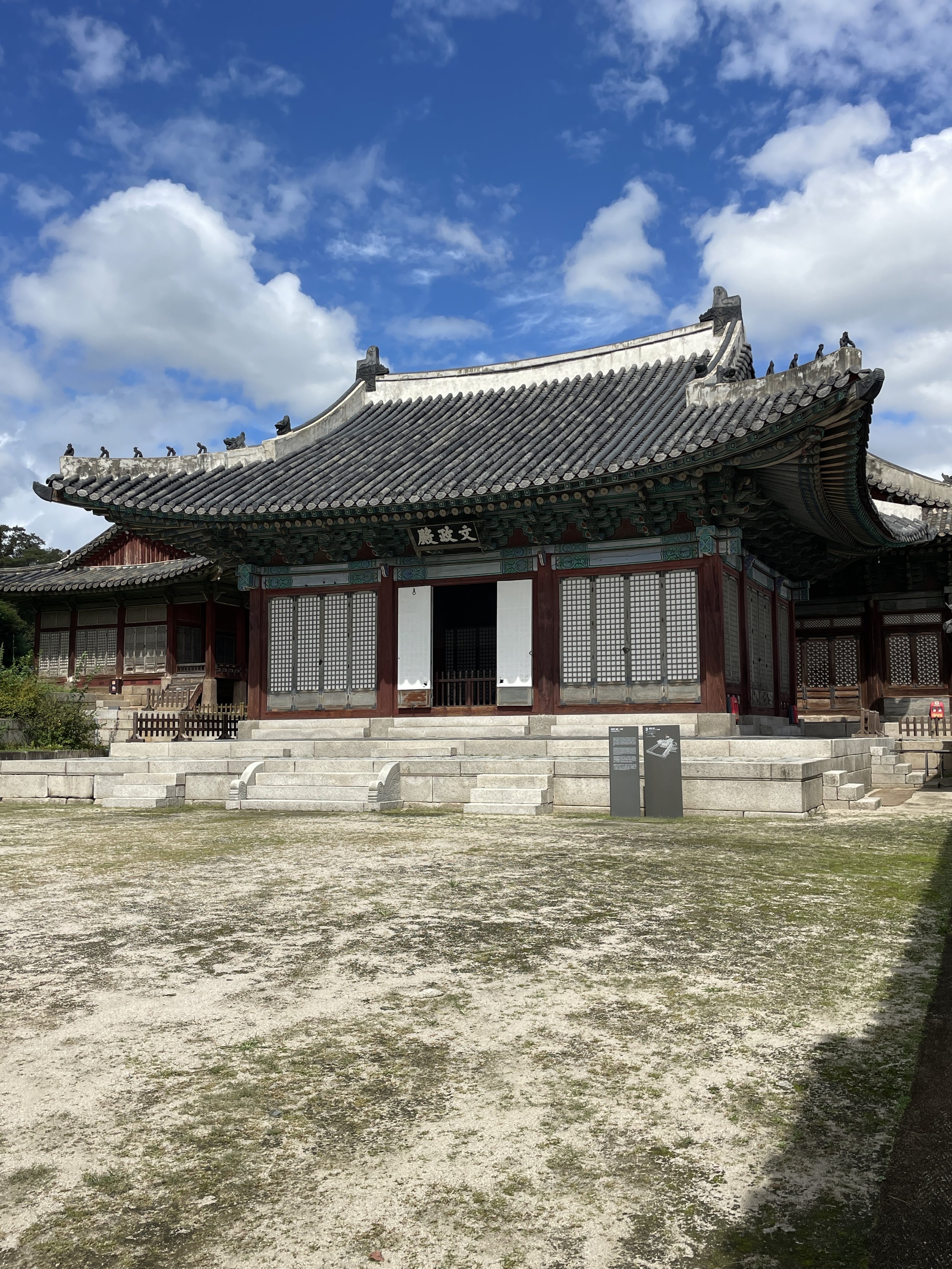
Myeongjeongjeon Hall in September.
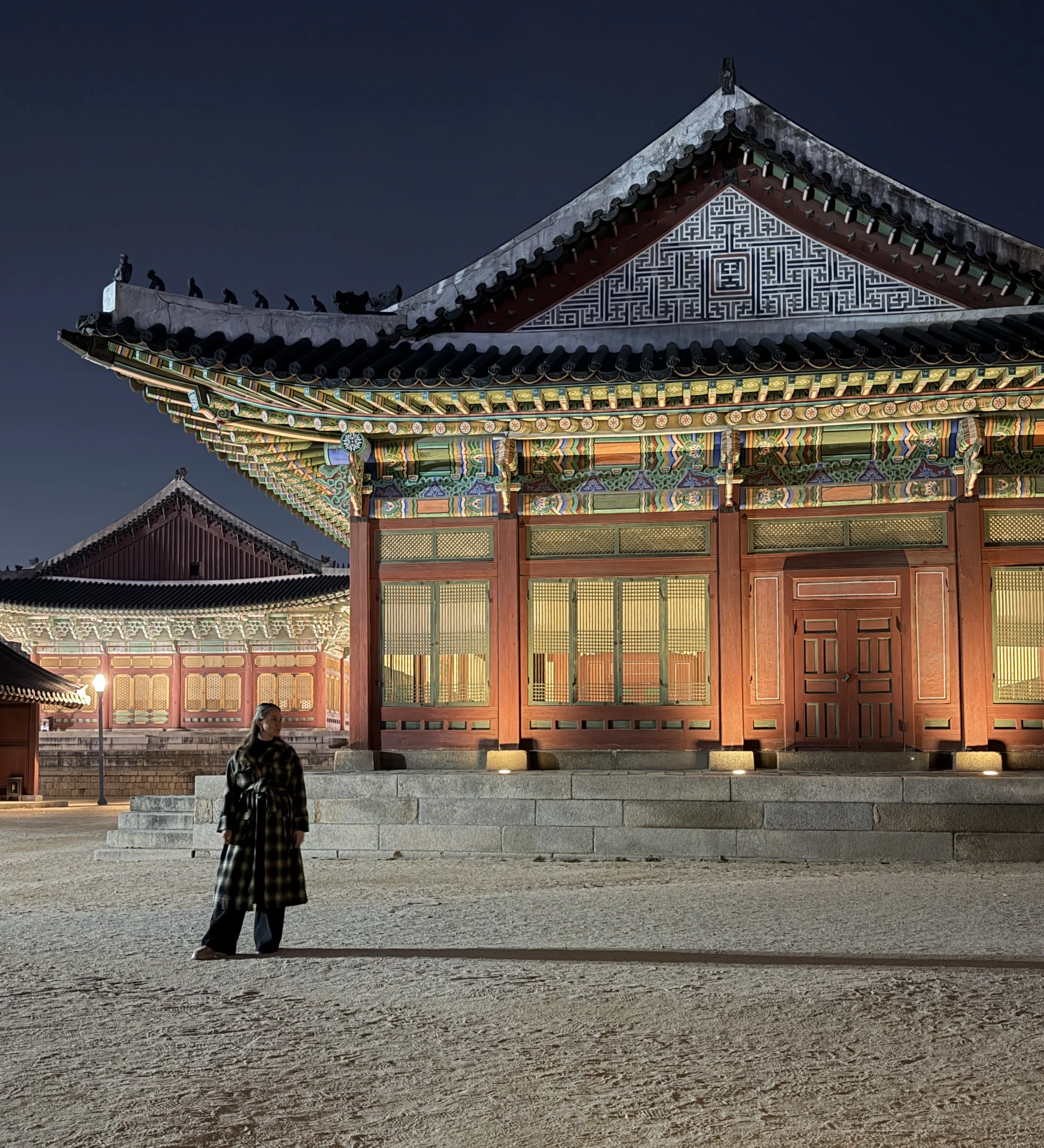
The main hall of the palace is smaller and more understated than the grand throne halls at Gyeongbokgung, but that’s part of its charm. It’s one of the oldest surviving main halls in Seoul and reflects the quieter, more residential nature of this palace complex.
The Grand Greenhouse (대온실)
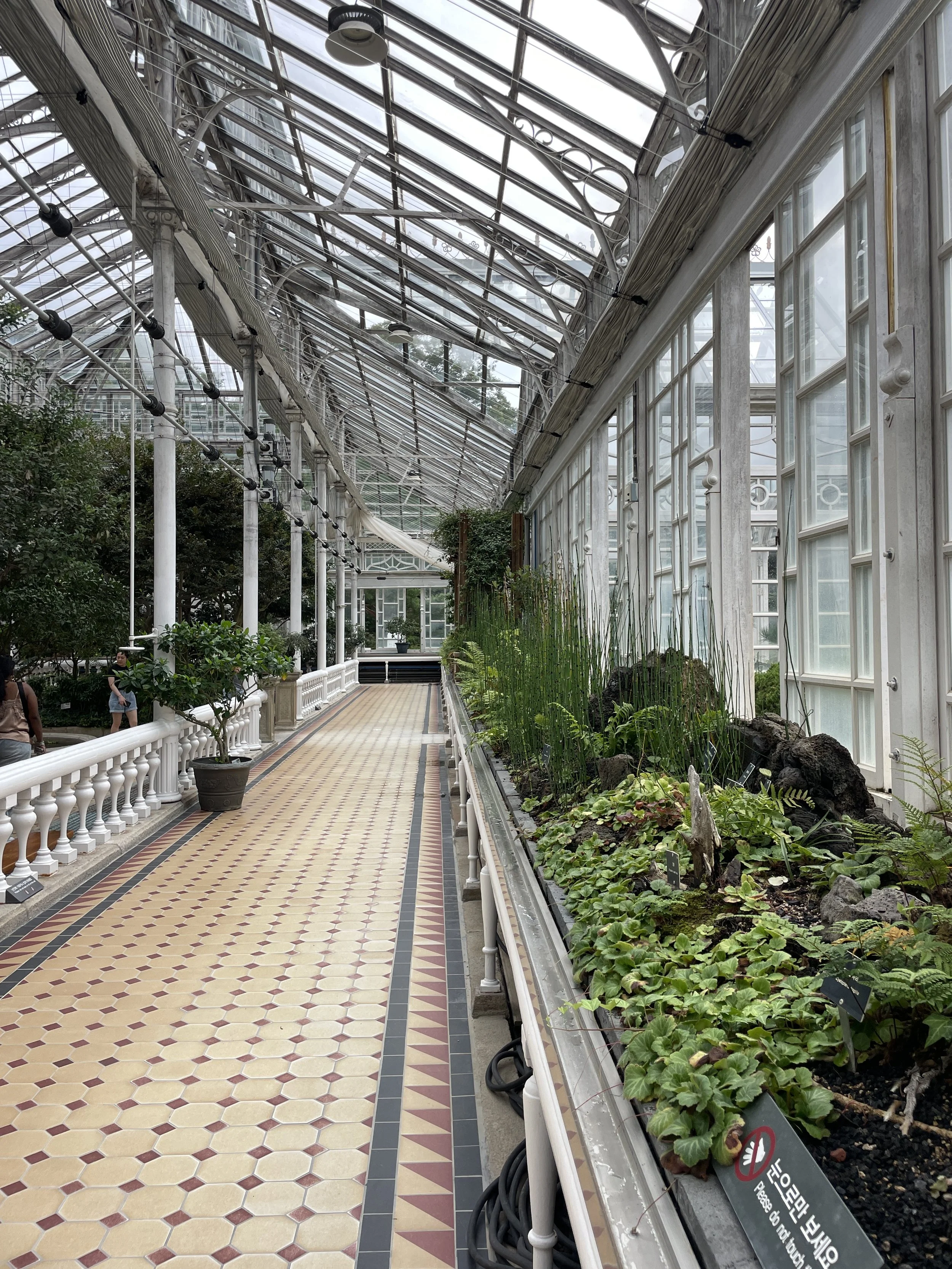
Inside the Grand Greenhouse at Changyeonggung Palace
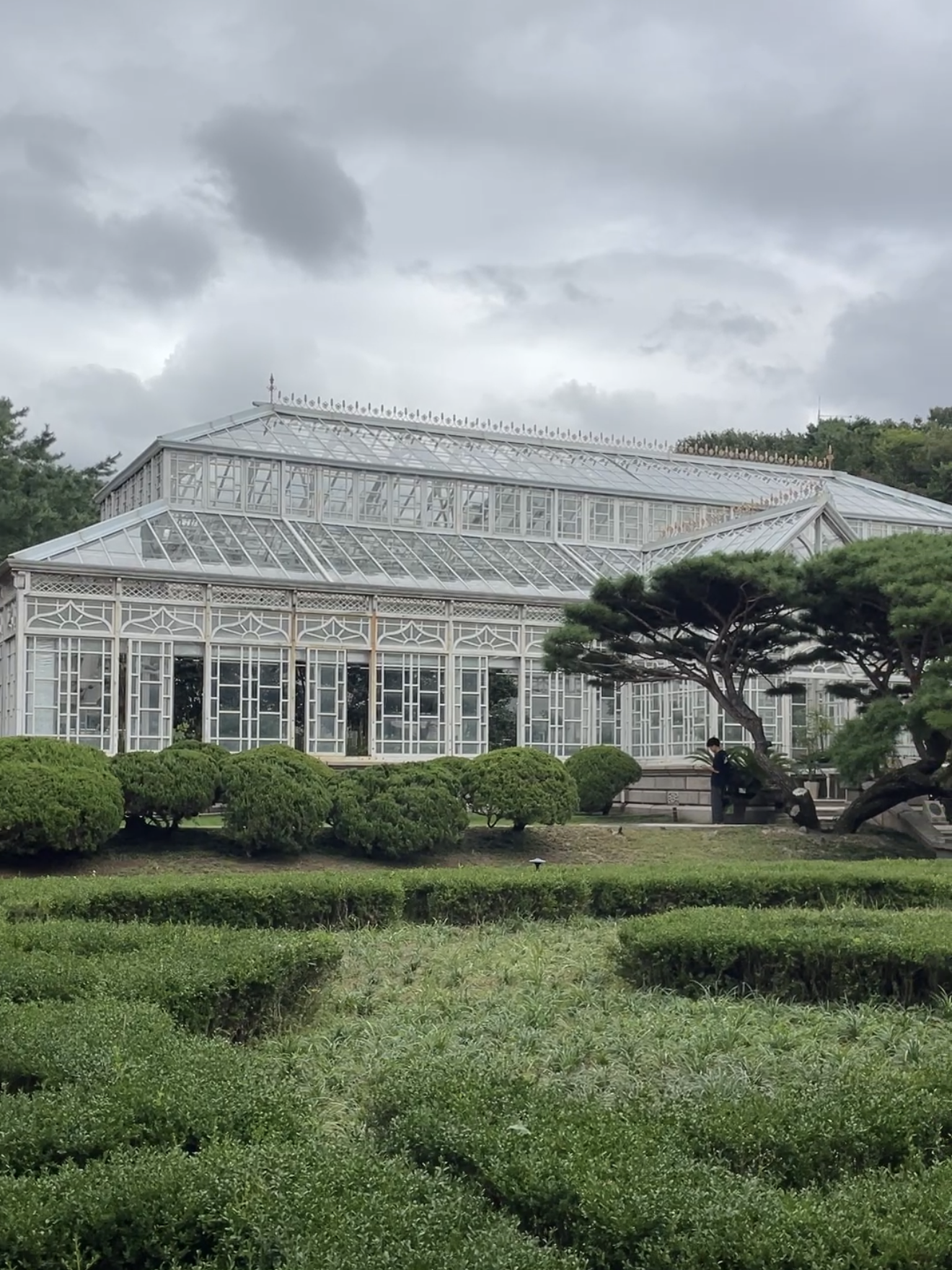
One of the most unexpected features of Changgyeonggung is its grand greenhouse, built in 1909. Built during the Japanese occupation, it was designed by Japanese and built by the French.
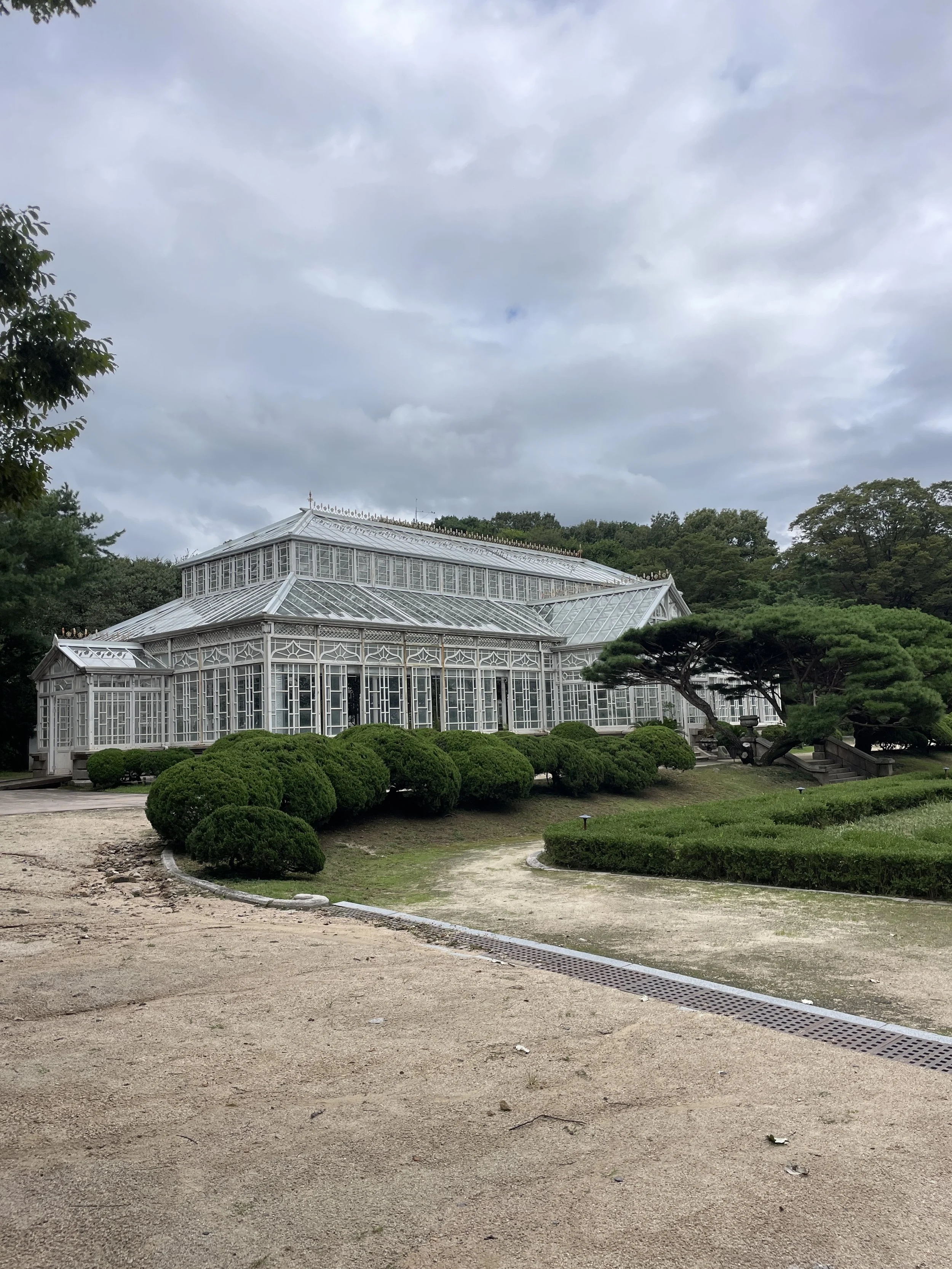
The Grand Greenhouse at Changgyeonggung
This departure from Josen architecture is one of many surprises at Changgyeonggung. Glass panels rise above tropical plants, framed by traditional tiled rooftops in the distance. In the late afternoon light, the structure almost glows.
A “Wait… What?” Moment
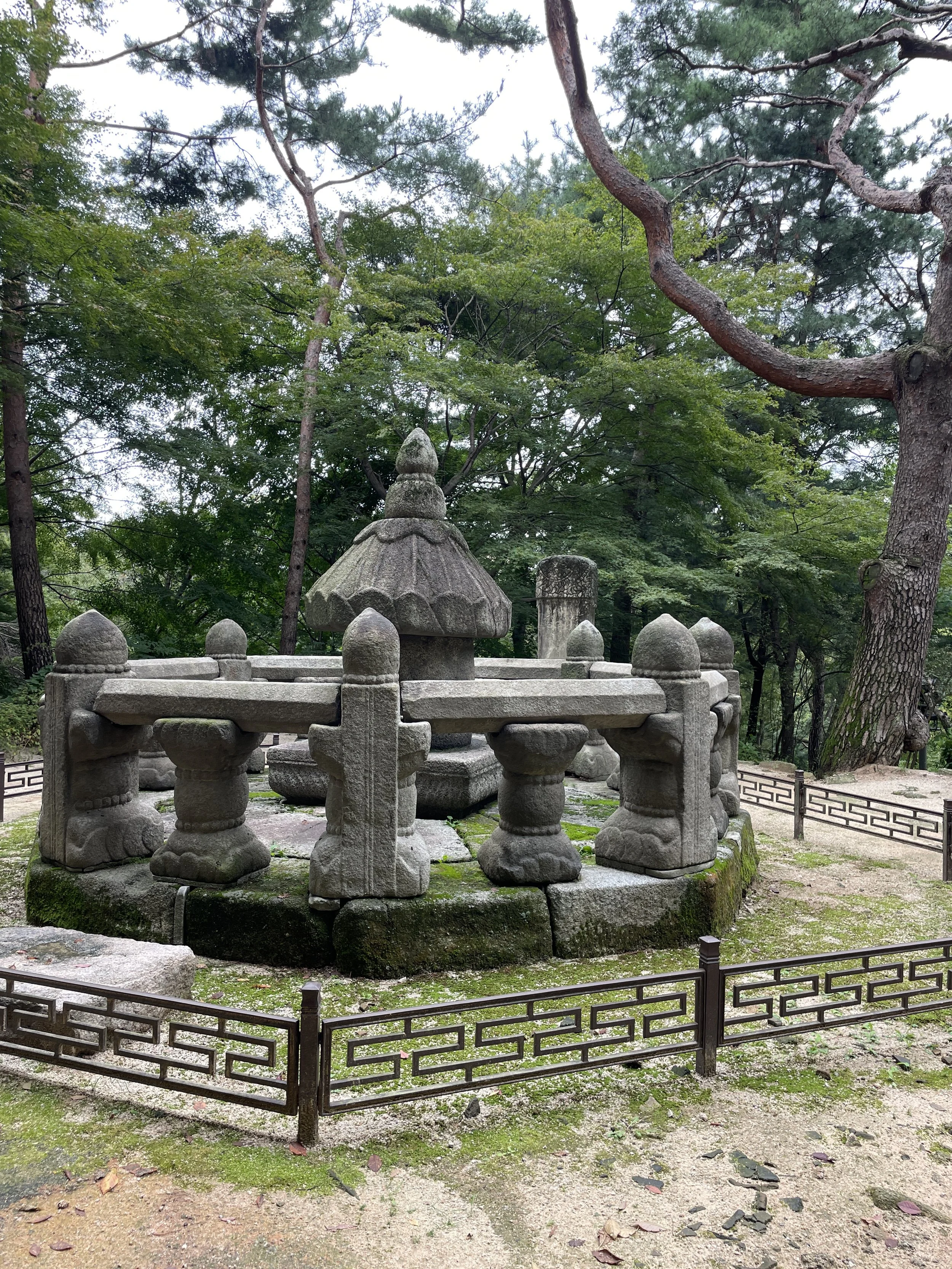
As I was wandering the grounds, I came across a stone monument tucked quietly into the landscape. There was a crowd surrounding it and it felt important — so I took a picture.
Then I read the sign. (And immediately texted it to my girlfriends.)
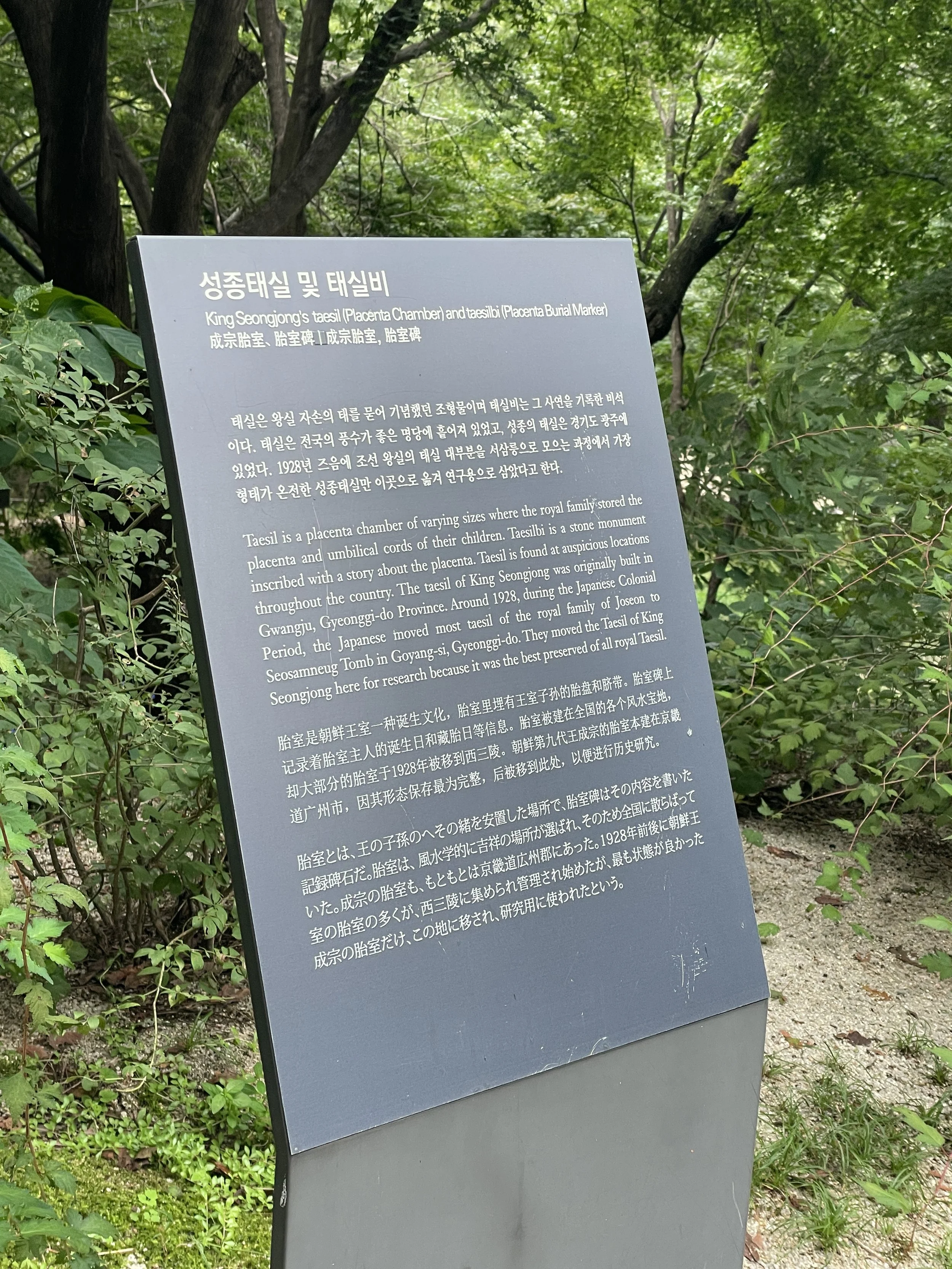
The taesil plaque at Changgyeonggung.
It was a placenta chamber.
During the Joseon Dynasty, royal placentas were preserved and enshrined in stone chambers called taesil (태실), believed to hold symbolic power tied to a child’s destiny. It’s one of those unexpected discoveries that makes you pause and think, “Okay… this palace just got a lot more interesting.”
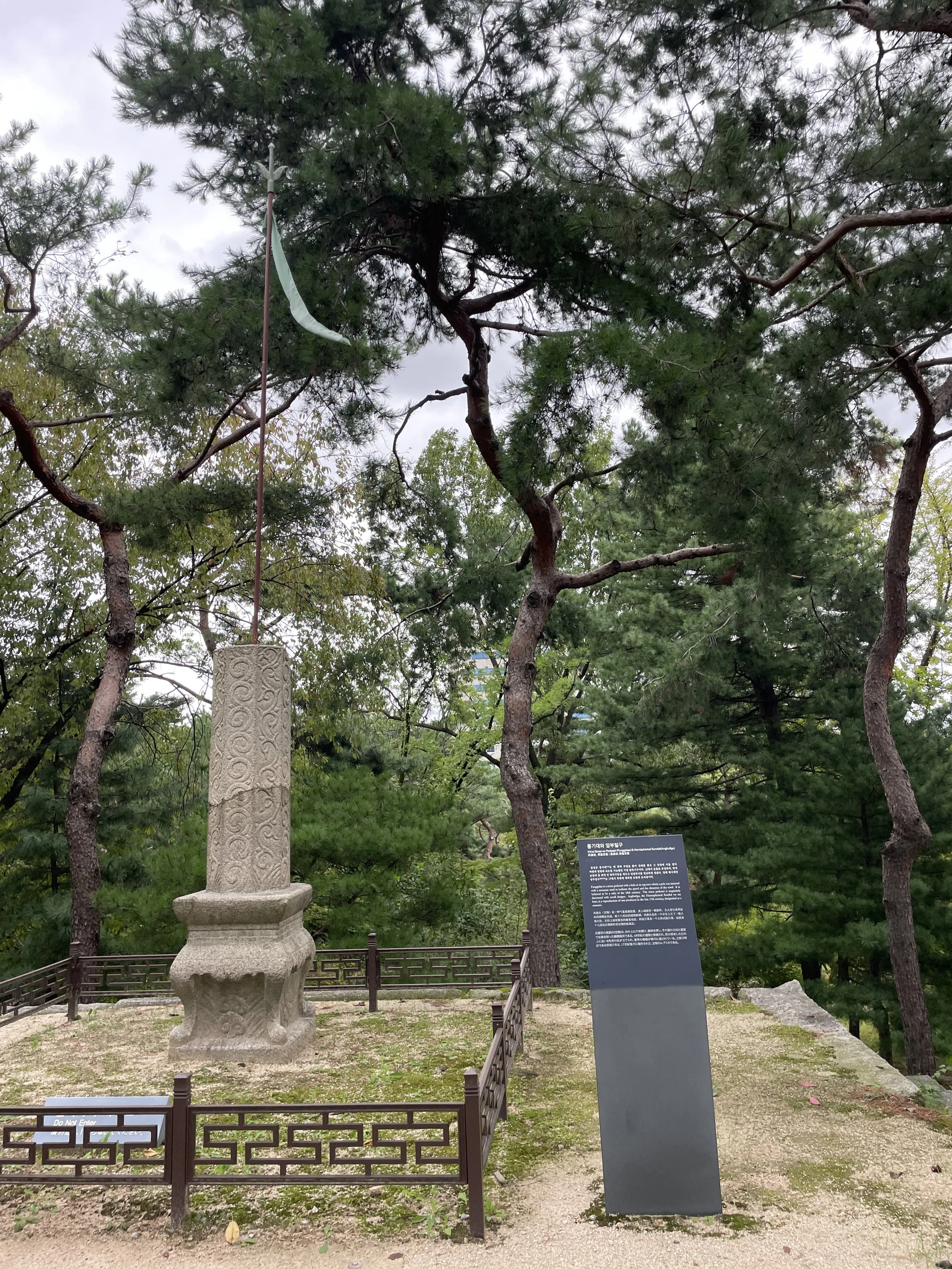
Interestingly, I found myself thinking there was quite a bit of science happening at Changgyeonggung.
Beyond the placenta chamber, there’s Gwandeokjeong Pavilion, which once functioned as a silkworm breeding facility. You’ll also spot Punggidae, a wind streamer pedestal designed to hold a flag used to measure the direction and strength of the wind. The information plaque for Punggidae also mentions Angbuilgu, a hemispherical sundial used to tell time by tracking the sun’s shadow.
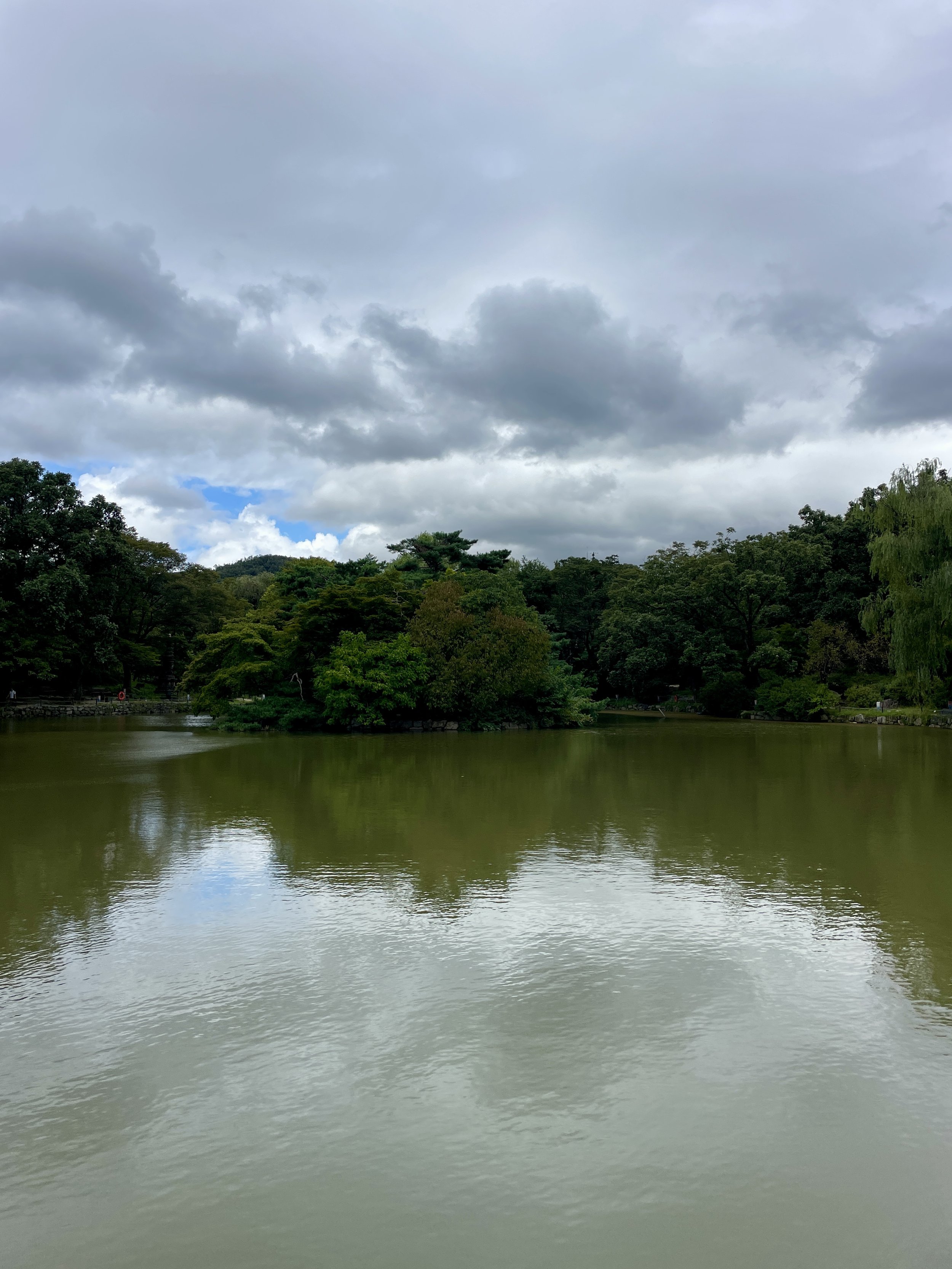
Chundangji pond.
Gwancheondae Observatory, an observatory that housed instruments for astronomical observation, is also situated on Changgyeongung grounds.
What Makes This Palace Feel Different
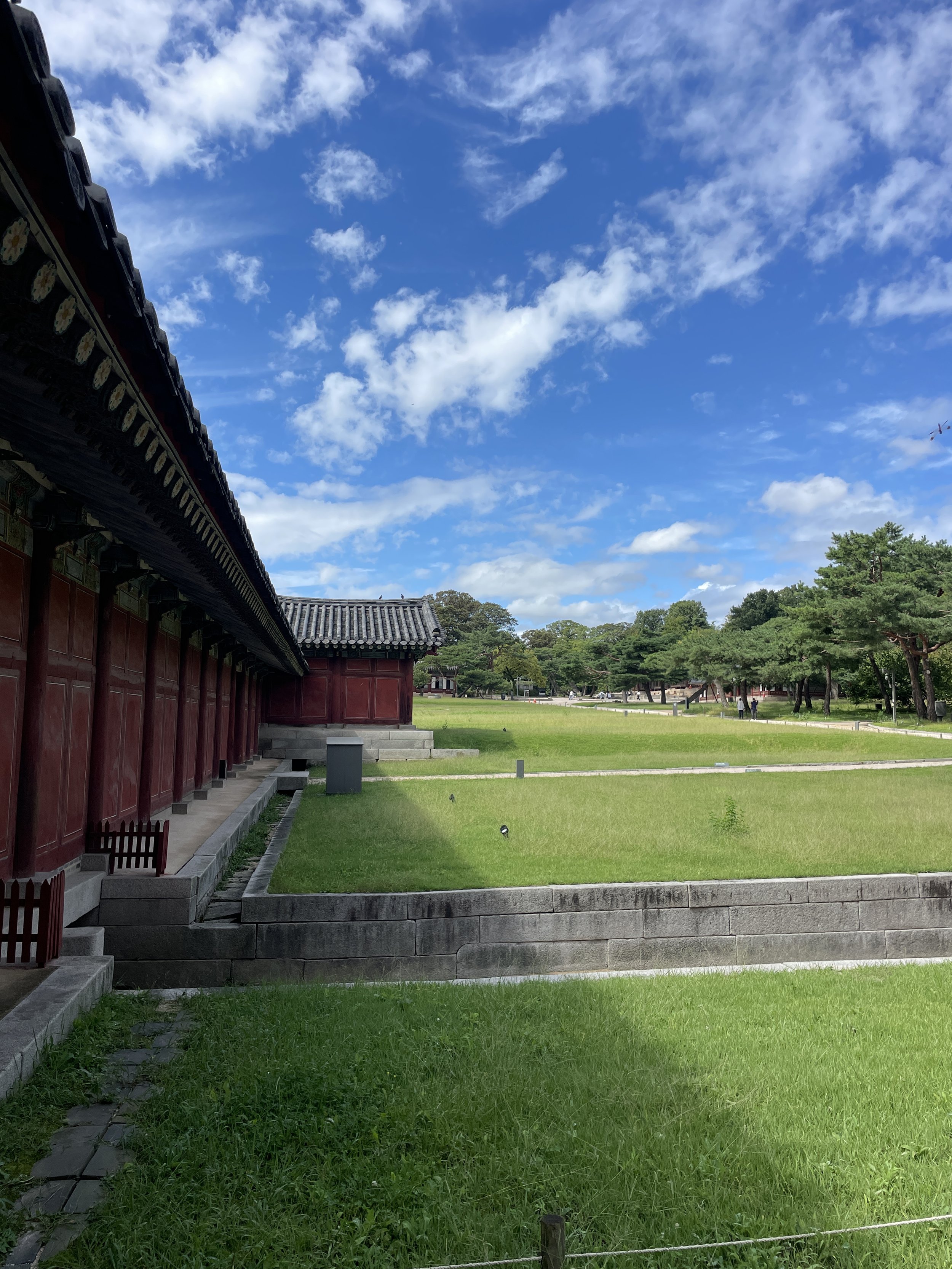
Lush greenery at Changgyeonggung
Another way it stood out was how shaded it felt. Many of Seoul’s palaces are known for their expansive courtyards and open plazas. They’re beautiful — but very exposed. Changgyeonggung, by contrast, is lined with mature trees and greenery.
Large sections of the walking paths are shaded and bathed in soft light filtering through the leaves. On warmer days especially, it feels cooler, calmer, and easier to explore without rushing, like a royal garden retreat tucked inside the city. Pretty fitting considering it backs up to the Secret Garden, as well.
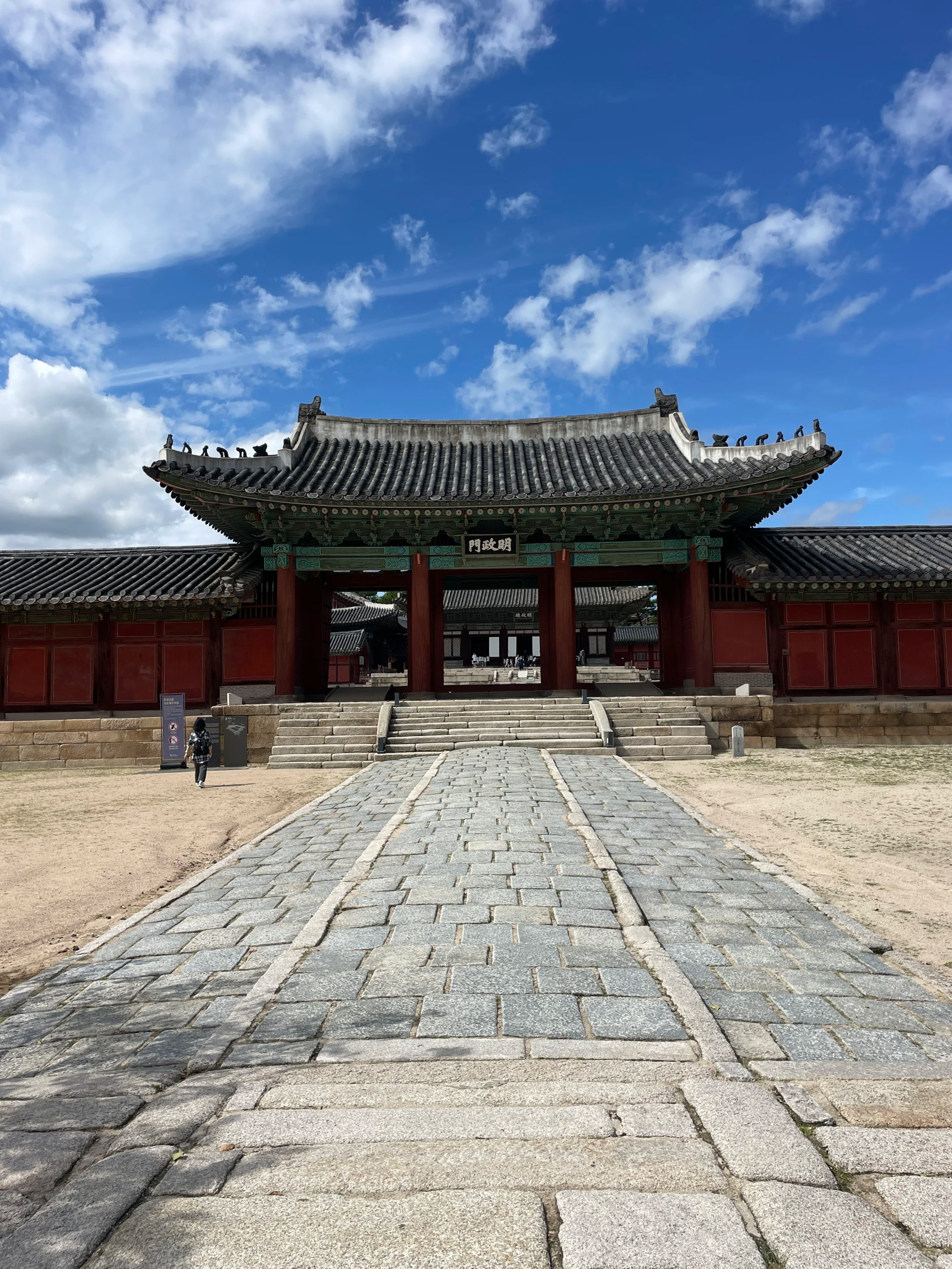
Myeongjeongum Gate at Changgyeonggung
Changgyeonggung doesn’t try to impress you. It doesn’t overwhelm you with scale or ceremony.
Instead, it offers hidden surprises and quite possibly, it might just be the palace you remember most.
Opening Hours & Admission
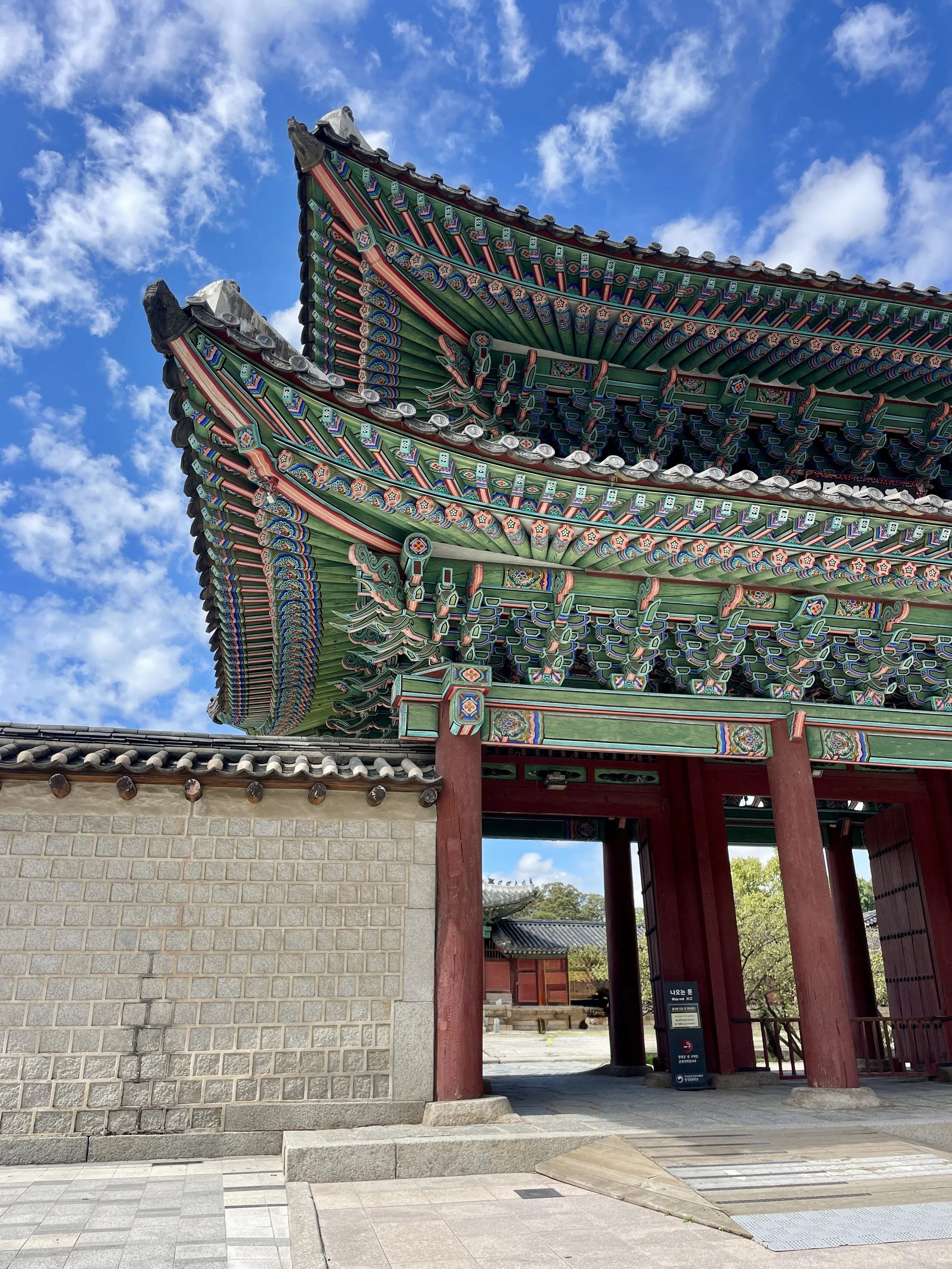
Honghwamun gate street view
Because it sits directly next to Changdeokgung, visiting the two together makes for a perfectly balanced half-day of palace exploring. If you time both palaces and the Secret Garden properly, you can also make the 12:00 tour at Jongmyo Shrine.
Hours: 09:00-21:00 year round
Last admission: 1 hour before closing
Admission fee: 1,000 KRW for adults, free for children and if you wear a hanbok
Closed: Mondays (always double-check seasonally)
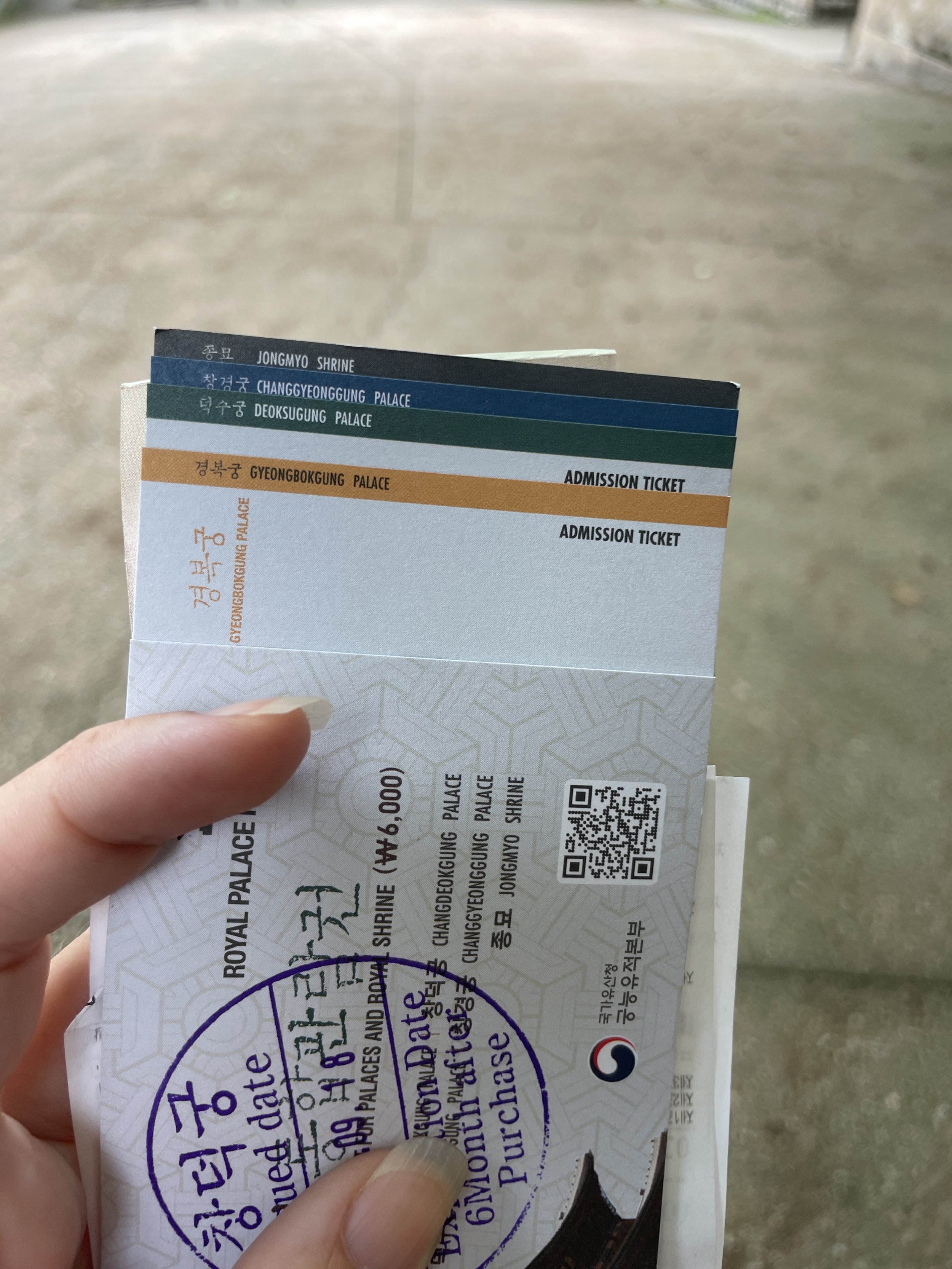
Be sure to check the Royal Palaces and Tombs Center website for the most accurate information. If you’re planning to visit multiple palaces, the Royal Palace Pass can save you money and makes hopping between them incredibly easy.
Naver pin for Honghwamun Gate here.
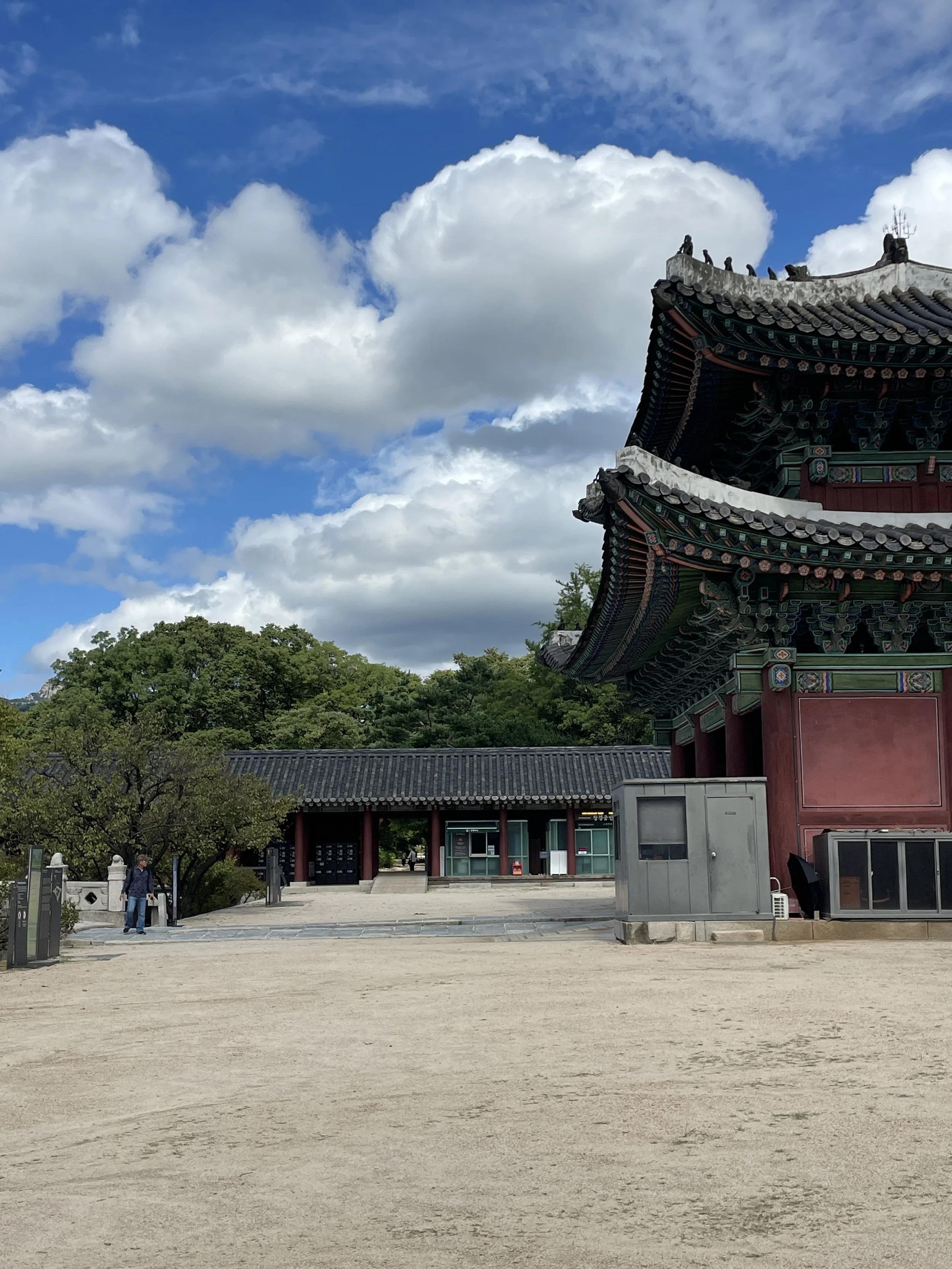
Side view of the main entrance at Honghwamun gate.
This is the line up I have coming for my Seoul Royal Palaces Series. I’ll update links as each post goes live!