Military Spouse: Military Noise Compensation Guide
Visit Osan Air Base or Camp Humphrey’s for ANY amount of time, and you’ve no doubt hear the fighter jet noise. The South Korean government offers annual compensation for residents who live(d) in designated military noise-affected zones.
Under the Military Airfield & Military Firing Range Noise Prevention and Compensation Act (군소음보상법), people who were registered and actually lived in a designated noise-affected area can apply for money each year. Foreigners — including U.S. military members and dependents living off-base — are eligible as long as their resident registration and actual residence meet the requirements.
I first heard about this compensation act in October, and at the time I assumed it was something new. After digging a little deeper, I learned that several people in the Osan area have actually gone through this process before and successfully received compensation. That discovery really stuck with me. As foreigners living in Korea — especially within the military community — I truly believe we have a responsibility to help each other by sharing information like this. Not everyone has access to Korean-language resources or knows what questions to ask, and I want to share what I’ve learned to the best of my knowledge. This program exists, it’s legitimate, and if you’re eligible, you deserve to know about it.
Who Can Apply?
✅ Residents (including foreigners)
✅ With resident registration in a military noise area
✅ Who actually lived there during the compensation period
Even if you didn’t apply in previous years, retroactive applications (within certain limits) are often allowed.
Unfortunately, if you reside on base, you are not applicable to apply.
Also, if your realtor/landlord doesn’t allow you to register as a tenant of your residence, you will not be able to receive compensation.
Step-by-Step Application Instructions
Check If Your Address Is in a Designated Noise Zone
Ideally, you’d want to confirm your address falls within a military noise compensation area, however, I have found it to be inaccurate and recommend applying in any case. During the application process, they’ll let you know if you are not eligible.
Use the Military Noise Portal (국방부 군소음포털) to look up your address and check what type of zone it is (Type 1 / 2 / 3). You’ll need to click the link and another window will pop up for you to enter your address in Hangul. (I like this Korean Keyboard website for times I need to enter my address.)
Here’s where it gets complicated if you don’t understand Korean addresses and can’t read Hangul. Start with entering your zip code and street name. If you don’t know where to find your address in Hangul, check your lease agreement. My apartment complex has a sticker on our elevator door with our address - so maybe yours does, too!
Here are two images with the noise map types listed. K-6 is Camp Humphrey’s and K-55 is Osan Air Base.
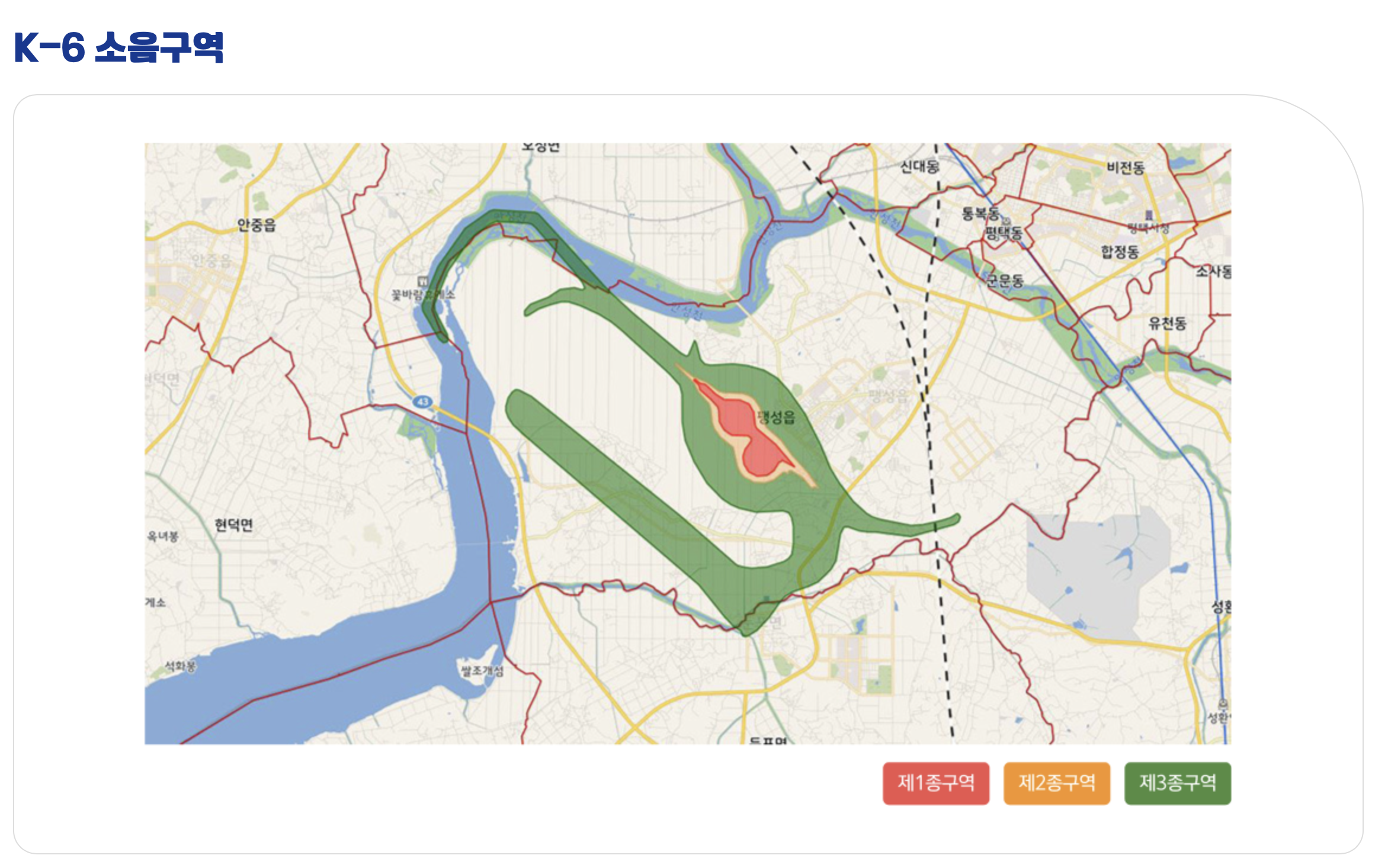
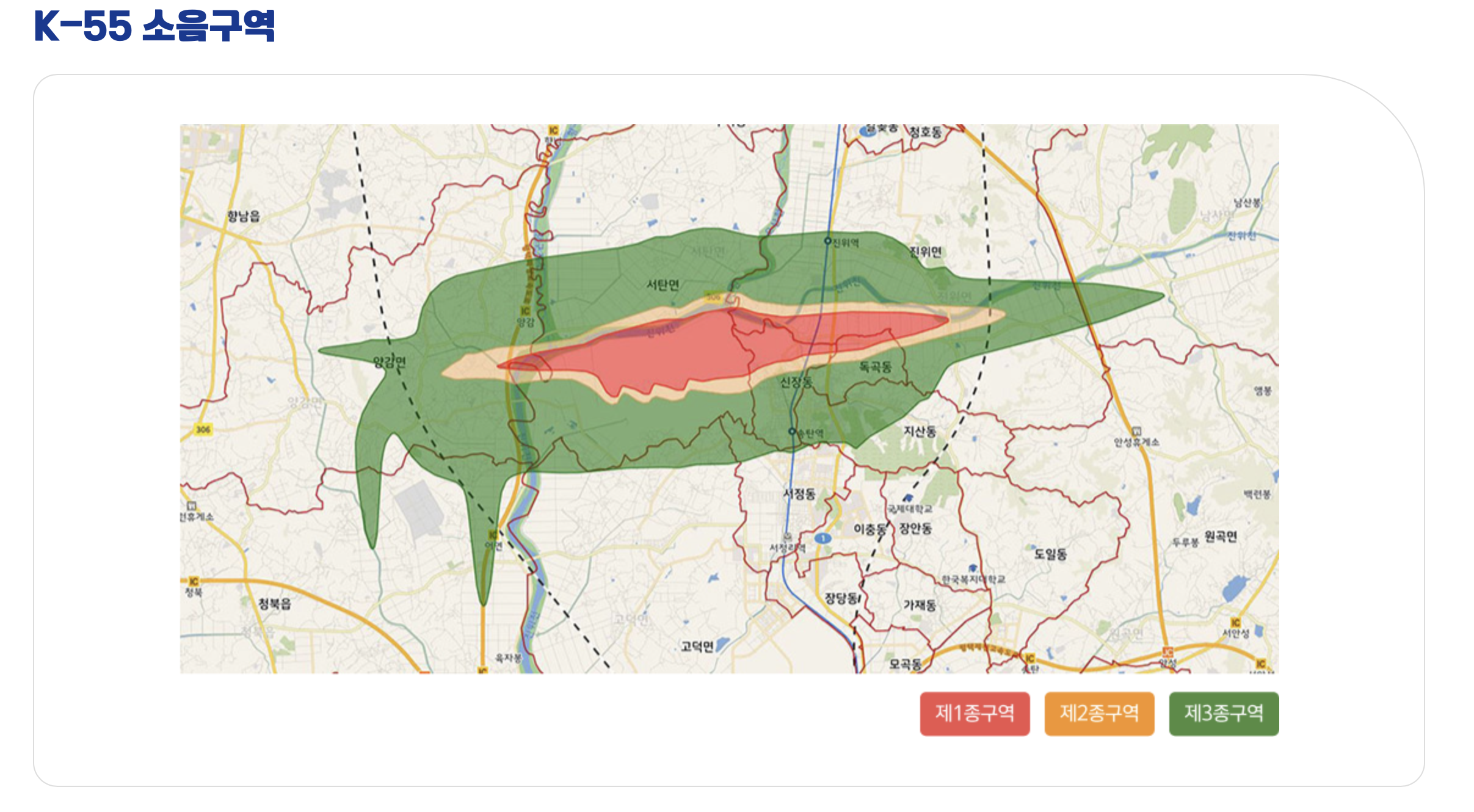
I want to add a disclaimer here: the map does not show ANY part of Godeok being included, however, the guide blog says “Compensation target: Pangseong, Cheongbuk, Jinwi, Seotan, Godeok, Seojeong, Jisan, Songbuk, some areas of Xinjiang (보상 대상지 : 팽성, 청북, 진위, 서탄, 고덕, 서정, 지산, 송북, 신장 일부 지역)” so whether you see your area highlighted or not, it’s worth attempting to apply. I say this because according to the Military Noise Portal, my apartment complex is not included - but they hosted an on-site event at my complex and I know several people living here that have received it in past years.
Gather Required Documents
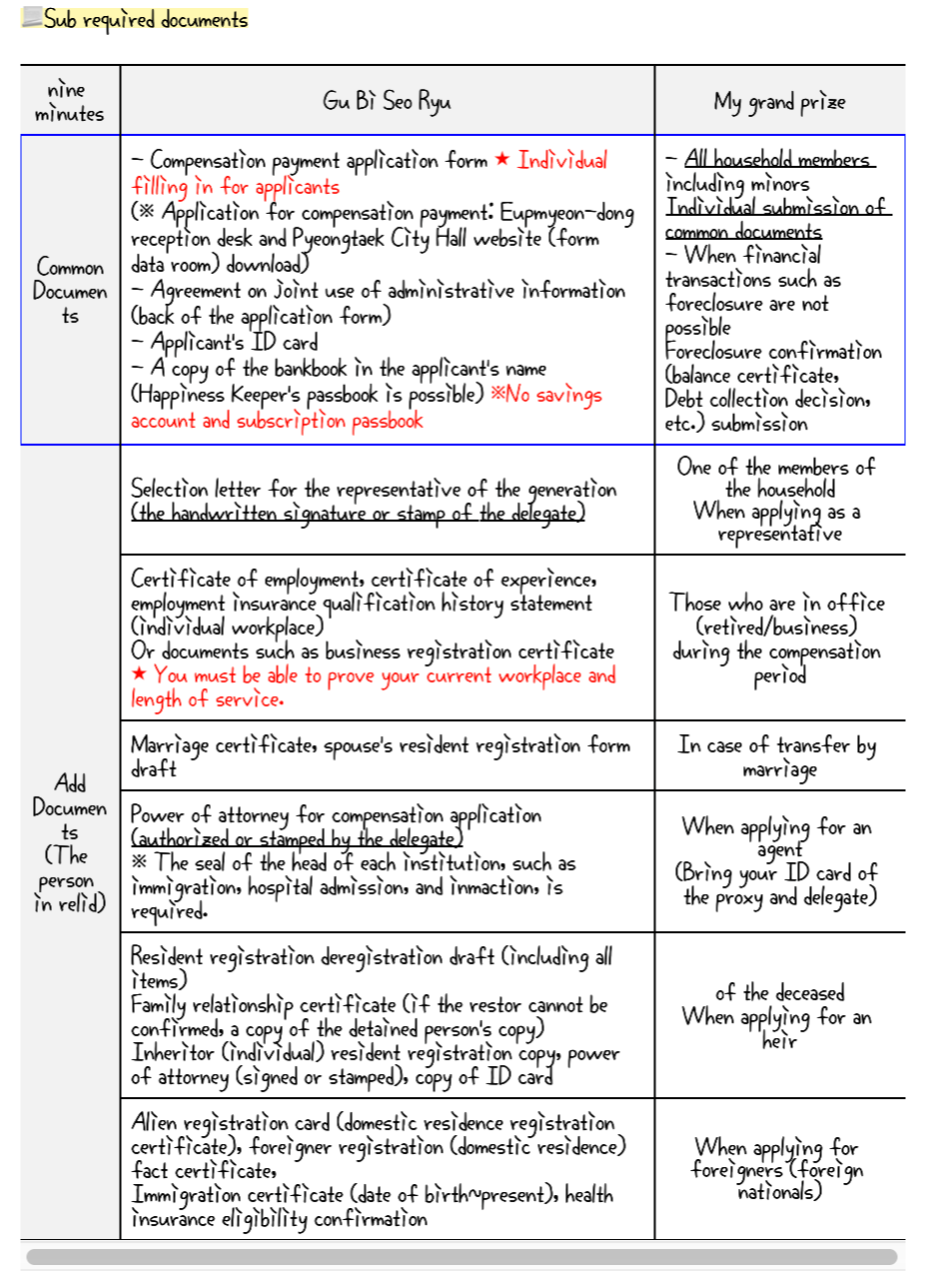
Documents required to apply for the compensation and the won amount based on your residence location
You can download the Compensation Payment Application form or get in person at your local Welfare Community Center. The agreement is on the backside of this form. Honestly, all the information is pretty redundant - you’ll fill out the applicant’s name, ARC number, address, phone number, bank and bank account number. At the bottom, you’ll need to date it, print the applicant’s name, and sign it. On the back there are a few highlighted places to print and sign the applicant’s name.
There is also a form to fill out for applying the first time. You only need one per family. The main applicant for the family goes in the top box. In the larger box below, you’ll fill out the name, signature and ARC number for each additional family member.
After you grab your forms, pull a ticket from the black and white printer to get in line.
I go to the Songbuk-Dong Community Center - it is convenient to the main gate of Osan Air Base as it’s located in the 4/9 market area. Click here for the Naver pin. The Military Noise Compensation Application is taking place on their second floor.
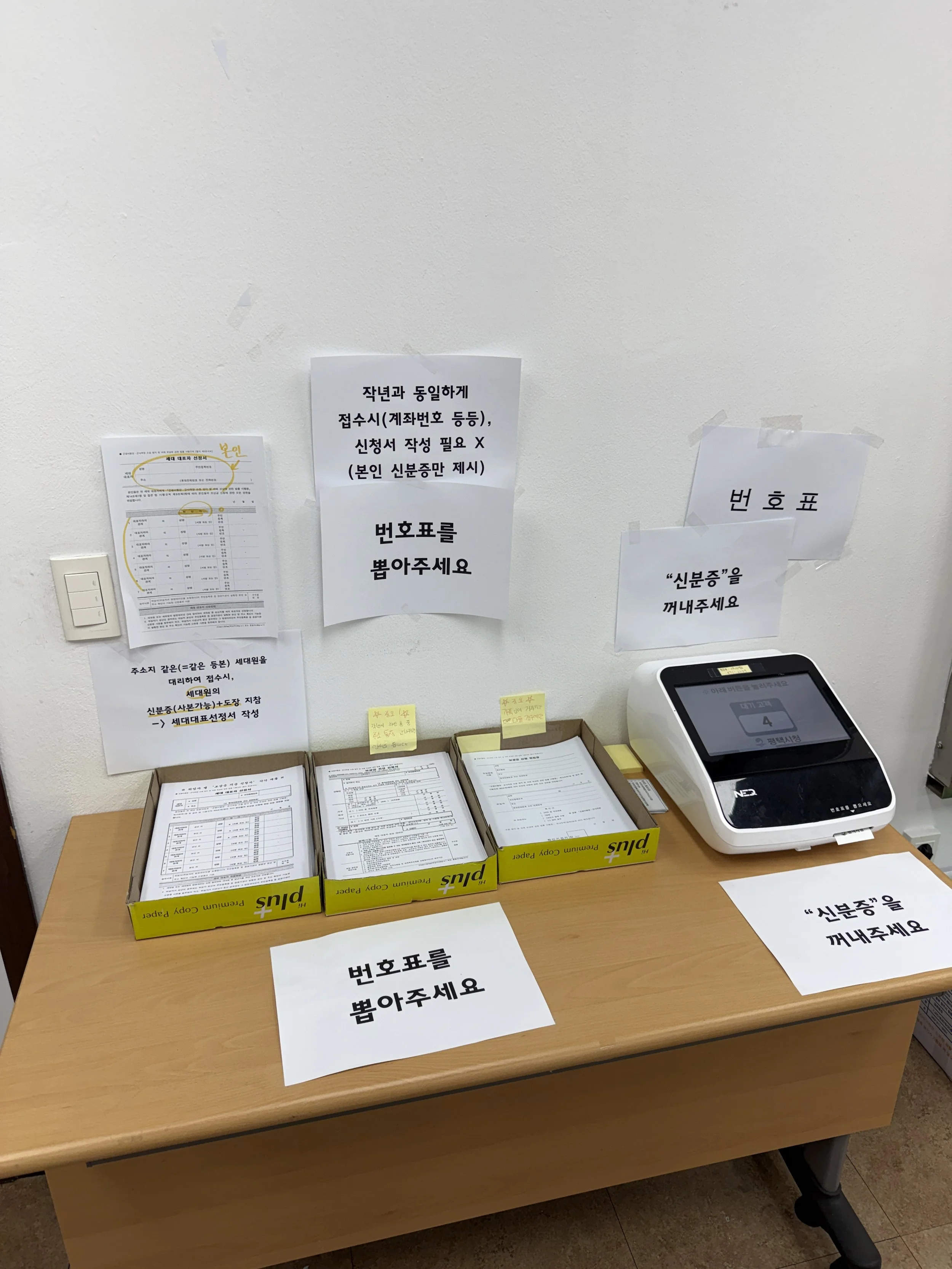
There are other welfare/community centers around both Camp Humphrey’s and Osan Air Base, search: 행정복지센터 on Naver to find the one closest to you.
As a foreigner, you will also need the documents listed in the image below. Below the image, I’ve written them out in numerical order according to the image.
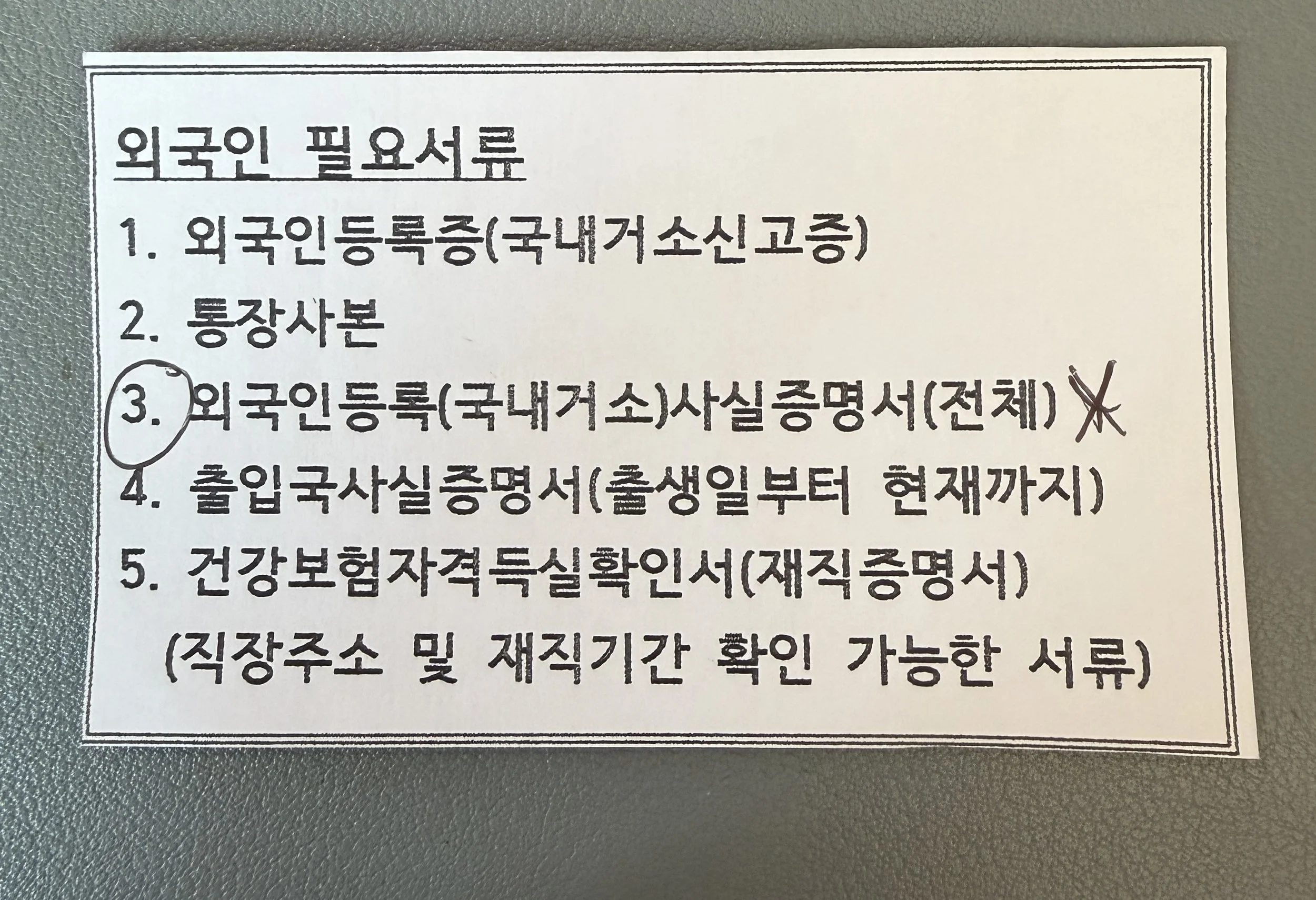
Documents needed for foreigners application
Alien Registration Card for each person applying. Children do not need to be present for the application process. They will make copies of each of the cards.
Copy of bankbook - if you have one, you know what this is. EACH person applying needs to have their own Korean bank account, including children.
Resident registration certificate (주소지 등록 확인서) You can get this at your local welfare community center. If you look at the image above, I circled and starred #3 - you can show this to the clerk at the counter so they know what you’re looking for. They cost 2,000₩ per copy.
Certificate of Entry and Exit (출생) This shows every time you’ve entered and exited South Korea. As a parent, you have to fill out a form to receive these for your kids, but it’s very simple. These are also 2,000₩ each.
Health Insurance Eligibility Confirmation (Employment Certificate) - I was told these are not necessary but I brought our military orders just in case.
While it may be good to have a copy of your lease agreement, your ARC card has your address on it, so it’s also not necessary. If you need both the resident registration certificate AND the certificate of entry and exit, you’ll need 4,000₩ per person. Cash only.
Submit Your Application
You have three ways to apply:
In person at your local district/community office (읍/면/동 주민센터), or at the city hall service counter handling noise compensation. Both are open 09:00-18:00 Monday through Friday. If you’re specifically going to the Songbuk-Dong community center I linked above, they are holding applications on the 2nd floor and are closed from 12:00-1:00 for lunch.
This year they are also hosting on-site applications at many apartment complexes around the area. See image below. On-site applications will be closed for lunch from 12:00-1:00. There were 5 women working at my apartment complex and only one spoke English. If you have any questions, your translator app will come in handy.
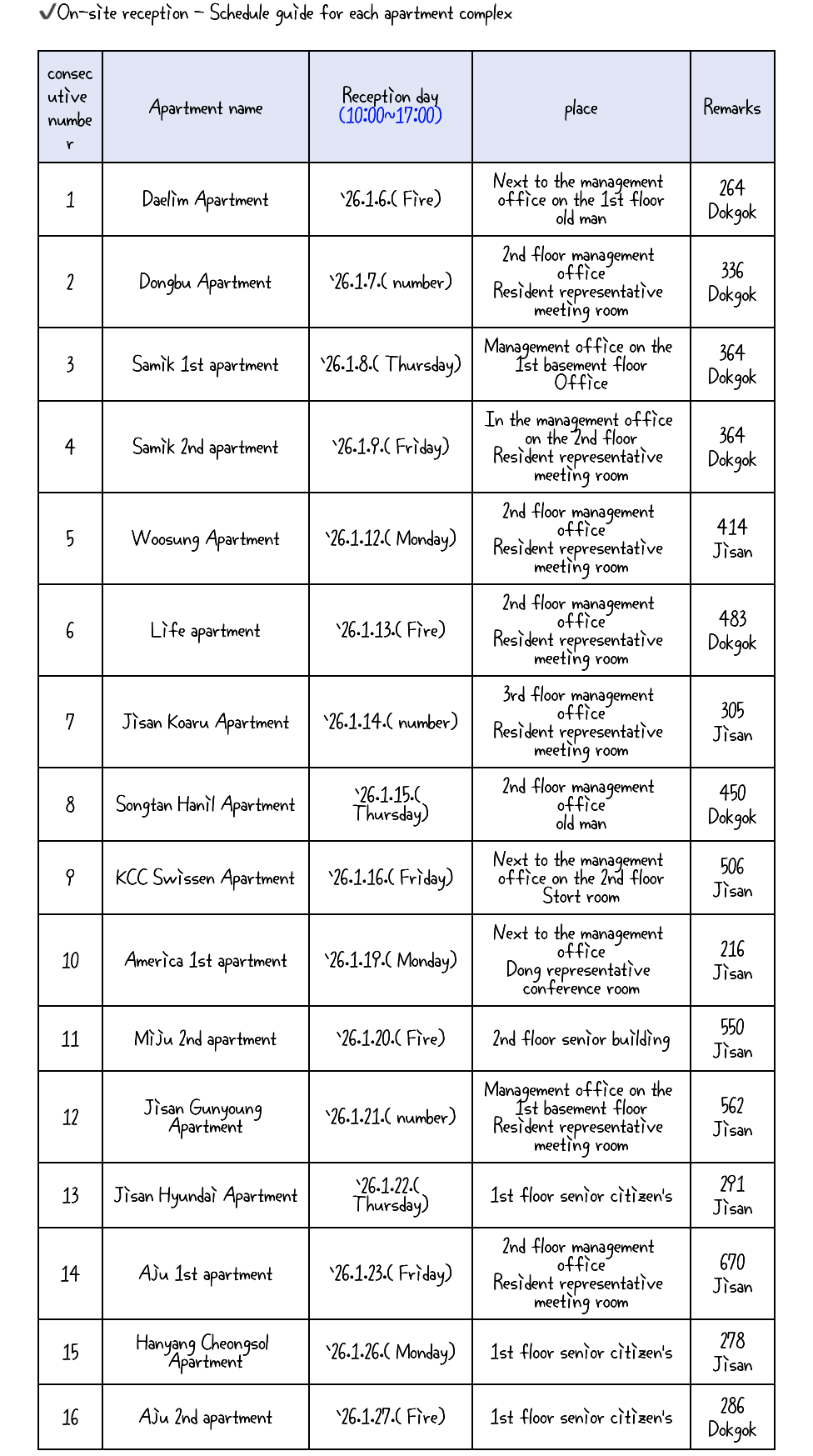
On-site apartment schedule for applications
If your apartment complex isn’t listed, check out the schedule of on-site reception at the local village hall’s. There are two happening in Godeok; one at the end of January and one mid-February.
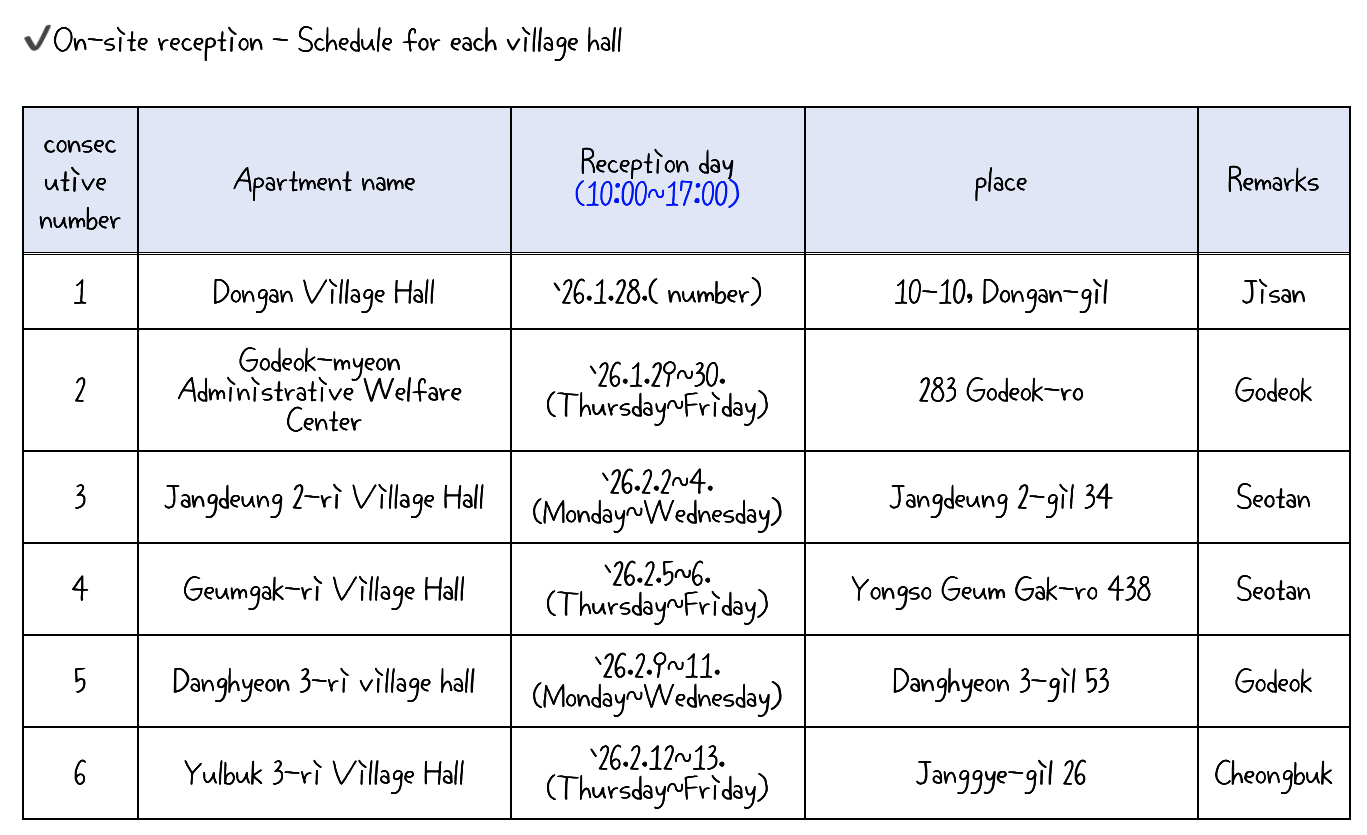
Image from Pyeongtaek City Naver blog
You can also apply online through the Government24 (정부24) online portal — search “군소음 보상금” and upload the necessary forms and documents. Lastly, you can apply by Registered Mail. Send completed forms and copies of documents to the municipal office address and keep the receipt for tracking. Having multiple options is convenient, however, for foreigners, in person is the best option in my opinion.
How Much Compensation?
Monthly amounts are based on noise intensity zones:
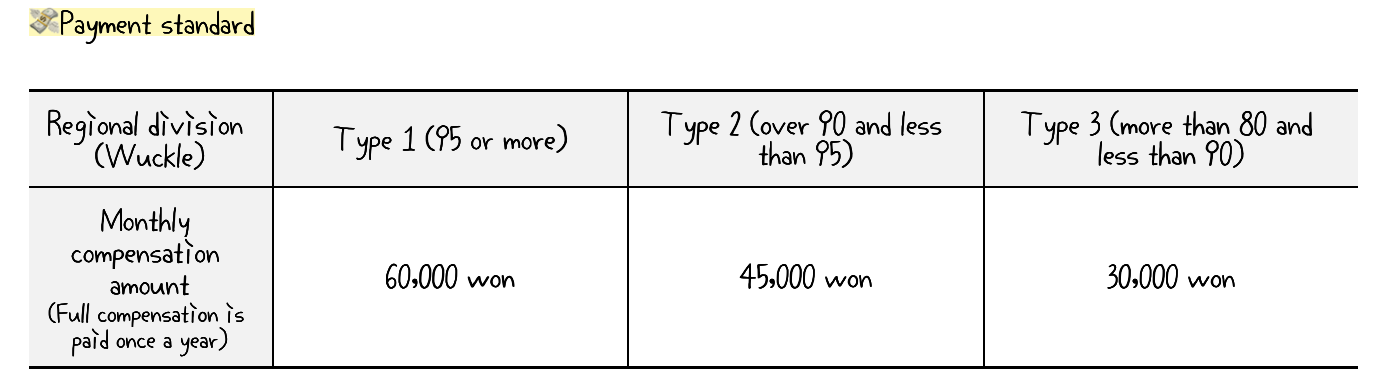
Payments for each zone type
These amounts can vary slightly depending on local policies and exact measurement period. I didn’t ask which zone I was in, but the closer you are to the base, the higher amount you’ll be eligible for. These amounts are PER PERSON PER MONTH, in a lump sum form.
Typical Timeline
Application Period: Jan 5 - February 28
Document Review: March–May
Notification of Decision: By late spring / early summer
Payment: Often in August
Tips for American Military Members
Getting documents together: Since several of the documents can be purchased at the community centers where applications are being accepted, it makes the process pretty streamlined. The application process is pretty quick itself, waiting in a room full of people will take the longest.
Apply early: Local offices can get busy in peak application periods. I walked into the Songbuk-Dong office at 11:45 and there were only about 4 people waiting in line.
Bring cash if you need to purchase documents. They don’t take card payments.
IMPORTANT: If your realtor/landlord doesn’t allow you to register as a tenant of your residence, you will not be able to receive compensation. I don’t have any experience with this particular issue, but it does seem to be common amongst the military community.
Key Resources
Pyeongtaek City Official Military Noise Compensation Page (Korean):
– Details eligibility, application periods, and forms. This page easily translates to English!
This Naver blog from Pyeongtaek City has all of the information I listed above. This page also translates easily to English.
If you have any questions or tips, leave them in the comments!